Destinations

Sardes, Manisa
Sardes or Sardis, a UNESCO World Heritage Site, is located on the Gediz, ancient Hermos valley 80 km east of İzmir, on the main road to Ankara, at the village of Sart.
The city of Sardes (Sardis or Sart) was the capital of Lydian Kingdom during the 6th century BCE. Its strategic location made it a centre connecting the hinterlands of Anatolia to the Aegean. Lydian ruler, Croesus, the last Lydian king, paid for the construction of the temple of Artemis, which became one of the Seven Wonders of the Ancient World
The city of Sardes and its surrounding area were enriched by the river Pactolus. The river is known for gold deposits which were the source of the wealth of Lydian King Croesus (Kroisos/Karun) and helped make the city prosperous and made the Lydians wealthy, hence the term “Rich as Croesus”.
Legends also suggest that Midas washed himself off at Pactolus river to get rid of his golden touch. Lydians are the first people who discovered the monetary system as we understand it today and the world’s first coins were minted in Sardes by King Alyattes, father of Croesus.
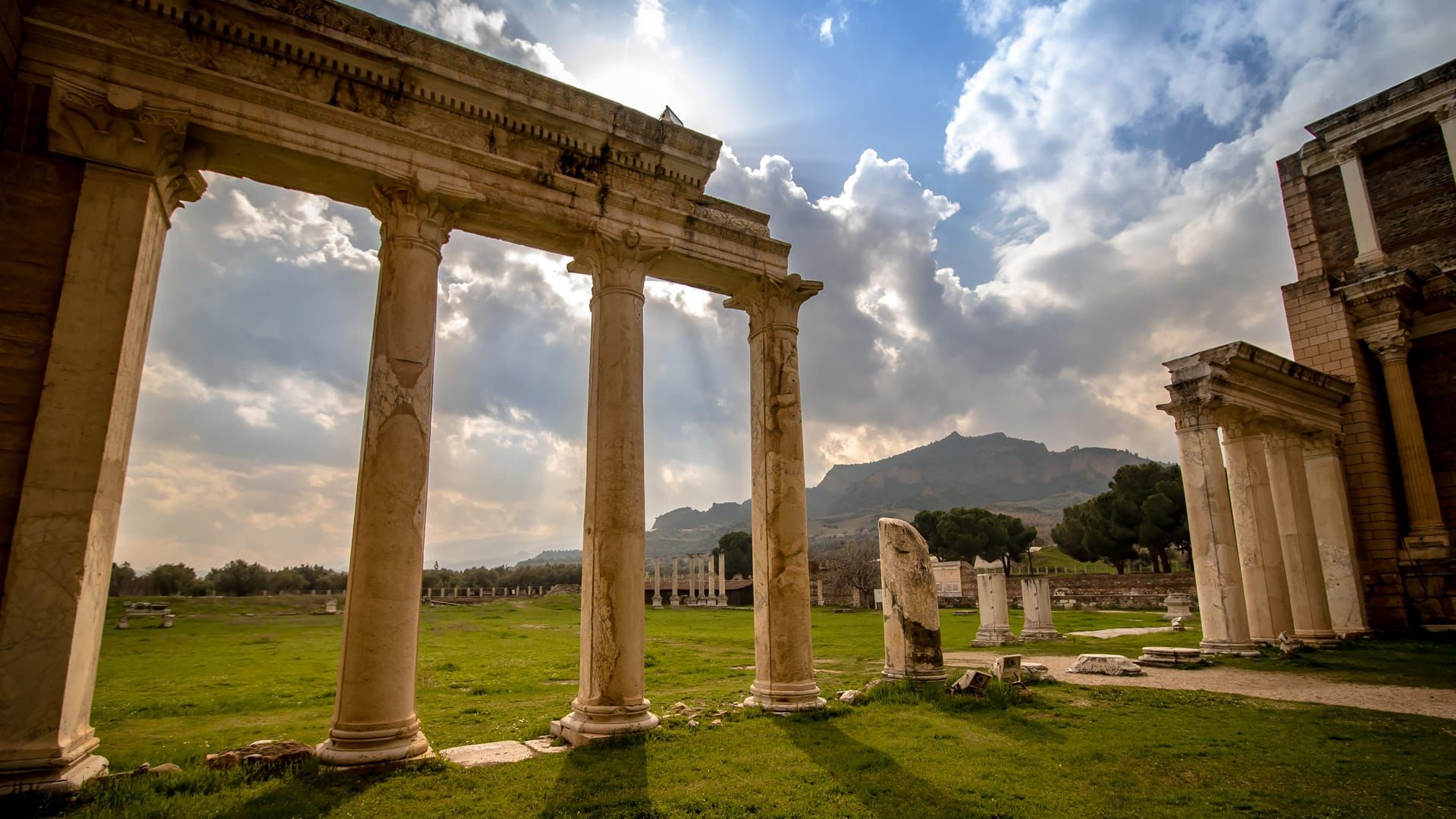
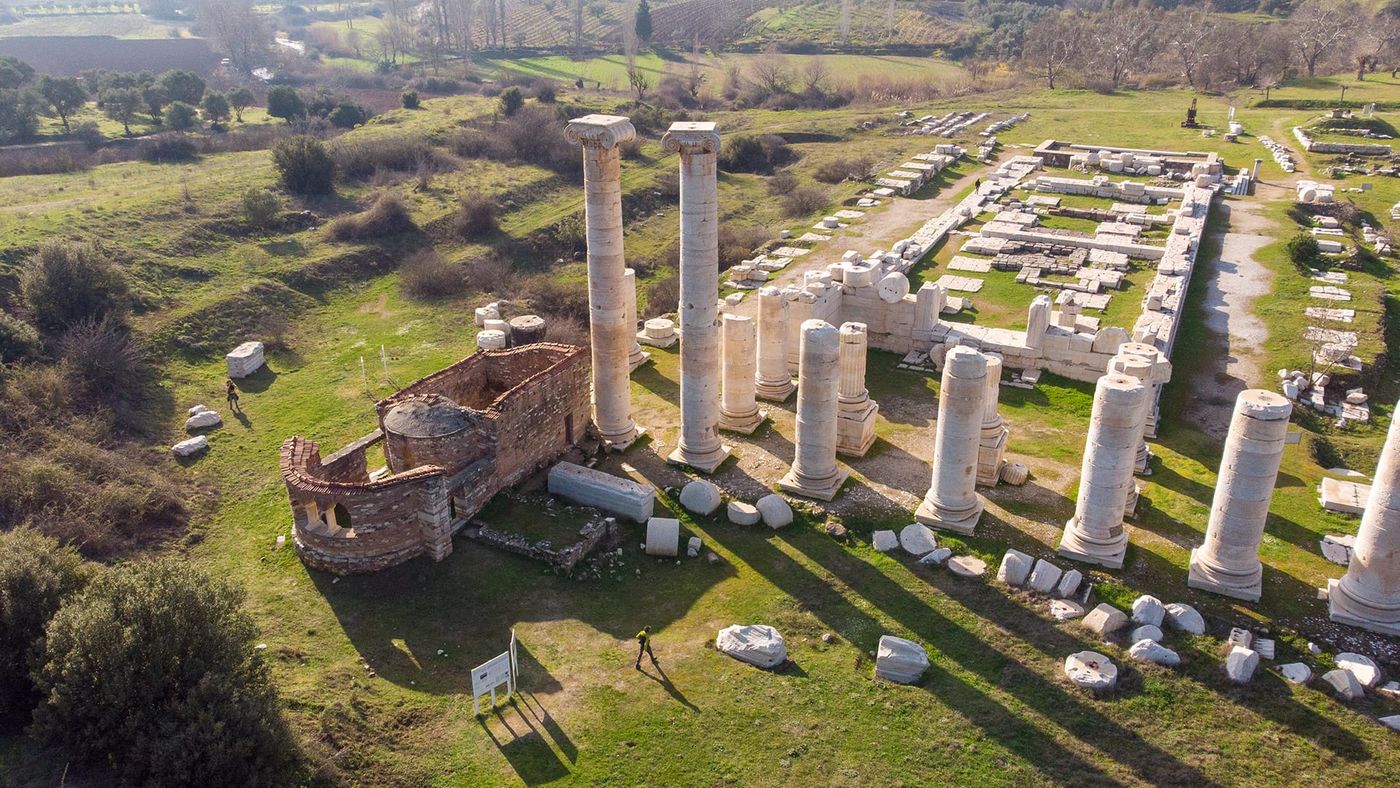
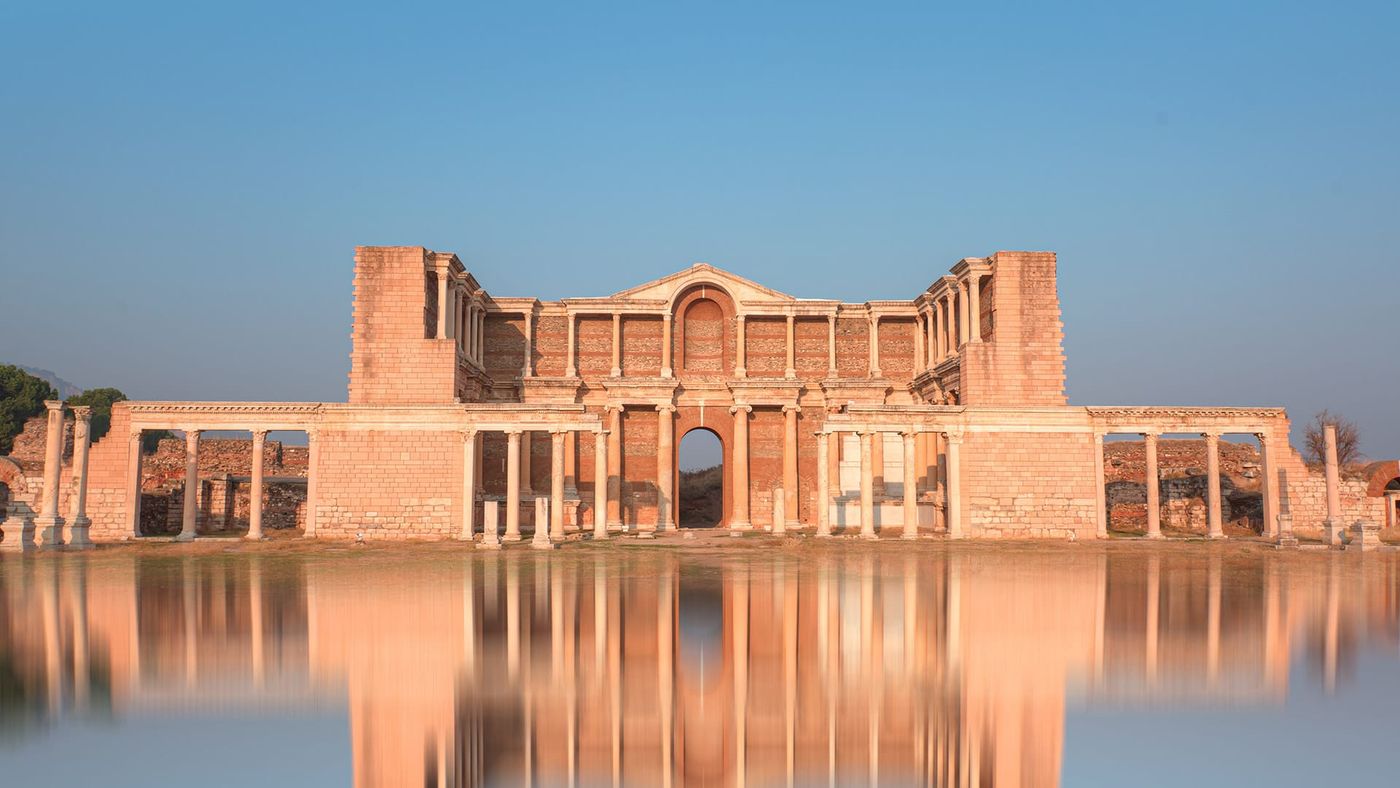
The city today lies on both sides of the modern road. The most important architectural structures uncovered with excavations are the ancient synagogue and gymnasium. To the North is the magnificent Gymnasium and synagogue, and in the south part, one can see the great temple of Artemis and a church attached to it. The synagogue is a uniquely beautiful building built in the 3rd century CE. The gymnasium is next to the synagogue. It is understood that the ornate eastern front of the Gymnasium was built at the beginning of the 3rd century CE. The arched shops along the edges of these two buildings date back to the Eastern Roman Period.
Sardes is also listed as one of the 7 churches of Asia Minor, to whom St. John wrote letters.