
Trojan Horse
The Iliad and Odyssey epics of Homer, who lived in today’s İzmir (ancient Smyrna) in the 8th century BCE, are based on oral tradition that dates back to the 2nd millennium. The myth of the "Trojan War" and the sorrows of those who participated in this war have survived to the present day in the poems of Iliad and Odyssey. The Iliad consists of the events of the 10-year siege period in the Troy Wars.
Subject of the legend of Paris and Helen, the Trojan Horse was a tactical manoeuvre in history planned by Odysseus, the commander of the Achaeans, to take over the city of Troy.
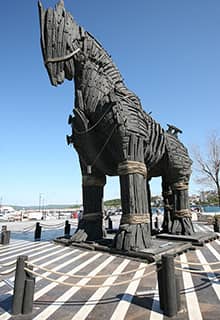
The 12.5 meter high horse at the entrance of the city as the symbol of the ancient city of Troy was built by the Turkish artist İzzet Senemoğlu using pine trees brought from the Kaz Mountains (Kaz Dağları) in 1975.
The wooden horse used in the movie Troy, which was shot in 2004 inspired by the Trojan War is located in the city-center of Çanakkale. Together with the wooden horse you will see outside Troy, you will decide which one is more realistic.
Naval Museum
Çanakkale Naval Museum (Çanakkale Deniz Müzesi), is located in Çimenlik Castle (Çimenlik Kalesi), which was built in the narrow area of the Hellespont in 1452 to defend İstanbul. It is a military museum established to meet the information needs of the Sea and Land Wars in 1915. This museum, which is operated under the Naval Forces Command, hosts items on the battlefield, objects found in villages, and special items donated by the people. It reflects the conditions of 1915 to the people.
Piri Reis Museum
There are two museums named after Piri Reis, one of the famous cartographers in the Ottoman era, a geographer, sailor, scholar and Admiral, who lived in the 16th century.
Piri Reis Naval Museum (Piri Reis Deniz Müzesi) is a private museum under the body of Onsekiz Mart Çanakkale University, and in this museum’s collection are hundreds of species of marine creatures.
Gallipoli Castle (Gelibolu Kalesi), a Byzantine period building built in the 8th century, of which ruins are visible on the coast today, is home to the Piri Reis Museum. The museum contains busts, paintings, and maps depicting the famous seafarer.
Truva Ruins
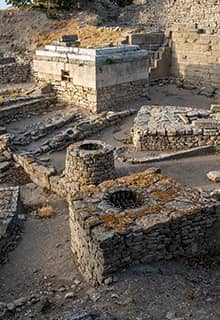
The oldest settlements in Truva, which has a complex and rich archaeological structure, with 10 different city layers belonging to different periods, date back to 3,000 BCE. This unique area, which had uninterrupted settlement until 500 CE, enabled the residents of the region to control all the traffic sailing from the Aegean Sea to the Black Sea in that period.
Troy is an important city in understanding the early development of European civilization. The city has a cultural significance due to its contribution to Homer's Iliad and the creative art.
Located within the boundaries of Çanakkale province, on the slopes of the Kaz Mountain (Kazdağı), Troy was declared a National Park in 1996 and was included in the UNESCO World Heritage List as a cultural asset in 1998.
The ancient city of Troy is located in the west of Tevfikiye Village in the Central district of Çanakkale.
It is thought that Troy, located on the edge of a bay where the Karamenderes (Skamender) and Dümrek streams reach the Aegean, was very close to the sea in the early years of settlement and gradually fell away from the sea due to the silting of Karamenderes river. The city, which was destroyed by wars and natural disasters and rebuilt many times over, gradually lost its importance and was finally abandoned.
Troy, which has become the subject of many movies, has an important place in mythology besides its rich historical background. The city has been the subject of Homer's epic of Iliad and the Trojan War has become a story known in the minds.
In the region visited by archaeologists and travelers since the 16th century, a hill where the city layers accumulated due to the use of adobe as construction material in the houses was formed as a result of the excavations.
The most magnificent megaron structures, which are the forerunners of ancient temples, are seen in Troy since 3,000 BCE. In addition, ashlar masonry has been found in Troy since 2500 BCE, when iron was not known yet.
Troy Museum
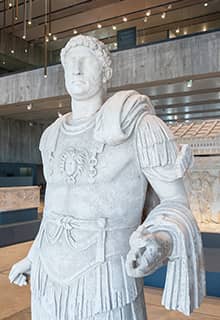
The new museum building, which was designed with a modern museology understanding, was named the "Troy Museum (Truva Müzesi)" and was officially opened in 2019. Today, the old Archaeology Museum building in the center continues to serve as the Provincial Public Library (İl Halk Kütüphanesi).
The Troy Museum is located at the entrance of the Ancient City of Troy, which was included in the World Cultural Heritage List by UNESCO in 1998, within the boundaries of Tevfikiye Village of the Central District of Çanakkale Province. It has a 3,000 m2 exhibition hall and 11,200 m2 closed area.
In the Troy Museum, the life and archaeological history of Troy and its cultures, which left their mark in the Troas Region, which has gone down in history with Homer's famous Iliad, are explained through the artifacts from the excavations.
When visitors follow a story divided into seven topics: The Archaeology of the Troas Region is the Bronze Age of Troy, the Epic of the Iliad and the Troy War, the Troas and Ilion in the Ancient Period, the Eastern Roman and Ottoman Period, the History of Archeology, and the Traces of Troy.
Visitors can climb to each exhibition floor via the ramp. In the niches on the walls of the ramp, different layers of Troy are described with tombstones, large sculptures, stage animations, and large size photographs. In the circulation band, which is the entrance area of the museum, the science of archeology, archaeological and archaeometric dating methods, terms such as "neolithic, chalcolithic, bronze age, iron age, mound, restoration, conservation" are explained through diagrams, drawings, texts and interactive methods in order to provide an orientation to the visitor before the ongoing exhibition floors.
Tevfikiye Village / Archeo-village
Tevfikiye village, which is the closest settlement to the ruins of Troy, is an archeo-village bearing traces of the unique history of Troy and reflecting the spirit of the period with all its features.
The village has been organized in order to make the visits to the Ancient City of Troy surround people with mythological, cultural and natural beauty and to provide them with the features of the Troy period, such as pleasant breaks during the trips, organic fruit and vegetable shopping.
57th Infantry Regiment Martyrdom
The 57th Infantry Regiment Martyrdom (57. Piyade Alayı Şehitliği) has been built on December 12, 1992. During the war, foreign soldiers called it "Chessboard". This martyrdom is symbolic and the real martyrdom is located in the Çataldere Valley, at the south end of Bomba Sırtı. The 57th Regiment is the first of the Turkish forces to confront the Anzac soldiers advancing on the Ariburnu Front and to repel them. In this front, the leadership and courage of Lieutenant Colonel Mustafa Kemal were proven.
The 57th Regiment Martyrdom was made of Kevser stone, which is generally used in Seljuk and Ottoman caravanserais. The entrance to the martyrdom is on the Kabatepe-Conkbayırı road. Directly opposite the entrance is a relief depicting the 57th Regiment's counterattack on April 25, 1915.
Anzac Cove
Anzac Cove (Arıburnu) is regularly visited by Australian and New Zealand citizens every year.
The cove, where Australian and New Zealand soldiers landed on April 25, 1915, is 600 meters long. Tourists from Australia and New Zealand (ANZAC) come to Çanakkale from thousands of kilometers away each year to commemorate their ancestors at the dawn ceremony.
Conkbayırı Monument
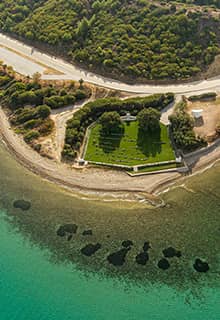
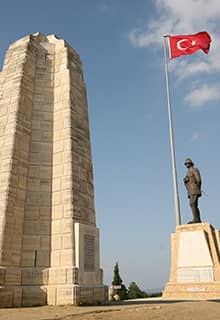
There are 3 Turkish monuments in Conkbayırı. The newest of these monuments is the bronze Atatürk statue, located right next to the New Zealand Monument (Yeni Zelanda Anıtı). On the pedestal of the statue, the shrapnel piece that hit Colonel Mustafa Kemal's chest on August 10, 1915 and the incident of his survival thanks to the clock in his pocket over his heart is told from his original voice.
It is one of the most violent and bloody fronts of the Gallipoli Campaign. 5 "memorial inscriptions" were erected in the name of our martyrs and their heroism.
Çanakkale Epic Information Center
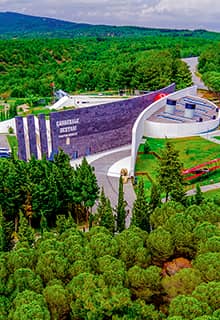
Çanakkale Epic Information Center (Çanakkale Destanı Tanıtım Merkezi) was put into service on June 7, 2012 in order to remember the Çanakkale Campaign, where unprecedented stories of heroism took place.
Three-dimensional demonstrations are made in two of the 11 different animation halls established with advanced simulation techniques, and important parts of the Çanakkale Campaign are explained by using mobile platforms in three separate rooms. The narration is made in seven different languages (English, German, French, Russian, Japanese, Italian and Arabic) for foreign visitors.
The exhibition hall consisting of two floors where materials and dioramas used in the Çanakkale Campaign are exhibited, a library where the works published about the Çanakkale Campaign are collected and a souvenir section are also located here.
The center includes a section explaining the beginnings of this war, which started in 1914 due to the pre-war Ottoman state and how it was carried to the war, the story of the Nusrat Mine Ship, the Battle Plans of the Allied Powers, the three-dimensional re-enactment of the heroism of Seyid Onbasi in Rumeli Mecidiye Bastion, Land Battles plans, which are narrated on a three-dimensional map with images of wars of that period with a special technique, and animations demonstrating Mustafa Kemal's conversation with a soldier at the front.
An exhibition area has been established spread over two floors where objects such as weapons, tools, equipment, personal belongings and letters used in Çanakkale Campaign are exhibited. In the exhibition hall, memories and objects from the Çanakkale Campaign are exhibited. In addition, reliefs depicting scenes from the Çanakkale Campaign decorate the exhibition walls.
Çanakkale Epic Information Center is a first in the world in terms of using film and hologram together.
Alexandria Troas Ancient City
The city of Alexandreia Troas was founded in the name of Alexander the Great in 310 BCE. The city developed economically in short time and became an important center. Due to its location as a junction between Europe and Asia, it was once a candidate to be the capital of the Roman Empire.
Although similar plans were made by Emperor Constantine, eventually İstanbul (Constantinapolis) was chosen to be the capital.
The second revival of the city took place with Augustus, a Roman Emperor. Augustus founded a colony here for the retired Roman soldiers in the middle of the 1st century BCE and supported the city's conversion into a Roman metropolis.
A second peak of the city was in the 2nd century CE. Herodes Atticus from Athens, one of the richest people in the ancient world, built an enormous Aqueduct extending from Mount Ida to Alexandreia Troas.
To the east of the city is the Neandria Gate (Neandria Kapısı), which has a circular inner courtyard and a tower on each side and an enormous water gate, dating back to the 3rd century BCE.
Saint Paul began his journey to spread Christianity to Europe from this city port in the 52nd CE. It is known that Alexandreia Troas port was one of the most important gates to Europe at that time.
The big bath of the city was built together with the waterway in 135 CE. The building, which was mostly standing until 1809, collapsed as a result of an earthquake. It is one of the largest of the Roman Period Baths in Anatolia.
An enormous theater was built at the highest point of the city during the Hellenistic Period. The location of the theater offers visitors an impressive view of the city, alongside the view of Neandria located on Cigri Mountain to the east, Lesbos Island to the south, Tenedos (Bozcaada) to the west and Çanakkale Strait (Çanakkale Boğazı) to the north.
Apollon Smintheion Ruins
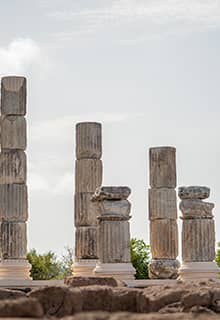
In the Apollon Smintheus Sanctuary, remains of a prehistoric settlement dating to around 5,000 BCE were unearthed. The Temple of Apollo Smintheus is located in a region called Bahçeleriçi.
This region, which is rich in water, is fed by underground springs. The abundance of water in the region during the Hellenistic era when the temple was built is a symbol of the Apollo cult. God Apollo always needed water for prophesy.
The Apollo Smintheus Temple draws attention with its architectural design and style, as well as the reliefs from Homer's epic of Iliad. The temple, built in the Ionian style in 150 BCE, is the only example of its kind today in the Troas region in north-west Anatolia. Apollon Smintheion sanctuary is the second most important sanctuary of Troas after Athena temple in Troy city. Apollo Smintheus appears in the Troas region as a God protecting farmers from mice.
Assos
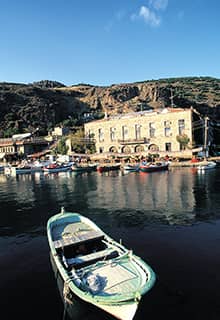
Assos is an ancient coastal town located 87 km south of Çanakkale, within the boundaries of Behramkale Village of Ayvacık district. Aristotle, the famous philosopher of the Antiquity, lived for a period in Assos, and made important research on zoology, biology and botany.
A significant portion of the 4 km long walls surrounding the city are still standing today. The Temple of Athena (Athena Tapınağı), located in the Acropolis, is one of the oldest Doric temples in Anatolia built in the Archaic Age. Among the h ruins on the acropolis, the Temple of Athena is the best place to watch the magnificent view of Edremit Bay at sunset. A big portion of the theater with a capacity of 4,000 spectators, has been preserved. The bridge from the Ottoman period at the borders of Behramkale Village is completely standing and still in use.
Babakale
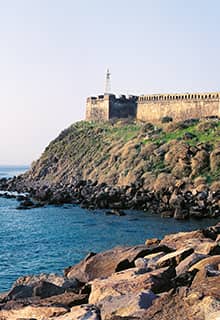
Babakale is affiliated to the Ayvacık district of Çanakkale. Here is the farthest point of the Asian continent, which is the largest continent in the world geographically.
Just like in Capo da Roca, where the European continent ends, it is possible to document your visit with a certificate at Babakale free-of-charge.
In Babakale, you can also visit Babakale Castle (Babakale Kalesi), the last castle built by the Ottoman Empire. Babakale is a place worth seeing with its magnificent view from the castle walls, the color of the sea and its historical texture.
Bozcaada
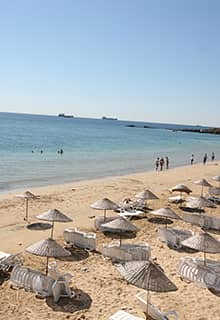
Located 4 nautical miles from the mainland (Geyikli Pier), formerly known as Tenedos, today known as Bozcaada, it is like a paradise with its houses and streets preserving its old architectural texture, deep blue sea, calm beaches, hills with thyme scent, and vineyards where delicious wines are produced. This is an island that you can visit throughout the year to watch the sunset from the point where the wind roses and Polentos Lantern are located at the westernmost end of the island, for hiking and cycling on its not very rough roads, kite-surfing at Çayır Beach (Çayır Plajı), exploring the undersea in the bays, one of the most important diving spots of the Aegean Sea.
Gökçeada
It is possible to reach Gökçeada, which is about eight times the size of Bozcaada as the largest island of Türkiye, by ferry from Kabatepe port. The island of Imroz, with its name used until 1970, has the title of "the last place where the sun sets" as it is the westernmost point of Türkiye in the North Aegean. The island, with its history dating back to 7,000 BCE, the artifacts found in the mound of the island and the uninterrupted settlement of the island, fascinates visitors with its old village architecture, churches and cobblestone streets.
Gökçeada is an island that stands out with the richness of its natural life due to the diversity in its flora and fauna and the abundance of water resources. Olive cultivation is a profession that dates back to ancient times. It is possible to see 300-400-year-old olive trees on the island.
Known as one of the cleanest seas in Türkiye, Gökçeada's beaches are ideal for swimming, diving and surfing. Gökçeada is considered to be one of the leading surf centers not only in Türkiye but also in the world thanks to its windy climate and unique geographic structure.
Zeus Altar
Homer mentions in the Iliad Epic that Gods lived on Mount Ida (Kazdağı) and watched and ruled the Trojan War from here. It is also told in this epic that Zeus, the King of Gods, lived here and watched and ruled the war. Researchers working in the region also think that this high place, built on a hill overlooking the sea and Edremit Bay, belongs to Zeus, the king of Gods.
The area named as Zeus Altar on Dede Hill (Dede Tepesi) has been formed by processing of the rock mass. This rock mass is accessed by ladders made of carved steps. The cistern under the altar and contains water inside, is called Zeus Cave (Zeus Mağarası).
Parion Ancient City
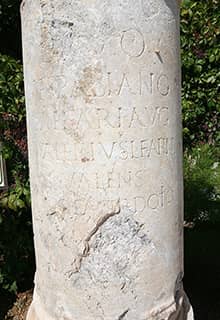
Parion is located in Çanakkale Province, Biga District, Kemer Village.
Parion, as a coastal city of the Marmara Sea, is considered to be a city of Troas region, especially considering the data obtained from the necropolis area. The ancient city of Parion is adjacent to important cities such as Lampsakos in the west, Priapos in the east and Skepsis in the south.
Eusebius said, that Parion was established in 709 BCE.
Parion declared Parion, which was a member of the Delos Union in 478-477 BCE, a colony city twice; the first time during the Julius Caesar or Augustus Period, and the second time during the Hadrianus Period.
Parion, a city where Christian communities were located since the 2nd century CE, did not lose its importance during the Byzantine Period and became an important episcopal center.
In the odeion, which is one of the important buildings of the city, a marble statue was unearthed during the excavations in 2012, is assumed to belong to the goddess Artemis.
Kaz Dağları (Mount Ida) National Park
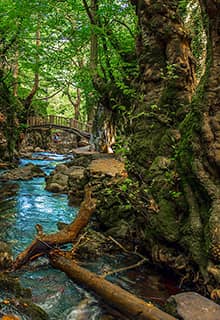
Known in mythology as Mount Ida, the Kaz Mountains span between the provinces of Balıkesir and Çanakkale, forming one of the world's most unique ecosystems with their high oxygen levels and pristine air. Referred to as "Ida of a Thousand Springs" in Homer's epic Iliad, the mountain lies at the very heart of ancient legends and Classical Mythology as the setting for history's first beauty contest and the place where Zeus watched the Trojan War. Designated a national park in 1993, this vast ecosystem hosts dozens of endemic plant species—29 of which are entirely unique to this region, including the world-famous Trojan Fir (Abies nordmanniana subsp. equitrojani).
The mountain's slopes facing Çanakkale (within the Bayramiç and Ayvacık districts) are renowned for Ayazma Nature Park with its ice-cold waters, the ancient Altar of Zeus, and preserved historic stone villages such as Adatepe and Yeşilyurt, which bear traces of traditional local architecture and multicultural heritage. Gastronomically enriched by high-quality, low-acidity olive oils, the Kaz Mountains—with their deep canyons, flowing streams, rich fauna, and historic texture—stand as one of Türkiye's most vibrant and delicate ecological treasures.
Gallipoli Historical Site
Spanning the European side of the Dardanelles on the Gallipoli Peninsula, the Gallipoli Historical Site encompasses the sacred grounds where the Gallipoli Campaign (1915–1916)—one of the most decisive battles of World War I—took place. Covering a vast territory of approximately 33,000 hectares, this area stands as a spiritual open-air museum where extraordinary acts of heroism unfolded, the military genius of Mustafa Kemal Atatürk emerged, and the foundations of modern Türkiye were laid.
The Historical Site features a multitude of monuments, war graves, and cemeteries dedicated to both Turkish and Allied forces. Key landmarks include the majestic Çanakkale Martyrs' Memorial, the legendary 57th Infantry Regiment Cemetery, the decisive trenches of Conkbayırı and Anafartalar, and Anzac Cove. Preserved for its dramatic natural landscape of steep cliffs, historic fortresses, and Mediterranean scrub, the Gallipoli Historical Site has transformed the scars of war into a global symbol of peace, reconciliation, and profound remembrance.
Gökçeada Salt Lake
Located between Aydıncık and Kefaloz beaches on Gökçeada, the Salt Lake is a unique lagoon fed entirely by seawater and rainfall. In the summer months, as the water evaporates, the lake is covered with a brilliant white salt crust, creating a mesmerizing scenery that looks as if it has snowed in the middle of summer, while meeting the salt needs of both locals and wildlife. Hosting nearly 80 species of waterbirds, most notably flamingos, this sensitive avian sanctuary also stands out for its therapeutic black mud rich in sulfur. Popular among visitors seeking natural remedies for ailments like rheumatism, psoriasis, and osteoarthritis, the lake remains one of the island's most vibrant destinations for both ecotourism and wellness tourism, thanks to its untouched nature and rich fauna.
Çanakkale Pembe(Pink) Lake
Located in Dalyan village of Çanakkale’s Ezine district, right next to the ancient city of Alexandrea Troas, the Pink Lake is one of Türkiye's rarest biological miracles. Towards the end of summer, as high temperatures and evaporation increase the water's salinity, the lake turns an eye-catching pink color due to a bloom in Dunaliella salina algae and halobacteria. Blending with the ruins of the ancient Roman harbor and the deep blue Aegean horizon to offer a surreal visual feast—especially at sunset—this lagoon stands out as one of Çanakkale's most vibrant ecotourism routes with its sensitive ecosystem and natural salt crystals.
Ayazma Beach and Aquarium Bay
Situated side by side on the southern coast of Bozcaada, Ayazma Beach and Aquarium Bay are two natural wonders hosting some of the clearest and most mesmerizing waters in the Aegean Sea. As the island's most popular and expansive shore, Ayazma Beach is the prime destination for sea lovers during the summer months with its golden fine sand and refreshing, turquoise sea; right next to it, the hidden paradise of Aquarium Bay resembles a natural aquarium with its untouched, rocky structure and perfect underwater visibility. Offering an unparalleled route for those wishing to snorkel and observe marine life, this bay reflects the island's pristine ecological balance in its most vibrant form. Surrounded by historic vineyard paths and the cooling Aegean breeze, Ayazma and Aquarium combine a comfortable beach experience with an isolated nature getaway, standing out as the most vibrant coastal treasures crowning Bozcaada's untouched shoreline.
Beaches
Located along the coastline of Çanakkale, Geyikli, Güzelyazı, Dardanos, Sivrice, and Karanlık Liman beaches offer unique alternatives to nature lovers in an ancient geography where the Aegean Sea meets the Dardanelles. Geyikli Beach, situated in the Ezine district with its mesmerizing location right across from Bozcaada and its expansive sandy shore shaded by centuries-old olive trees, is one of the indispensable summer destinations besides being a gateway to the island. Situated closer to the city center, Güzelyazı and Dardanos beaches reveal the cool waters and vibrant marine life of the Dardanelles, standing out as some of the region's most popular and lively hubs, especially for windsurfing enthusiasts. Hidden in the Ayvacık district, directly across from the Island of Lesbos, Sivrice Beach is an untouched corner of peace where time slows down, characterized by its pebbly shore, crystal-clear deep waters, and wooden piers. Karanlık Liman (Dark Harbor), which hosts the historical harbor area of the ancient city of Troy and takes its name from its strategic past, is a hidden paradise for campers and those seeking tranquility, thanks to its isolated structure surrounded by pine trees. Offering a comfortable beach experience alongside water sports and nature getaways, this chain of beaches stands out as one of Çanakkale's most vibrant coastal routes crowning the region's rich ecological heritage.
Gökçeada Secret Port (Gizli Liman)
Reached by passing through the Uğurlu village of Gökçeada, Gizli Liman appears like a beautiful surprise as you turn right from the fishermen's harbor, standing out as one of the island's most mesmerizing natural wonders. Being the furthest point you can reach by road on the western tip of the island, this paradise bay is one of the most pristine and untouched shores in the Aegean, featuring a 750-meter-long fine sandy beach stretching right in front of lush pine trees. Revealing its full splendor about 1-2 kilometers after the Uğurlu Harbor, the lagoon offers an isolated peace to its visitors with its crystal-clear, deep blue sea and a pristine shore adorned with small pebbles. Furthermore, İnce Burun (Cape Avlaka), located at the very tip of the bay and geographically representing the westernmost point of Türkiye, crowns the island's wild and ancient nature. Free from any construction, this tranquil haven stands out as one of Gökçeada's most vibrant ecotourism routes for peace-seekers, campers, and nature lovers alike.
Gallipoli Historic Underwater Park
Located at the meeting point of the Aegean and Marmara seas, the Gallipoli Historic Underwater Park is the world's first World War I-themed underwater park. Launched by the Directorate of Çanakkale Wars Gallipoli Historical Site at Seddülbahir Castle, this project has transformed Çanakkale into a premier international diving destination. Offering 14 distinct diving points across a 150-square-kilometer area, the park preserves Türkiye’s rich underwater archaeology and century-old military heritage. Its depths host 14 strategic wrecks sunk 106 years ago, led by the iconic British battleship HMS Majestic, alongside Lundy, HMS Louis, HMS Triumph, Massena, and Saghalien. Opened to tourism in collaboration with TÜBİTAK MAM, these wrecks have transformed over time into unique habitats for marine fauna and flora, serving as artificial reefs. With its mysterious stories and noble spiritual atmosphere, the park stands out as one of the world's most vibrant underwater museums.
Gökçeada Underwater National Park
Located between Kaleköy and Yelkenkaya in the northeast of Gökçeada, Türkiye's largest island, this area was declared Türkiye's first and only underwater national park in 1999. Situated at the crossroads of the nutrient-rich, cold currents from the Black Sea and the warm waters of the Aegean Sea, this pristine sanctuary hosts some of the most untouched marine life in the Northern Aegean. The park is home to extensive seagrass meadows (Posidonia oceanica), which act as the lungs of the marine ecosystem, alongside Mediterranean monk seals, sea turtles, rare sponges, and diverse fish populations. To preserve the ecological balance, the park is divided into strictly protected core zones and buffer zones; all commercial fishing is prohibited, while snorkeling and scuba diving are permitted under specific regulations. With its crystal-clear waters, underwater caves, and fascinating biodiversity, Gökçeada Underwater National Park stands as one of Türkiye's most valuable marine conservation areas.
Çanakkale Clock Tower
Located in Çanakkale city center, the historic Clock Tower is one of the city's most prominent symbols and primary meeting points. Built in 1897 during the reign of Sultan Abdulhamid II, this monumental Ottoman heritage site consists of four levels that gently taper upward, topped by a domed pavilion. Standing approximately 20 meters tall, the tower features fountains on its ground floor and circular clock faces on each side of its fourth level. Bearing a marble inscription dated 1897 and giving its name to the square it stands in, the Clock Tower has witnessed the city's modern history, including the Gallipoli Campaign. Today, this elegant structure remains an important historical landmark where visitors exploring the city center can take a short break and capture beautiful photographs.
Streets of Bozcaada
Reflecting the peaceful atmosphere of the Aegean Sea, the streets of Bozcaada serve as a captivating open-air museum with a deeply rooted multicultural past. Historically shaped by different cultures and now seamlessly blended, the island center has successfully preserved its historical fabric. The narrow, cobblestone streets lined with historic stone houses featuring colorful shutters create a postcard-perfect view adorned with vibrant bougainvillea and geraniums. While the grid-patterned streets characterized by distinctive neoclassical architecture are bustling with lively cafes, art galleries, and restaurants, the other side offers a more serene atmosphere with its winding alleys and elegant wooden details. Closed to traffic, these aesthetic streets invite visitors to enjoy leisurely exploration and capture unique photographs.
Çıplak Village (Ethno-Village)
Located on the route to the Ancient City of Troy in Çanakkale, Çıplak Village is an authentic settlement preserved under the concept of an "Ethno-Village." The village holds significant historical importance; Heinrich Schliemann, the excavator of Troy, stayed here during his excavations in the 1870s, using a local house as his headquarters. Today, the village stands out with its mudbrick and stone architecture, featuring historic Ottoman fountains, traces of Schliemann, and open-air displays of traditional agricultural tools along its streets. Offering an authentic rural atmosphere, Çıplak Village serves as a delightful cultural stopover with its local produce markets and welcoming village coffeehouse.
Adatepe Village
Nestled on the slopes of Mount Ida in the Ayvacık district of Çanakkale, Adatepe Village is one of the best-preserved stone-architecture settlements in Türkiye. Inhabited since antiquity, the village was declared a protected historical site in the 1980s, which saved it from modern concrete development and allowed its original structures to be meticulously restored. With its village square shaded by century-old plane trees, masonry houses, and narrow cobblestone alleys, Adatepe offers a timeless atmosphere. The historic stone schoolhouse now serves as a cultural hub hosting philosophy and art seminars, while the nearby mythological Altar of Zeus provides breathtaking panoramic views of the Edremit Gulf. Renowned for its premium olive oils and oxygen-rich air, Adatepe is a perfect retreat for nature and culture lovers.
Yeşilyurt Village
Nestled at the foothills of Mount Ida in the Ayvacık district of Çanakkale, Yeşilyurt Village is a pristine sanctuary where mountain and maritime tourism blend seamlessly. Located just 3 kilometers from the coast, the entire village is a protected historical site; it is preserved from modern construction and defined by its meticulously restored traditional stone houses. In recent years, Yeşilyurt has become a premier retreat for those escaping metropolitan stress, offering scenic trekking paths lined with almond trees, vibrant geraniums along its alleys, and exceptionally pure air. The village square also features a historic mosque that stands out with its unique architectural style from the past.
Polente Lighthouse
Located at the westernmost tip of Bozcaada, Polente Lighthouse is an iconic landmark that has stood on steep cliffs 32 meters above sea level since 1861. Positioned alongside giant wind turbines, the area offers a striking landscape and is one of the premier spots in Türkiye to watch the sunset. Free from electricity and modern development, visitors gather on the cliffs with their camp chairs and local snacks to watch the sun sink into the Aegean Sea. With only the sound of the wind and waves, Polente is an essential and captivating stop during any visit to Bozcaada.
Bigalı Atatürk House Museum
Located in Bigalı Village in the Eceabat district of Çanakkale, the Bigalı Atatürk House Museum is a vital historical landmark that witnessed the critical days of the Gallipoli Campaign. Lieutenant Colonel Mustafa Kemal, commander of the 19th Division, used this traditional house as his headquarters between April 19 and 25, 1915, planning the decisive Arıburnu and Conkbayırı offensives here. Meticulously restored, the two-story house now exhibits Atatürk's personal belongings, his study, historical photographs, and military artifacts from the period, serving as a poignant stop that embodies the spirit of the national struggle.
Çimenlik Castle (Kale-i Sultaniye)
Situated at the narrowest point of the Dardanelles, Çimenlik Castle was built between 1461 and 1462 by Sultan Mehmed the Conqueror to secure the strait. The rectangular fortress consists of strong outer walls surrounding a central keep. Within the castle grounds, the former gunpowder magazine now serves as the "Piri Reis Gallery," alongside two historic mosques dating to the reigns of Sultan Mehmed II and Sultan Abdülaziz. Today, it stands as one of the most majestic defensive monuments overlooking the strait.
Seddülbahir Castle
Located at the southernmost tip of the Gallipoli Peninsula, Seddülbahir Castle was built in 1659 by Hatice Turhan Sultan, mother of Sultan Mehmed IV, to strengthen the defenses of the strait. Holding the distinction of being the first Ottoman fortress commissioned by a female patron, its name translates to "The Barrier of the Sea." The castle sustained heavy damage and suffered the first casualties of the campaign during the initial Allied bombardment, later witnessing heroic resistance during the landings. Recently restored and opened as an open-air museum, it stands as a pivotal military and historical landmark.
Adatepe Olive Oil Museum
Located in the Küçükkuyu town of Ayvacık, Çanakkale, the Adatepe Olive Oil Museum was established in 2001 as Türkiye’s very first olive oil museum. Housed in a beautifully restored historic soap factory, the museum showcases the centuries-old journey of the olive from the branch to the table and bottle. On display are traditional stone mills, presses, clay storage amphorae, and various hand tools historically used in harvesting, oil extraction, and soap making. Offering free admission, this living museum allows visitors to observe traditional soap-making techniques and taste or purchase cold-pressed olive oils along with natural olive-based cosmetics.
Kilitbahir Castle Museum
Situated at the narrowest point of the Dardanelles, directly across from Çimenlik Castle, Kilitbahir Castle was built in 1462 by Sultan Mehmed the Conqueror to secure the defenses of Istanbul. With its unique architectural layout resembling a three-leaf clover from a bird's-eye view, this fortress stands as a rare masterpiece of geometric military engineering. Its name literally means "The Lock of the Sea," and it served as a crucial defense stronghold during the Gallipoli Campaign. Following extensive restorations by the Ministry of Culture and Tourism, the historic structure now operates as the Kilitbahir Castle Museum. Through interactive exhibitions housed within its main keep and the Yellow Tower, the museum vividly brings to life Ottoman garrison life, maritime defense strategies, and period military technologies.
Çanakkale City Museum and Archive
Located in the historic Kemalpaşa Neighborhood in the heart of Çanakkale, the Çanakkale City Museum and Archive (ÇAKEMA) opened its doors in 2009. Housed in a beautifully restored three-story 19th-century mansion, the museum functions as a living, constantly evolving cultural hub rather than a traditional, static exhibition space. It chronicles Çanakkale’s thousands of years of archaeological history, the Ottoman era, the Gallipoli Campaign, the Republican period, and the city's daily social, cultural, and economic life through rotating thematic exhibitions. Serving also as an archive and library for researchers to preserve local memory, the museum is an essential stop for anyone wishing to understand the authentic identity and heritage of Çanakkale.
Gallipoli Mevlevihane
Located in the Gallipoli (Gelibolu) district of Çanakkale, the Gallipoli Mevlevihane was established at the very beginning of the 17th century and holds the distinction of being the largest Mevlevi convent (külliye) in the world. Commissioned by Azade Mehmed Dede, a Janissary commander, it stood as one of the most prestigious Sufi centers of the Ottoman Empire, playing a vital social, military, and cultural role over the centuries. Featuring a majestic semahane (whirling hall), expansive gardens, and dervish cells, the complex has been meticulously restored by the Ministry of Culture and Tourism. Preserving its profound spiritual atmosphere, this historic sanctuary continues to host traditional Whirling Dervish ceremonies, offering visitors a serene and enriching experience.
Namazgâh Redoubt Museum
A critical defensive stronghold of the Dardanelles, the Namazgâh Redoubt is believed to have been named either for its architectural resemblance to traditional open-air prayer areas or because soldiers gathered here for collective prayers. Comprising 26 bunkers used for various military functions during the war, the centrally located main bunker now serves as a modern museum.
The museum features a 1/100 scale model of the fortress, historical photographs, and military artifacts recovered during archaeological excavations. Visitors can watch the documentary "Reflections from the Depths," which explores the underwater shipwrecks of the campaign, and experience an interactive simulation of the vital communications between redoubts on March 18. One of the most striking highlights of the museum is a ruined section preserved under glass, showcasing the devastating impact of a direct hit from a massive naval shell
Gallipoli Castle and Piri Reis Museum
Perched on a hill overlooking the harbor in the center of Gallipoli, Gallipoli Castle is an ancient fortress that was extensively rebuilt during the reign of the Eastern Roman Emperor Justinian I. Having served as a vital military base and shipyard following the Ottoman conquest of the town in 1354, only a single defensive tower of this once-massive fortress remains standing today. This surviving historic keep now houses a museum dedicated to the legacy of Piri Reis, the legendary Ottoman admiral and cartographer who was born and raised in Gallipoli. Inside, the museum seamlessly blends the fortress's military history with the great navigator's global contributions, displaying replicas of his famous 1513 world map, illustrations from his maritime masterpiece Kitab-ı Bahriye, period naval equipment, and historical ship models.
Bozcaada Castle
The most majestic symbol of Bozcaada in the northern Aegean Sea, Bozcaada Castle rises in all its grandeur right at the entrance of the island, adjacent to the harbor. With origins tracing back to antiquity, the fortress was used by the Phoenicians, Genoese, and Venetians before being annexed by the Ottoman Empire in 1455 under Sultan Mehmed the Conqueror, who had it extensively rebuilt. Having achieved its present form through grand restorations during the reigns of Köprülü Mehmed Pasha in the 17th century and Sultan Mahmud II in the 19th century, it stands today as one of the best-preserved historic castles in Türkiye.
Consisting of two main sections—an inner and an outer castle—the structure is surrounded by a deep protective moat. Within the castle grounds, visitors can explore old ammunition depots, cisterns, an infirmary, the ruins of a mosque, and an open-air exhibition showcasing ancient stone artifacts that reflect the island's rich history. Bozcaada Castle not only sheds light on military history with its impressive architecture but also offers visitors an unforgettable panoramic view of the Aegean Sea from its battlements.
Bigalı Castle
Located on the Gallipoli Peninsula, Bigalı Castle holds a significant place in the defensive history of the Dardanelles. Commissioned under Sultan Selim III (1807) and completed during the reign of Sultan Mahmud II, the fortress features a distinct rectangular layout with cylindrical corner towers. During the 1915 Gallipoli Campaign, it played a vital logistical role as the "3rd Army Corps Weapons Repair Workshop," locally repairing nearly 90,000 rifles behind the frontlines. Opened as a museum-fortress in 2022 following extensive restoration, the historic site today features period reenactments, the active Mahmudiye Mosque, and an interactive Mauser rifle shooting simulator.
Seddülbahir Castle
Located at the southernmost tip of the Gallipoli Peninsula on the Dardanelles, Seddülbahir Castle was built in the 17th century during the reign of Mehmed IV to secure the strait. Meaning "Wall of the Sea," the castle witnessed historic defenses as it was subjected to the first and heaviest bombardments during the Gallipoli Campaign (1915). Following extensive restoration efforts, the castle was opened to visitors as an open-air museum; with its exhibition areas, historic ramparts, and a commandingly panoramic view of the Aegean Sea, it stands as one of the most prominent stops within the Gallipoli Historical Site.
Babakale Fortress
Located in the town of Babakale within the Ayvacık district of Çanakkale, at the westernmost tip of the Asian continent, Babakale Fortress holds the distinction of being the final fortress built by the Ottoman Empire. Constructed in the early 18th century (1701–1703) during the reign of Sultan Ahmed III under the order of Grand Admiral Kaymak Mustafa Pasha, it was erected to protect the coast from pirate raids and ensure maritime security.
Rising at a strategic point where sailors historically sought refuge from storms, the fortress serves as a fine example of late Ottoman military architecture. Well-preserved to this day with its sturdy ramparts, historical cannons, and internal fountain, the site offers visitors a deep historical atmosphere paired with sweeping views over the Aegean Sea from the edge of Asia. Today, alongside its historic fortress, Babakale is renowned for its traditional handmade cutlery craft and fresh seafood offerings.
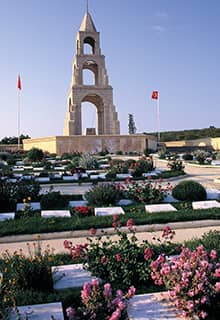
57th Infantry Regiment Martyrdom
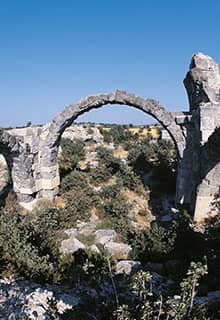
Alexandreia Troas Ancient City
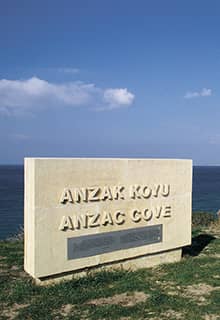
Anzac Cove
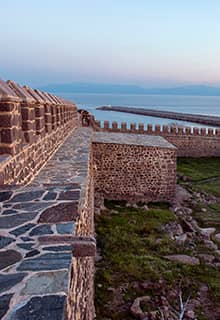
Babakale
Parion Ancient City
Apollon Smintheion Ruins
Conkbayırı Monument
Ayazma Spring Nature Park
Assos
Babakale
Çanakkale Epic Promotion Center
Troy Ruins
Bozcaada
Conkbayırı Monument
Trojan Horse
Troy Museum