
Koza Inn
In 1492, It was built by Bayezıt II to generate income for its mosque and madrasah in İstanbul. It was established on a wide area between the Orhan Mosque and the Ulu Mosque. The Han, which is mostly built with ashlar masonry and sometimes brick, has two floors and the front of the rooms is a portico. The portico consists of 40 concrete domes. Koza Inn has a total of 95 rooms, 50 on the upper floor and 45 on the lower floor. All the rooms on the upper floor are used as shops to sell silk and silk products. There is a door opening to the south on the upper floor and doors opening to the Orhan Mosque side and the covered bazaar in the north. The large stone door opening to the north is decorated with turquoise tiles. There is a domed mosque with six fountains in its courtyard. The architect of the inn is Abdül-Ula Bin Pulad Shah, and the master of construction is Şuca Bin Karaca. Koza Inn, known by names such as Han-ı Cedid-i Evvel, Simkeş, Beylik, Yeni Kervansaray, Cedid-i Amire, is now the silk and trade center of Bursa as it used to be.
Muradiye Complex
The Muradiye Complex is the last one built by the Ottoman sultans in Bursa. The Kulliye, built by Murad II between June 1425 and November 1426, contains a mosque, a madrasa, an imaret, a hamam and tombs. In the vast garden, there are tombs belonging to Murad II and his family members.
Ulu Mosque
Bursa Ulu Mosque was built on a large area where Orhan Gazi Park is located, during the time of Yıldırım Bayezid, between 1396-1400. It is the first of the multi-domed monumental structures among Ottoman mosques. Ulu Mosque has 20 domes sitting on twelve large square pillars. The construction had started after Yıldırım Bayezid's 1396 Niğbolu victory. The inscription on the Minber door shows the completion date of the mosque as 802 (1399-1400). The western minaret of the mosque, which has two minarets, was built during the time of Yıldırım Beyazid, and the eastern one was built by Çelebi Sultan Mehmed. The Ulu Mosque is one of the largest in Türkiye.
The high and simple muezzin gallery, which spreads over elegant eight columns, was built in 1549. The stone pavement, carved from a round single piece of marble, placed on the pillar opposite the pilgrimage, was built in 1815. Under most of the plates that decorate the interior walls of the Ulu Mosque, there is the signature of the calligrapher. There are 192 works in the form of 87 plates written on the wall by 41 different calligraphers in the mosque with 13 different characters. In addition, there are antique clocks, candlesticks and the Qur'ans.
Bursa Yeşil Mosque
Located in the Yeşil district, the mosque was built in 1419 by Çelebi Sultan Mehmed. Bursa Yeşil Mosque, which is one of the "Inverted T" plan mosques, is one of the most beautiful historical buildings of Türkiye as well as Bursa. The architect of the mosque is Hacı İvaz Pasha.
The crown door at the entrance of Bursa Yeşil Mosque, is a beautiful product of Turkish stone carving. The mukarnas is extraordinarily beautiful. Green stone and marble were used in the door arch. Most of the interior is covered with tiles. The walls, ceilings, vaults and transition iwans are all covered with tiles. One of the most precious examples of tile work in the mosque is its mihrab, which is more than ten meters high. The mihrab, which includes flowers with various geometric motifs, is one of the most beautiful details in the mosque.
Turkish & Islamic Arts Museum
Green Madrasa, one of the first Ottoman madrasas, is also known as Sultaniye Madrasa, hosts tile and ceramic works from the Seljuk, Beylik and Ottoman periods (İznik, Kütahya) dating from the 13th to the 20th centuries, wood, carved and inlaid works, examples of Turkish metal art, tombak and other metal works, Seljuk and Ottoman coins, traditional Turkish handicrafts and clothes.
Soğanlı Botanical Park
Soğanlı Botanical Park covers an area of 400 acres and is open to herbal research and scientific studies, has been a first degree site since its establishment in 1998. There are 150 species of trees, 27 types of roses, 76 types of shrubs, 20 types of cover plants in the park, which includes sections such as the Japanese Garden, the French Garden, the English Garden, the rose garden, the rock garden, the scented plants garden, the shaped plants garden. Again, within the park, there is a section where 17-19th century Bursa mansions serving as a hotel and restaurant are modeled. In addition to activity areas such as jogging and walking tracks, sports fields, bicycle tracks, children's playgrounds, automobile tracks, and sports equipment, there is also an artificial pond in the Soğanlı Botanical Park.
Irgandı Bridge
It is located in the south of Boyacı Kulluğu Bridge. This stone bridge, which is the only bridge between the Ottomans, it is believed that it was built by the merchant Hodja Muslihuddin, son of Irgandı Ali, to Timurtaş, son of Abdullah, whom Hacı İvaz Pasha witnessed in his endowment, in the time of II. Murad, in 1442. In the Seyahatname of Evliya Çelebi, who came to Bursa in 1640 after the Celali Uprisings, it is stated that there were 200 shops on the bridge, but in reality, there were 32 shops on both sides of the bridge, one of them on the northeast end was separated from the mosque, the only one carrying the bridge.
Hüdavendigar Mosque
The tomb located in the northwest of Hüdavendigar Mosque was built by Yıldırım Beyazid, son of Murat I. The tomb, which was completely destroyed in the earthquake of 1854, was built differently from its original state. It took its current form during the reign of Abdülhamit II (1676-1909). In the middle of the octagonal dome, there is the sarcophagus of Murad I in brass railings. Apart from the sarcophagus of Murat I, there are seven more sarcophagi in the tomb.
Emir Sultan Mosque
Emir Sultan Mosque was built by Hundi Hatun, daughter of Yıldırım Bayezıt and wife of Emir Sultan, upon the death of Emir Sultan, at the beginning of the 15th century, on a hill on the slopes of Uludağ Mountain 2543 M, east of Bursa.
The only dome of the mosque rests on an octagonal frame. The mihrab is decorated with 17th century İznik tiles, but was rebuilt in marble during repairs and has columns with Corinthian capitals on both sides. The courtyard of the mosque is reached by going through the door between the two columns after climbing the stairs on the west.
İznik
İznik (ancient Nicaea) is a beautiful town on the lakeside offering rich natural and historical attractions. At one time it was considered as a holy city throughout Christendom compared only with Jerusalem and the Vatican City due to the fact that it was here in Nicaea, the famous “Nicene Creed” was issued. The 1st and 7th Ecumenical Councils dated to 325 and 787 were held in İznik/Nicaea. İznik is one of the 8 pilgrimage centers in Türkiye.
In İznik, you can visit Ayasofya Grand Mosque and the Roman Theatre and visit some ceramic workshops to learn the secrets of the famous İznik tiles. Sunbathing and swimming off the beaches on the banks of the lake and eating the local fish caught from the lake are highly recommended. İznik is in the UNESCO World Heritage Tentative List.
Gölyazı Village
Gölyazı Village of Bursa is a unique beauty where nature and history come together on the shores of Lake Uluabat. Known as Apolyont in ancient times, this lovely village is where examples of traditional residential architecture can be seen.
Byzantine and Ottoman styles are intertwined. Trees that are submerged due to rising waters in spring, ducks soaring in these waters, pelicans, storks that nest on the roofs every spring, narrow and clean streets with cobblestone and friendly hospitable villagers; is just a few of the beauties. Ulubat Lake, which has gained the status of an important Bird sanctuary, is an important breeding area for birds like pygmy cormorants, pied heron and spoonbill.
Süleyman Pasha Madrasa
The Süleyman Pasha Madrasa was commissioned in the 14th century by Süleyman Paşa, the son of Orhan Gazi and known as the conqueror of Rumelia. Lacking an inscription, the structure stands out as an important example of early Ottoman educational architecture with its open courtyard, U-shaped plan, arcades, eleven cells, and domed classroom. Today, it has been restored and serves as the Tilemakers’ Bazaar, sustaining the tradition of İznik tile art.
Sadağı Canyon Nature Park
Located near Sadağı village in the Orhaneli district of Bursa, Sadağı Canyon Nature Park is a hidden paradise offering a unique blend of unspoiled natural beauty, thermal springs, and historical significance. Officially declared a nature park in 2013, the protected area covers 4,360 decares and features a dramatic 12-kilometer-long canyon whose soaring rock walls and pristine landscapes make it an essential destination for trekking and camping enthusiasts.
Beyond its scenic allure, the canyon is celebrated for its natural thermal springs. The thermal waters emerging from the surrounding rock formations serve as a natural wellness retreat, particularly sought after by visitors seeking therapeutic relief for rheumatic conditions. The site also possesses deep historic value; human and animal depictions carved into the canyon's cliff faces showcase a rich cultural heritage tracing back to prehistoric times. Combining nature, history, and healing thermal waters, Sadağı Canyon remains one of Bursa's most captivating outdoor landmarks.
Atatürk Urban Forest
Situated directly behind the Odunluk neighborhood in Bursa, the Atatürk Urban Forest spans a vast 150-hectare area, standing as one of the city's largest and most vibrant natural parks. Serving as a peaceful green sanctuary for locals looking to escape the bustle of urban life, this lush forest draws large crowds of picnickers and outdoor enthusiasts every weekend, particularly throughout the summer season.
Thoughtfully equipped to provide a seamless outdoor experience, the park features a 6.5-kilometer walking and cycling trail, 6 scenic viewing terraces, and 10 rain shelters (7 equipped with built-in barbecue facilities) alongside 10 gazebo seating areas . Tailored for both families and sports lovers, the amenities include 2 children's playgrounds, table tennis tables, 2 volleyball courts, kiosks, meat sales units, and 5 dedicated dishwashing stations for picnickers. Offering a complete blend of recreational activity and scenic relaxation, Atatürk Urban Forest remains one of Bursa's premier public parks.
Gököz Pond
Located near the Gököz Village in the Keles district of Bursa, Gököz Pond is a mesmerizing natural haven nestled along the southern slopes of Mount Uludağ. Surrounded by dense pine forests and set against the dramatic backdrop of Mount Uludağ, the pond offers picture-perfect scenery and a tranquil retreat away from the city.
In recent years, Gököz Pond has emerged as one of Bursa's premier destinations for ecotourism and outdoor recreation, offering activities such as canoeing, ATV tours, horseback riding, and nature hiking (trekking). Equipped with lakeside picnic grounds, scenic walking paths, and wooden lodging facilities, it provides an inviting atmosphere for both day-trippers and campers seeking an immersive nature experience.
Situated at an elevation of approximately 2,420 meters near the summit region of Mount Uludağ in Bursa, Kilimli Lake (Kilimli Göl) is one of the most prominent and captivating glacial lakes in the national park. The lake derives its name—meaning "Carpet Lake"—from the dense aquatic vegetation and vivid reflections on its floor, which create colorful patterns on the water's surface reminiscent of a traditional woven carpet.
Kilimli Lake
Accessible primarily via trekking trails across the Uludağ Lakes Region, Kilimli Lake stands as an essential destination for high-altitude camping, nature photography, and mountaineering enthusiasts. Framed by alpine meadows and crystal-clear turquoise waters during the summer and autumn months, the lake offers a tranquil retreat surrounded by the dramatic rocky crags of Mount Uludağ.
Situated at an elevation of approximately 2,420 meters near the summit region of Mount Uludağ(2543m) in Bursa, Kilimli Lake is one of the most prominent and captivating glacial lakes in the national park. The lake derives its name—meaning "Carpet Lake"—from the dense aquatic vegetation and vivid reflections on its floor, which create colorful patterns on the water's surface reminiscent of a traditional woven carpet.
Accessible primarily via trekking trails across the Uludağ Lakes Region, Kilimli Lake stands as an essential destination for high-altitude camping, nature photography, and mountaineering enthusiasts. Framed by alpine meadows and crystal-clear turquoise waters during the summer and autumn months, the lake offers a tranquil retreat surrounded by the dramatic rocky crags of Mount Uludağ(2543m)
Bursa Castle
Perched atop the historic Tophane district in the heart of Bursa, Bursa Castle (Bursa Kalesi) stands as one of the city's most iconic historical landmarks, with foundations dating back to the Kingdom of Bithynia in the 2nd century BC. Expanded and fortified successively under Roman, Byzantine, and Ottoman rule, the fortress played a vital defense role for centuries.
Stretching along a perimeter of approximately 3.5 kilometers, the fortress walls originally featured five main gates: Saltanat Gate ( Imperial Gate), Yer Gate, Pınarbaşı Gate, Zindan Gate, and Sıcak Su Gate. Following its conquest by Orhan Gazi in 1326, the citadel became the primary administrative center of the early Ottoman Empire. Today, the area within the walls including Tophane Park houses the tombs of Ottoman founders Osman Gazi and Orhan Gazi, the historic Tophane Clock Tower, and restored Ottoman townhouses. Thorough restoration efforts have revived the ancient gates and ramparts, offering sweeping panoramic views over modern Bursa.
Kestel Castle
Perched atop a rocky hill in the Kestel district of Bursa, Kestel Castle is a strategic border fortress constructed during the Eastern Roman Empire, likely under the reign of Emperor Michael VIII Palaiologos (1261–1282) or his successor Andronikos II Palaiologos (1282–1328). It was established primarily to bolster Eastern Roman defenses and protect Bursa against incoming Turkish advances from the east.
Following the Eastern Roman defeat at the Battle of Bapheus in 1302, the fortress fell under Ottoman control around 1307. Historically covering an area roughly three times larger than its surviving footprint, the citadel reached its current condition following a comprehensive restoration project completed in 2013. Today, Kestel Castle serves as a public landmark featuring a park area and a small restaurant, offering visitors a blend of rich history and scenic relaxation.
Kubbeli Han
Kubbeli Han, located in the Historic Bazaar and Khans Area of Bursa's Osmangazi district, is one of the finest examples of early 14th-century Ottoman civil architecture. The inn was commissioned during the reign of Orhan Gazi by Lala Şahin Pasha, the first Beylerbeyi of Rumelia. Taking its name from its distinctive roof domes, the structure served for centuries as a strategic hub where traveling merchants rested and traded their goods. Today, preserving its historical charm, it continues to keep Bursa's vibrant commercial culture alive with its traditional shops.
Tophane Clock Tower
Located directly behind the tombs of Osman Gazi and Orhan Gazi in Bursa's Historic City Center, the Tophane Clock Tower is one of the city's most striking landmarks. Originally erected during the reign of Sultan Abdülaziz, the tower collapsed over time and was rebuilt in its present 6-story, 33-meter-tall ashlar masonry design in 1905 to commemorate the 29th anniversary of Sultan Abdülhamid II's accession to the throne.
Due to its elevated vantage point overlooking sweeping views of Bursa, the tower historically served as a fire lookout post. It is distinguished by its square architectural plan, clock faces on all four upper sides, and a pointed conical roof. Today, set within the picturesque Tophane Park, it stands as a cherished historic symbol and a favorite destination for visitors exploring the city.
Ahmet Pasha Madrasa
Located in the historic Muradiye district of Bursa, the Ahmet Pasha Madrasa (Ahmet Paşa Medresesi) stands as a profound cultural landmark and a gateway of knowledge dating back to the 15th century. Reflecting the heritage of Emperor Mehmed the Conqueror’s reign, the madrasa was commissioned by Grand Vizier Veli Mahmud Pasha's brother, Kapudan Pasha (Grand Admiral) Ahmet Pasha. Once a bustling center where students gathered to pursue learning, the structure’s stone walls continue to whisper tales of the past today.
An elegant reflection of Ottoman educational architecture, the madrasa is distinguished by its central courtyard, surrounding vaulted arcades (revak), and a vaulted, domed classroom section. Having served Ottoman intellectual life for centuries, the Ahmet Pasha Madrasa remains a captivating historical retreat in the heart of Muradiye, welcoming visitors with its architectural charm and rich history.
Beştaş (Obelisk) Funerary Monument
Located in the İznik district of Bursa, this impressive Eastern Roman funerary monument—locally known as Beştaş ("Five Stones"), Dikilitaş, or Nişantaşı dates back to the late 1st or early 2nd century AD. Based on the Greek inscription carved onto its surface, the obelisk was erected in memory of C. Cassius Philiscus, son of Asklepiodos, a prominent figure of the city.
The monument is notable for its subterranean section, which was constructed in the style of a tumulus burial chamber. Rising above a square prism pedestal and tapering regularly toward the top, the structure is believed to have originally stood 15.5 meters tall, composed of six stone blocks topped with a bird figurine. Over time, the uppermost section was lost, leaving the monument at its present height of 12 meters across five surviving blocks. Footprints and connection sockets visible on the pedestal on either side of the triangular prismatic obelisk indicate that bronze statues once stood here. Today, Beştaş remains one of the most remarkable monumental symbols of İznik’s Eastern Roman heritage.
Boyacı Kulluğu Bridge
Located over the Gökdere stream in the Osmangazi district of Bursa, the Boyacı Kulluğu Bridge is one of the oldest and most authentic surviving civil architecture structures from the Ottoman era. Constructed in the late 14th century during the reign of Sultan Bayezid I (Yıldırım Bayezid) by the city's guild of dyers, the bridge derives its name from boyacı ("dyer") and kulluk, which referred to an adjacent Ottoman guard post or watchhouse.
Featuring a distinctive single pointed arch, the stone bridge served for centuries as a vital crossing point connecting the historic Setbaşı and Kayhan neighborhoods. Despite undergoing various repairs and modern restoration efforts over time, the bridge has preserved its historic character, standing today as an elegant testament to Bursa's traditional water architecture and guild heritage.
Abdal Bridge
Located over the Nilüfer Stream in the Osmangazi district of Bursa, the Abdal Bridge is a magnificent example of 17th-century Ottoman stone bridge architecture. Commissioned in 1669 by Abdal Çelebi, a wealthy merchant and philanthropist from Bursa, the bridge historically served as a vital trade and transportation crossing along the route connecting Bursa to Mudanya.
Constructed entirely of ashlar masonry, the structure spans approximately 70 meters in length and 4.80 meters in width. Featuring 12 pointed arch spans, with the central arch being the widest and tallest, the bridge is renowned for its architectural elegance and structural durability. Following extensive restoration works, Abdal Bridge has been pedestrianized and preserved as a historic monument, standing today alongside its surrounding green spaces as a cherished symbol of Bursa's Ottoman water architecture.
Gölyazı
Encircled by the serene waters of Lake Uluabat in Bursa's Nilüfer district, Gölyazı is a unique destination where nature and history seamlessly intertwine. Formerly known as Apollonia ad Rhyndacum and Apolyont, this historic island town functions as an open-air museum, showcasing rich traces of Eastern Roman, Hellenistic, and Ottoman heritage.
Preserved as a protected heritage site, Gölyazı offers visitors a chance to hear the tragic lore of the 750-year-old Crying Sycamore (Ağlayan Çınar), experience the mystical ambiance of the restored St. Panteleimon Church, and enjoy breathtaking views over the lake from Zambaktepe. Alongside savoring the region’s famous pike (turna) fish, guests can take traditional boat tours across Lake Uluabat to explore its surrounding islets and remarkable natural beauty.
Tirilye
Situated along the Marmara Sea coast in Bursa's Mudanya district, Tirilye is one of the most authentic coastal towns to have preserved its historical charm, surrounded by rolling olive groves. Having hosted various civilizations throughout history—including Mysia, the Roman Empire, the Eastern Roman Empire, and the Ottoman Empire—the town offers a captivating atmosphere with its stone mansions, narrow winding streets, historic churches, monasteries, mosques, and centuries-old plane trees.
Harmonizing multi-cultural heritage with Ottoman architectural signatures, Tirilye is particularly renowned for its rich olive and olive oil culture. Today, protected as a historic conservation site, this seaside town remains one of Bursa's most captivating destinations, bringing together culture, gastronomy, and natural beauty.
Tirilye Coast
Located in Mudanya's historic town of Tirilye, Tirilye Coast boasts a unique character with its nostalgic feel, cobblestone-adjacent shoreline, and colorful fishing boats. It offers a pleasant atmosphere for those wishing to stroll along the Sea of Marmara and enjoy the fresh coastal breeze. Where historical charm meets sea vistas, this promenade remains a central stop for visitors to the area.
Kapanca Ancient Port
Located near Tirilye in Mudanya, Kapanca Ancient Port is a natural harbor bay with a deep-rooted history dating back to the Roman era. Having served as a critical hub for trade and transportation in antiquity, the port now welcomes visitors with its historical remains and captivating sea views. It stands as an impressive destination for both history enthusiasts and landscape photographers.
Tirilye Fatih Mosque
Located in Bursa’s Mudanya district, Tirilye Fatih Mosque was originally built between 610 and 850 AD as Hagios Stephanos Church (Aya Todori), making it one of the oldest Eastern Roman structures in South Marmara. Converted into a mosque in the 16th century (1560 AD), the building stands out with its 19-meter-high conical dome and Eastern Roman-style column capitals. Restored after the severe 1855 earthquake, this historic site resumed its function as a mosque following a brief interruption in the 1920s and continues to serve as an active place of worship today.
Baraklı Pond
Nestled at the foothills of Mount Uludağ in Bursa’s Keles district, Baraklı Pond (Baraklı Göleti) is a favorite spot for nature lovers, surrounded by dense pine forests and striking mountain views. Highly suited for camping, hiking, and photography, the pond stands out with its tranquil atmosphere. Displaying distinct color palettes across all four seasons, it remains one of the city's key natural retreats.
Dağyenice Lake
Located in Bursa’s Nilüfer district, approximately 20 kilometers from the city center, Dağyenice Lake is one of the city's most popular natural escapes, surrounded by lush pine and oak forests. Tucked away in a green valley, this picturesque reservoir offers a serene environment for nature enthusiasts and outdoor adventurers alike.
The area around the lake is ideally suited for camping, glamping, caravan stays, hiking, and cycling. Additionally, with its integrated adventure park and outdoor recreation facilities, visitors can enjoy various active experiences while immersed in nature. Presenting distinct scenic beauty across all four seasons, Dağyenice Lake stands out as a prime destination in Bursa, renowned for its tranquil atmosphere and striking sunset vistas.
Sansarak Canyon Nature Park
Located within the boundaries of Sansarak Village in Bursa's İznik district, Sansarak Canyon Nature Park (Sansarak Kanyonu Tabiat Parkı) is a favorite destination for nature enthusiasts and avid trekkers, renowned for its pristine, untouched wilderness and challenging trails. Surrounded by dense forest cover, steep cliffs, and a crystal-clear stream running through its core, the canyon boasts one of the richest biodiversity hubs in the region.
Spanning approximately 7 kilometers in length, the canyon offers an exceptional setting for outdoor activities such as hiking, rock climbing, canyoning, and camping. With its cascading waterfalls, natural rock pools, and towering stone passages promising an adventurous experience, Sansarak Canyon stands as one of İznik’s hidden natural wonders, protected under nature park status.
Tacir Canyon
Located within the boundaries of Tacir Village in Bursa's İznik district, Tacir Canyon (Tacir Kanyonu) is one of the region's hidden natural wonders, characterized by its steep cliffs, crystal-clear stream, and rich vegetation. Nestled along the southern slopes of the Samanlı Mountains, the canyon serves as an exceptional route for outdoor sports enthusiasts and adventure seekers.
Distinguished by its narrow rock passages, cascading waterfalls, and natural water pools, the canyon is ideally suited for canyoning, hiking, and nature photography. With its untouched, pristine atmosphere and serene landscape, Tacir Canyon stands as a captivating destination for visitors seeking an immersive nature experience in the İznik area.
Ayvaini Cave
Beginning near Doğanalan Village, approximately 30 kilometers northwest of Bursa's Mustafakemalpaşa district, and ending near Ayvaköy in the Nilüfer district, Ayvaini Cave (Ayvaini Mağarası) spans a length of 5.5 kilometers, making it one of the most prominent underground formations in South Marmara. Accessible from two different entrances, the cave is closed to general tourism due to its steep terrain; however, it remains a favored route for professional mountaineers and cavers.
The Karadonlu Stream, which runs through the interior, has created over 60 large and small natural ponds throughout the cave's path. Adorned with striking stalactites, stalagmites, and travertine formations at every step, the cave stands as a genuine natural wonder. Reached by traveling about 2 kilometers along a dirt road northeast from Doğanalan Village (which sits 12 kilometers from Söğütalan), Ayvaini Cave remains one of Bursa's most impressive hidden natural treasures.
İznik Lake Basilica Archaeological Site Museum
Discovered in early 2014 during aerial photography studies conducted by the Bursa Metropolitan Municipality, the İznik Lake Basilica stands as one of the most remarkable examples of Early Christian basilica architecture. Submerged due to a structural collapse into the lake, underwater excavations began in 2015 to unearth the building's remains and surrounding rubble. Led by Prof. Dr. Mustafa ŞAHİN, Head of the Archaeology Department at Uludağ University, these scientific excavations continue to illuminate the region's rich history. Following the completion of the visitor center project by the General Directorate of Cultural Heritage and Museums in May 2025—featuring a museum, cafeteria, gift shop, and walking platform—the site officially opened to visitors on October 28, 2025, offering a unique historical and cultural experience.
Panorama 1326 Bursa Conquest Museum
Located in Bursa’s Osmangazi district, the Panorama 1326 Bursa Conquest Museum stands as the world's largest full panoramic museum, bringing to life April 6, 1326—the day the city transitioned under Ottoman rule. Displayed beneath a massive 42-meter diameter dome, the 360-degree painting combined with 3D physical objects creates an immersive experience, making visitors feel as though they are walking through 14th-century Bursa. Designed with an eco-friendly green building concept, the museum features not only the main panoramic hall but also Ottoman sultan portraits, historical miniatures, exhibition rooms, and thematic sections detailing the city's foundation. Blending Bursa’s deep-rooted history with modern architecture, this site serves as a key landmark for culture and history enthusiasts visiting the region.
Mudanya Armistice House Museum
Located in the center of Bursa's Mudanya district, the Mudanya Armistice House Museum is the historic residence where the Mudanya Armistice was signed—marking the Grand National Assembly of Türkiye's first political victory. Dating back to the late 19th century, the wooden mansion was originally owned by Aleksandr Ganyanof before being purchased and restored by Mudanya businessman Hayri İpar to open as a museum in 1937. Handed over to the General Directorate of Antiquities and Museums in 1959, the building consists of two main floors alongside a basement and attic.
The first floor houses the historic hall where the armistice was signed and İsmet Pasha's study, while the upper floor contains the bedrooms of İsmet Pasha and his aides-de-camp. Preserving its authentic atmosphere following brief changes during the war years, the museum offers visitors a journey through pivotal Turkish history with original furnishings, photographs, and official documents.
İznik Castle
Enclosing the district of İznik in Bursa, İznik Castle is a monumental defense system whose foundations date back to the Hellenistic era, later expanded and fortified during the Eastern Roman and Ottoman periods. Spanning approximately 5 kilometers in length, the walls are reinforced with over 100 square and circular towers. The historic gates providing access to the city—such as the İstanbul Gate, Lefke Gate, Yenişehir Gate, and Lake Gate—stand out with their intricate reliefs, inscriptions, and architectural features. Having sheltered various civilizations across centuries, these magnificent walls remain one of İznik’s most prominent landmarks, reflecting its rich history and architectural heritage.
Lefke Gate
Located on the eastern side of İznik, the Lefke Gate stands as one of the most remarkable main entrance points of the city's monumental defense walls. Constructed during the Roman period and continuously used through the Eastern Roman and Ottoman eras, the gate features re-used marble masonry, rounded arches, and detailed architectural reliefs. Having welcomed caravans and travelers arriving along the Silk Road and from eastern routes across centuries, it remains a defining landmark reflecting İznik's deep-rooted history and mastery in stone architecture.
İznik Museum
Located near the historic Yenişehir Gate in İznik, the İznik Museum opened its doors in January 2023, showcasing nearly 8,500 years of history dating back to 6500 BCE. Featuring artifacts from active excavations such as the İznik Tile Kilns, Roman Theater, Submerged Basilica, and Hisardere Necropolis, the collection presents items chronologically from the Neolithic Age through the Ottoman Era. With display halls on the ground level, an open-air courtyard housing stone artifacts, and administrative facilities, the museum stands as an essential cultural stop for discovering the region's rich heritage.
İznik Yeşil(Green) Mosque
Located in Bursa’s İznik district, the İznik Green Mosque (İznik Yeşil Camii) stands as one of the most distinguished masterpieces of early Ottoman architecture. Commissioned by Çandarlı Kara Halil Hayreddin Pasha in 1378–1379, its construction was completed in 1391–1392 under his son Ali Pasha. Designed by the architect Hacı bin Musa, the building is recognized as one of the earliest examples of monumental single-domed Ottoman mosques.
The mosque is celebrated for its refined marble workmanship and detailed stone carvings along its portico. The defining feature that gives the mosque its name is its magnificent minaret, adorned with vibrant turquoise, green, purple, and cobalt blue tiles. Reflecting the transition into an authentic Ottoman architectural style, this historic monument remains one of the defining symbols of İznik’s artistic heritage.
Bursa Atatürk House Museum
Located on Çekirge Street in the Osmangazi district, the Bursa Atatürk House Museum is a late 19th-century wooden mansion presented to Atatürk by the local municipality during his visit in 1923. Serving as his residence during subsequent visits to the city, the building was officially opened as a museum on October 29, 1973. Featuring reception and dining halls, a study, a bedroom, and a conservatory, almost all displayed items are original pieces used personally by Atatürk, making it an essential historical stop in Bursa.
Bursa Archaeology Museum
Established in 1904 as a branch of the Imperial Museum (Müze-i Hümayun), the Bursa Archaeology Museum is the third oldest museum in Türkiye, following those in Istanbul and Konya. Having functioned as a regional museum for many years, it features an extensive collection that chronologically displays rich historical heritage spanning from the Miocene Period all the way through the Eastern Roman (Byzantine) Era.
The museum houses remarkable finds, including the "Paşalar Elephant" ivory fossils from the Paşalar Fossil Locality, Chalcolithic bead-inlaid vessels from Aktopraklık Mound, and iconic artifacts such as the Bronze Athena bust and Bronze Apollo statue from the ancient city of Miletepolis. Additionally, unique items like the Roman bronze statue of a child holding a dog from Mudanya, a gold diadem adorned with olive motifs from Gemlik, and artifacts retrieved from excavations in Gölyazı (Apollonia ad Rhyndacum) offer visitors a vivid look into the region's multi-millennial history.
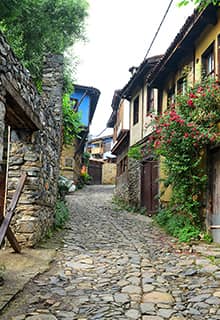
Cumalıkızık Village
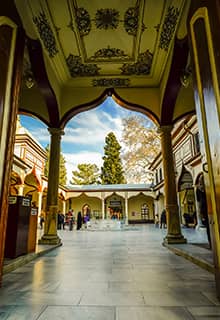
Emir Sultan Complex
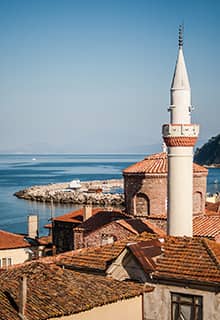
Fatih Mosque
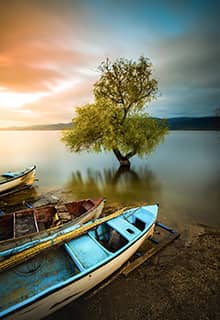
Gölyazı Village
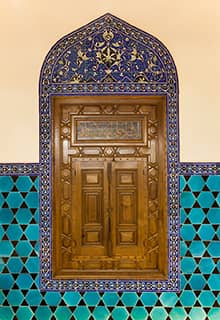
Bursa Yeşil Mosque
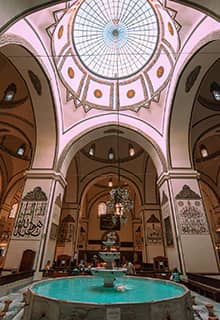
Grand Mosque
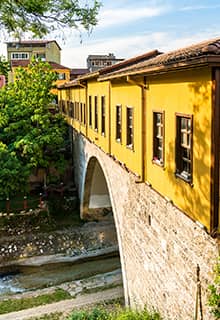
Irgandı Köprüsü
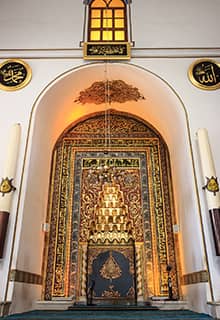
Hüdavendigar Mosque
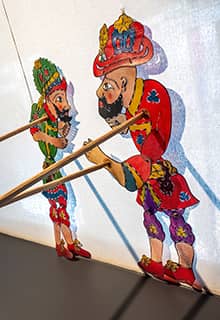
Karagöz Hacivat
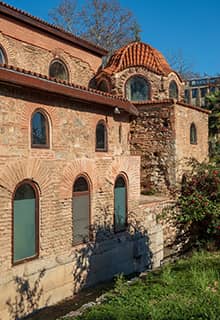
İznik Ayasofya Mosque
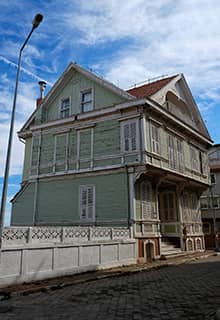
Mudanya Girit
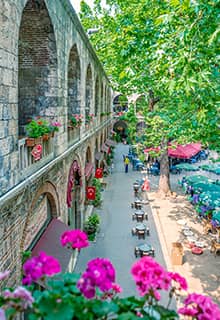
Koza Han
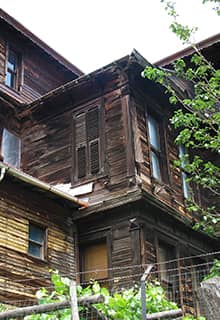
Mudurnu
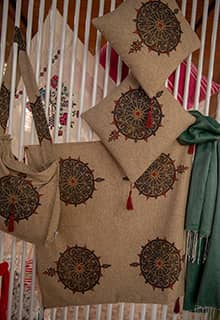
Silk Production
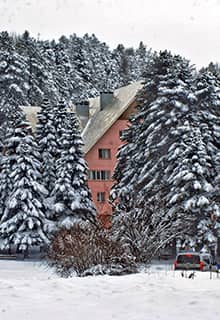
Uludağ Mountain 2543 M
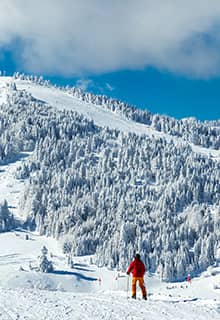
Uludağ Mountain 2543 M
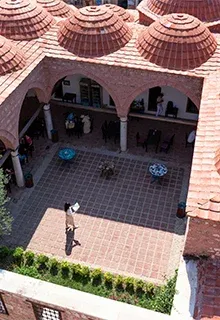
Süleyman Pasha Madrasa