
A Road Trip Through Aegean Archaeological Sites
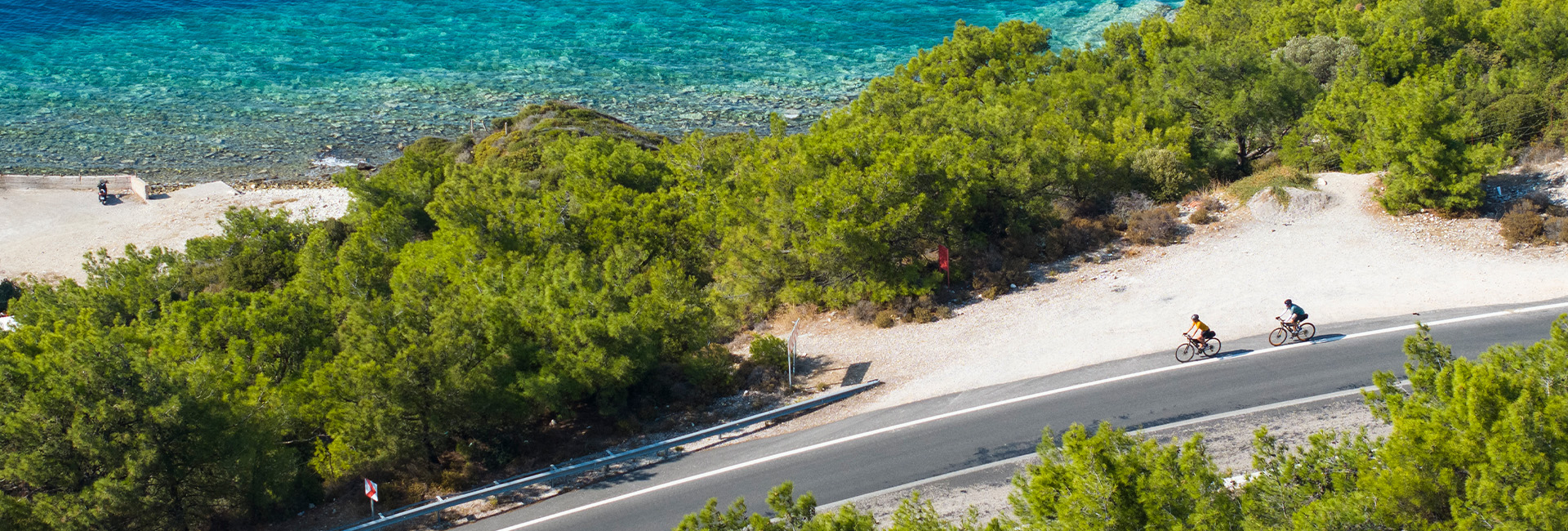
The Aegean coast of Türkiye is more than a destination, drawing visitors into a layered story that stretches from ancient civilisations to the present day. Here, a blue haze drifts over olive orchards, softening the marble colonnades that once framed lively markets and quiet temples. For anyone drawn to what lies beneath the surface, a 1-week Aegean road trip of archaeological sites promises an encounter with heritage that has endured conquests, changing faiths, and the passage of time itself. Over seven days, you can trace your own route through Aegean archaeological sites whose names still echo across centuries, discovering the ambition and devotion etched into every worn threshold and toppled pedestal. This is what we call the Aegean road trip.
Arrival in İzmir
Your Aegean road trip route begins in İzmir, a city where the modern waterfront buzzes with energy while the echoes of its long history linger just beneath the surface. As you stroll along the Kordon, the fresh sea breeze blends with the sounds of street musicians. The city feels alive yet timeless, shaped by centuries of trade and migration. Before heading south, it’s worth taking a detour west to Urla, a coastal town that wears its charm effortlessly.Urla is known for its boutique vineyards, olive oil tastings, and farm-to-table culinary culture. Nearby, Klazomenai preserves the oldest olive oil workshop ever found in Anatolia, a reminder of how deep the region’s culinary heritage runs. A stop here lets you savour the Aegean and dip into its archaeological sites.A short drive south brings you to ancient Teos, once a thriving Ionian city and site of the monumental Temple of Dionysus. Dedicated to the god of wine, theatre and ecstatic celebration, the sanctuary stands as a powerful symbol of the region’s enduring relationship with viticulture. Walking among its columns, you begin to see today’s vineyards of Urla and the neighbouring slopes of Seferihisar not simply as a modern gastronomic trend, but as part of a lineage rooted in antiquity.As evening draws in, return to İzmir with salt on your skin and the sense that something has shifted. This first day becomes less about ticking off sights and more about shedding the weight of everyday life, opening yourself to the vast narrative waiting just beyond the city’s lights.
Pergamon—Citadel of Learning and Power
On your second day, you drive north to Bergama, ancient Pergamon. Once a powerful kingdom and later a Roman provincial capital, Pergamon rises on a steep acropolis with commanding views of the surrounding plain. As you ascend the winding road, the theatre appears almost carved into the cliffs, its rows cascading dramatically toward the valley below.Walk among the columns of the Trajan Temple, peer into the Altar of Zeus’s remains, and imagine the scholars who once worked in the famous library, second only to Alexandria’s. Down in the lower city, the Asclepion sanctuary was a renowned healing centre, blending ritual and early medicine. Pergamon feels different from the coastal cities: lofty, cerebral, steeped in the confidence of a place that shaped ideas as much as trade.By late afternoon, you leave the heights behind and turn the car south again, trading the acropolis winds for a gentler landscape of orchards and olive groves. As the light softens, Selçuk begins to feel less like a destination and more like a threshold.
Selçuk—A Crossroads Between Eras
Selçuk is the kind of place where history feels close, tangible—part town, part open-air museum. In the golden light of evening, the Basilica of St John glows softly, while Ayasuluk Castle rises above it, casting long shadows over the rooftops.Settle in for the night with the sense that you have arrived at a crossroads between eras. The ruins here are not only monuments; they are invitations. And in Selçuk, the invitation feels immediate.
Ephesus—The Heart of the Aegean
The third morning begins early. Ephesus deserves all the time you can spare. Passing under the Gate of Augustus, you enter a place that feels both monumental and strangely intimate. The Marble Road stretches ahead, its surface still bearing the grooves from wagon wheels that carried trade and pilgrims. The Library of Celsus stands as a testament to knowledge and ambition, its façade delicate and towering at once.You’ll spend hours here. In the Terrace Houses, mosaics and frescoes still cling to the walls. The Great Theatre feels alive even when empty. Climb the steps to the top row and see the old harbour plain stretching toward the sea, imagining ships arriving from every corner of the Mediterranean. By the time you leave Ephesus in late afternoon, you will understand why no Aegean vacation is complete without standing among its columns. For those who want to see the site in a different light, the site also opens for summer night visits, with the ruins staying lit into the evening, turning the Marble Road and the Library of Celsus into something even more atmospheric after dark.If your time allows, you might stop in Şirince, where whitewashed houses climb the hills, and wine cellars invite you to linger. Sip a glass of the region’s renowned fruit wines as the sun sets, letting the flavours and colours of the village settle in.Further Reading: Ephesus: Exploring an Ancient City
Priene and Miletus—A Tale of Two Ports
After Ephesus, you dedicate day four to Priene and Miletus—two cities that speak in different tones. Priene, perched on its quiet slope, is a compact and contemplative city. Its streets still follow their ancient grid, guiding you past stoas, homes, and the Temple of Athena. The afternoon sun bleaches the stones almost white, and from the city’s edge, the Meander River plain stretches toward the horizon.Miletus feels more sprawling. Once a maritime powerhouse, it now lies silent, except for the cries of swallows darting over the massive theatre. Here, you can walk vaulted passages beneath the seats, climb up to look across the remnants, and imagine the harbour crowded with ships. Together, these cities show two faces of coastal Anatolia: one serene, the other grand.
Didyma—The Colossal Sanctuary
On day five, you continue to Didyma, where the Apollo Temple of Didyma towers above the surrounding village. The columns are monumental, so large that standing beneath them feels almost surreal. The steps descending into the inner sanctuary seem designed for a race of giants. In antiquity, Didyma was one of the most influential oracle centres of the ancient world.The site often feels deserted, its scale amplified by the quiet. Birds roost in the capitals, and weeds sprout between stones older than empires. You might spend hours walking the perimeter, pausing in the colonnade’s shadow, or simply sitting to absorb the stillness. Few places capture the otherworldly ambition of the Aegean archaeological sites so vividly.
Knidos—At the Edge of the Peninsula
On the sixth day, you set out for Knidos, at the very tip of the Datça Peninsula, where the Aegean meets the Mediterranean. The drive alone is worth the journey: winding coastal roads, cliffs dropping into bright water, and glimpses of small coves. When you arrive, Knidos feels like the edge of the world.The site was famous for its harbour and for the statue of Aphrodite, one of the most celebrated sculptures of the ancient world. Today, you can climb the tiers of the theatre overlooking the bay, walk the long collonaded avenues, and stand where the temples once faced the sea. Knidos is more remote than the other sites, but its isolation only adds to the sense of discovery.
Kuşadası and Return to İzmir
Your final day begins with a slower pace. After the long coastal miles, Kuşadası offers a softer rhythm. You can stroll the seafront, visit small shops, or simply sit with a coffee, watching the ferries slip across the bay. The energy here feels lighter, a soft landing after the remnants.Eventually, you return to İzmir, tracing the coastline one last time. By the end of your journey, the Aegean archaeological sites will feel less like distant relics and more like companions whose stories have become part of your own.When you finally depart the Aegean coast of Türkiye, you carry more than photographs. You take with you the knowledge that these places are the enduring record of people— Roman citizens, Eastern Roman (Byzantine) pilgrims—who built, believed, and dreamed along these shores. In retracing their steps, you discover that your Aegean road trip route has led you not just across a landscape, but deep into the shared memory of the world.