
Tekirdağ, located on Edirne-İstanbul route, became an important summer resort during the Ottoman period. There are many must-see architectural attractions in Tekirdağ city centre, especially the historical Ottoman houses and the Rüstempaşa Complex (Rüstempaşa Külliyesi) which bears Mimar Sinan’s signature.
The museums in Tekirdağ are also important in terms of presenting the historical and cultural riches of the city to its visitors.
Traditional Houses in Tekirdağ
Some of the 18th and 19th century houses in Tekirdağ have survived the onslaught of urbanisation. Some of them are wooden houses, while others are built out of stone or bricks in the Mediterranean style. The hill between the bus station and the town centre, overlooking the sea, is a good place to see these traditional houses. The streets overlooking the sea between Archaeology and Ethnography Museum (Arkeoloji ve Etnografya Müzesi) and Rakoczi Museum (Rakoczi Müzesi) are also a good area to view these old houses.
Rakoczi Museum
The 3-storey traditional Ottoman house which was home to Hungarian People’s Liberation Hero Ferenc Rakoczi II from 1720 to 1735 and was restored by the Hungarian government to be made into a museum. The museum’s collection comprises, Rakoczi's statue, documents about his life, as well as items used in that period. On the second floor, there are oil paintings of those who participated in the Hungarian independence war with Rakoczi.
Tekirdağ Archaeology and Ethnography Museum
The museum building was initially constructed as the Governor’s Mansion during the early republican period. The four sectioned museum includes stone works hall, archaeological artefacts’ hall, ethnographic artefacts’ hall and the old Tekirdağ room. The museum exhibits cultural heritage dating back to 4500 BCE. The collection includes architectural pieces from the Hellenistic, Roman and Byzantine periods, sarcophagi, stelae, altars, milestones. Inscriptions from the Ottoman period, fountains and fountain mirrors and tombstones are on display in the large garden of the museum.
Rüstempaşa Mosque and its Complex
The Islamic social complex consisted of a mosque, medrese, bedesten (covered bazaar), caravanserai, Turkish bath, imaret and library. Today, the complex’s mosque, hamam, bedesten, medrese and library are still standing. It was built in 1554 under Sadrazam Damat Rüstem Pasha and it bears Mimar Sinan’s signature. The mosque is made of cut limestone and the single balcony minaret is located on its right. The entrance door made out of walnut tree with inlayed ivory. The door wings and window sash are decorated with geometric motifs. The round, 5-column marble fountain in the garden was added under the reign of Abdülmecit.
Rüstem Pasha Bedesten
Located in the Süleymanpaşa district of Tekirdağ, the Rüstem Pasha Bedesten (Rüstem Pasha Bedesteni) stands as a vital commercial component of the historic Rüstem PashaComplex, designed by the chief Ottoman architect Mimar Sinan. Commissioned in the mid-16th century (circa 1552–1553) by Grand Vizier Rüstem Pasha son-in-law of Sultan Suleiman the Magnificent—the covered bazaar served as the financial and trade hub of the city for centuries.
Constructed using alternating layers of ashlar stone and brick, the bedesten is designed on a rectangular floor plan topped by stone domes. Its interior features vaulted shops and storage chambers historically utilized for trading precious textiles, spices, and regional merchandise. Having undergone meticulous restoration, this landmark continues to stand as an active cultural and commercial space in the heart of Tekirdağ.
Namık Kemal House
The museum was founded in memory of Turkish writer, journalist and poet Namık Kemal not far from where he was born in Tekirdağ in 1840. The building is a replica of an old Tekirdağ house. Namık Kemal House exhibits the works of Namık Kemal as well as works written on him.
The Museum of Old Tekirdağ Photographs
The family mansion that belonged to Mavridis Family before the exchange of populations in 1922, was converted into a museum and has, today, a 150-year-old collection of more than 1500 Tekirdağ photographs owned by Dimitrios Mavridis.
İbrahim Balaban Museum
The museum exhibits the paintings and personal documents of painter İbrahim Balaban donated to Süleymanpaşa Municipality.
Music Technologies Museum
The museum presents a collection of musical instruments as well as tools used in the production of musical instruments.
Heraion Teikhos Ancient City
Located along the Marmara Sea coast in the Tekirdağ province, Heraion Teikhos (Wall of Hera) stands as one of the most significant and unique ancient Thracian settlements in Türkiye. Surface surveys and archaeological excavations reveal that the site maintained continuous habitation for over three millennia, spanning from 2000 BC to the late 13th century AD.
Key archaeological finds—such as hand-molded earthenware vessels and stone hand axes—document the city's deep origins extending back through the Bronze and Iron Ages. Excavations conducted on the acropolis of this mound-shaped settlement have uncovered rich cultural layers dating from the 6th century BC through the 1st century AD. Offering invaluable insights into Thracian medicine, healing cults, and religious practices, Heraion Teikhos remains a cornerstone for understanding ancient Thracian civilization.
Muratlı Atatürk House
Located in the Muratlı district of Tekirdağ, the Muratlı Atatürk House is a dedicated historic museum preserving a memorable moment from the early Republican era. On June 3, 1936, Mustafa Kemal Atatürk visited Muratlı to personally inspect the ongoing construction of housing built for Balkan immigrants. During his visit, he was welcomed into this modest home situated right across from the train station, where the daughter of the residing family served him coffee.
Comprising three rooms and a kitchen, this single-story historic residence was subsequently restored and opened to the public as a museum. Today, the house exhibits historical photographs capturing Atatürk's visit to Muratlı, alongside period documents and regional ethnographic artifacts. Serving as an authentic representative of early Republican immigrant housing architecture, the museum stands as one of Tekirdağ's most cherished historical landmarks.
Çorlu Yılmaz Büyükerşen Sculptures Wax Museum
Located in the Çorlu district of Tekirdağ, the Çorlu Yılmaz Büyükerşen Sculptures Wax Museum (Çorlu Yılmaz Büyükerşen Balmumu Heykeller Müzesi) stands as a prominent cultural landmark seamlessly blending the city's historic heritage with art. The grand building housing the museum was originally constructed in 1903 as the Çorlu Town Hall. Following an extensive restoration in 2015, it hosted numerous cultural and artistic events until 2020.
Reopened in 2020 through the contributions of Prof. Dr. Yılmaz Büyükerşen, the historic site achieved distinction as Çorlu's very first art museum. The museum features a remarkable collection of 110 lifelike wax sculptures depicting significant historical figures along with national and international celebrities. Housed within the impressive ambiance of the former town hall, the museum offers visitors a compelling journey through history, culture, and art.
Orta Mosque
Located on Hükümet Avenue in Süleymanpaşa, Tekirdağ, the Orta Mosque (Orta Cami) was rebuilt on its original site by local benefactors after the primary 1856 structure built by Kürkçü Sinan Bey collapsed. Featuring a rectangular plan constructed with rubble stone, a hipped roof, and a flat timber ceiling, the mosque includes a entrance porch supported by two wooden columns. Its interior is adorned with decorative woodwork and acanthus-leaf column capitals. Completed with a slender ashlar minaret with a single balcony, it remains an elegant piece of regional heritage.
Ayas Pasha Mosque
Located in the Saray district of Tekirdağ, the Ayas Pasha Mosque (Ayas Paşa Camii) is a historic house of worship commissioned in 1525 by the Ottoman Grand Vizier Ayas Mehmed Pasha. Dedicating a significant portion of his wealth to public works in Saray—including mosques, schools, madrasas, and soup kitchens—Ayas Mehmed Pasha left behind a lasting architectural legacy. The inscription on his tombstone, dated "Evahir-i Safer 946" (following his passing in 1538), marks this rich era. Notably, the famed Divan poet Fırıncı Mehmet Efendi (Pilavcı Dede) was a grandson of Ayas Pasha, adding further cultural depth to the family legacy.
Architecturally, the mosque is a compact yet elegant ashlar structure comprising a portico for latecomers (son cemaat yeri) and a main prayer hall crowned by a single dome. Its slender cylindrical minaret featuring a single balcony accents its classic skyline. Enclosed by a tranquil garden with historic boxwood trees and a charming ablution fountain (şadırvan), Ayas Pasha Mosque remains one of the district's most cherished historical landmarks.
Gazi Ömer Bey Mosque and Tomb
Located in the bazaar area of the Malkara district center in Tekirdağ, the Gazi Ömer Bey Mosque and Tomb (Gazi Ömer Bey Camii ve Türbesi) stands as one of the oldest surviving examples of early Ottoman architecture in Rumelia. Constructed in 893 AH (1488 AD), the historical complex reflects the deep-rooted Ottoman heritage in the region.
The mosque honors Gazi Ömer Bey, a valiant Ottoman commander who served during the reign of Sultan Mehmed the Conqueror. Trained alongside his father, Gazi Turhan Bey (the conqueror of Morea), Ömer Bey distinguished himself through numerous acts of heroism on the battlefield. His tomb is situated within the mosque's courtyard, positioned to the left (northeast) of the main structure. Preserving both architectural and historical significance, the complex remains a cornerstone of Malkara's heritage.
Çorlu Süleymaniye Mosque
Standing as one of the most significant historical landmarks in the Çorlu district of Tekirdağ, the Süleymaniye Mosque (Süleymaniye Camii), also known as Camii Kebir, was commissioned in 1521 by the Ottoman Sultan Suleiman the Magnificent. Exemplifying classic Ottoman architecture, the mosque features a central main hall covered by a single large dome, while its latecomers' gallery (cemaat mahfeli) is sheltered by three smaller domes.
When first constructed, the complex also housed a prominent madrasa consisting of 22 rooms, making it a pivotal center for community and scholarly life for centuries. Commonly referred to as "Camii Kebir" (The Grand Mosque), this historic structure remains a cornerstone of Çorlu's cultural and architectural heritage.
Güzelce Hasan Bey Mosque
Located in the center of the Hayrabolu district in Tekirdağ, the Güzelce Hasan Bey Mosque (Güzelce Hasan Bey Camii) was commissioned in the late 15th century by Güzelce Hasan Bey, the son-in-law of Ottoman Sultan Bayezid II. According to its foundation inscription, the mosque was completed in AH 905 (October 1499). Locally known also as the "Ulu Cami" (Grand Mosque), Hasan Bey endowed the revenues of Dânişmendli and Midyeli villages near Dimetoka to ensure the mosque's upkeep and operation.
Representing an early and distinguished example of classic Ottoman architecture in the region, the mosque is built on a square plan using fine ashlar stone masonry. Standing as a cornerstone of Hayrabolu's historical landscape for centuries, Güzelce Hasan Bey Mosque remains one of Tekirdağ's most cherished cultural landmarks.
Marmara Ereğlisi Lighthouse
Positioned atop the headland at the southern tip of Ereğli Bay in Tekirdağ, the Marmara Ereğlisi Lighthouse (Marmara Ereğlisi Deniz Feneri) has been aiding maritime navigation across the Sea of Marmara since January 1, 1861. Situated 52 meters above sea level, the structure features a 26-meter-high metallic tower. Powered by an electrical battery system with a 50W bulb, its revolving light mechanism projects a beam visible from up to 16 nautical miles away.
Accessible via a narrow unpaved road leading from the town center, the lighthouse complex and keeper's quarters are enclosed within a fenced perimeter, surrounded by open paths that guide visitors along both sides of the cape. Those exploring the coastal side encounter an ancient cave originating from the historic city of Perinthos, while the trails behind the lighthouse offer elevated panoramic views overlooking the local fishing harbor and Marmara Ereğlisi.
Hora Lighthouse (Hoşköy)
Located in the Hoşköy village of Tekirdağ's Şarköy district, the Hora Lighthouse (Hora Feneri / Hoşköy Deniz Feneri) has been guiding vessels across the Sea of Marmara since 1861. Commissioned during the reign of Sultan Abdülmecid and engineered by French architects, the structure stands as an extraordinary historical monument that has remarkably preserved its original architectural integrity over the centuries.
Constructed entirely from cast-iron and steel panels, the tower soars over 20 meters high, exemplifying the advanced engineering standards of the 19th century. Its original optical crystal lens system, imported from France, remains fully operational to this day. Framed by surrounding vineyards, olive groves, and panoramic views of the Marmara coastline, Hora Lighthouse represents one of the most compelling heritage stops along the Şarköy coastal route.
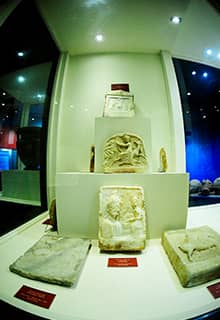
Archaeology and Ethnography Museum
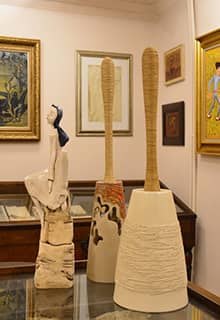
İbrahim Balaban Museum
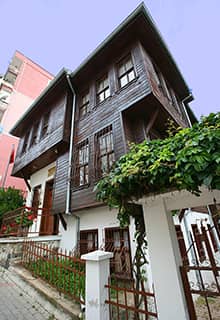
Namık Kemal House
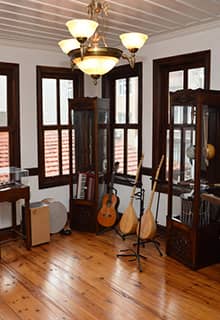
Music Technologies Museum
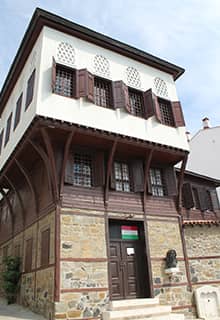
Rakoczi Museum
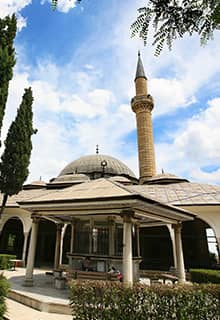
Rüstem Paşa Complex
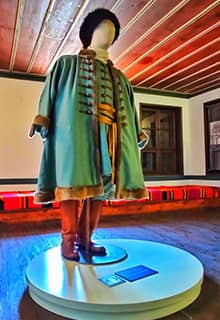
Rakoczi Museum
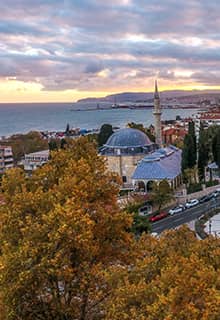
Rüstem Paşa Complex