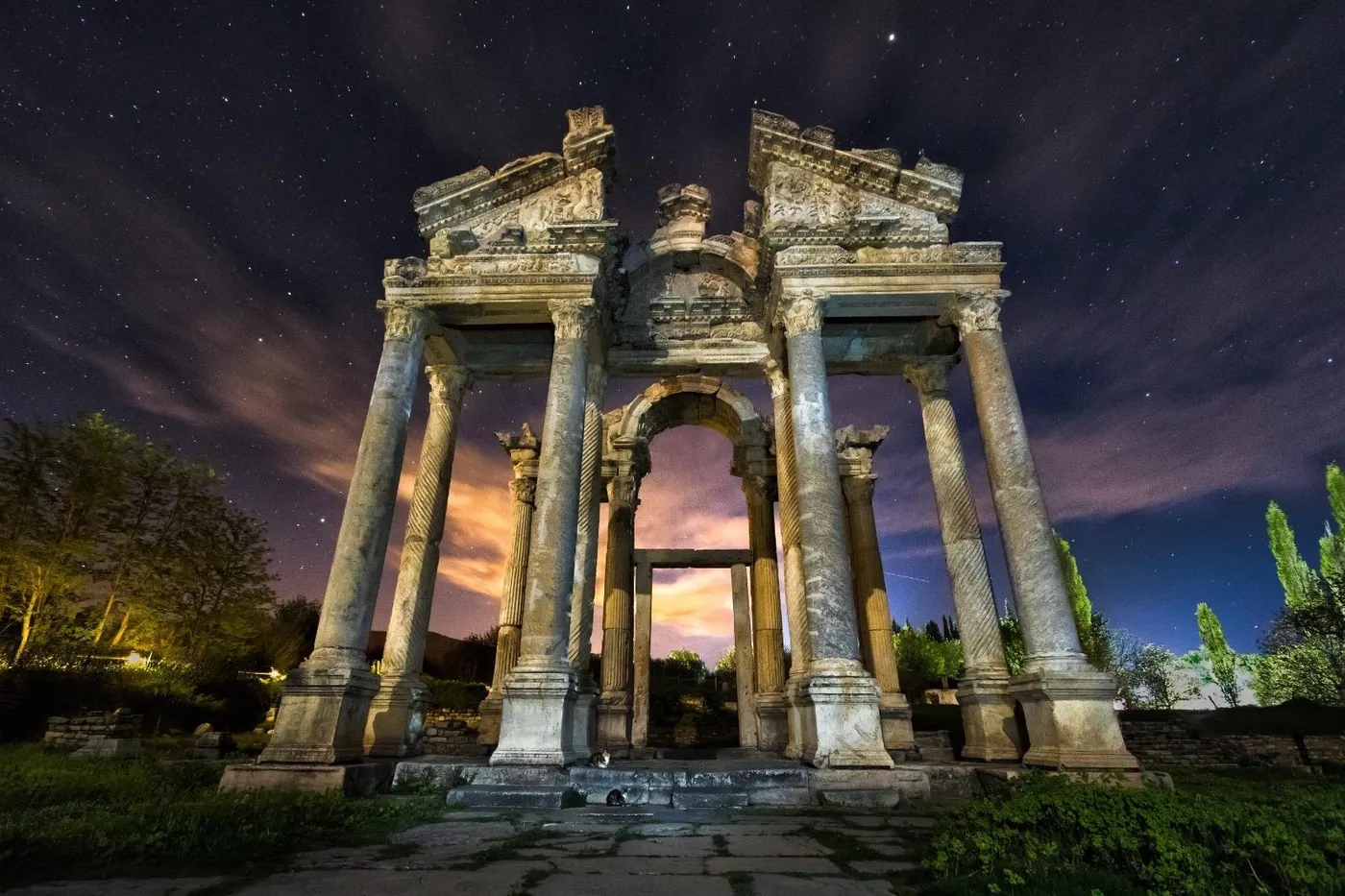

Türkiye’s Night Museums Project, designed to make the country’s rich cultural heritage accessible beyond regular visiting hours and offer visitors a unique way to experience its historic landmarks, has officially launched its third season. The program invites visitors to experience some of Türkiye’s most iconic museums and archaeological sites after dark, creating a distinctive cultural journey that combines history, atmosphere, and discovery.
Having attracted well over 1 million visitors in 2025, the project will enable guests to explore 20 museums and archaeological sites during evening hours between June 1 and October 1 in 2026. From Nemrut to Ephesus, and from Zeugma to the Galata Tower, the sites will welcome guests from 7 pm until their designated late-night closing hours.
Beyond enriching Türkiye’s cultural tourism offering, the Night Museums Project also contributes to the preservation and sustainable management of heritage sites by distributing visitor traffic more evenly throughout the day. By extending access beyond conventional opening hours, the initiative helps ease daytime congestion, encourages longer stays, and fosters deeper engagement with the country’s cultural treasures.
İstanbul Museums by Night
Türkiye’s cultural capital İstanbul is the first destination where you can see iconic sites and museums in a new nocturnal light. The İstanbul Archaeological Museums, Türkiye’s first museum, housing an outstanding collection from various civilisations; the Galata Tower, offering iconic views of the city; and the Turkish and Islamic Arts Museum, housed in the former İbrahim Pasha Palace, offer a truly unique after-dark cultural journey in the city this summer. Imagine seeing the world’s oldest known peace treaty and one of the oldest love poems at the İstanbul Archaeological Museums, witnessing the panoramic views of the city lights and the Golden Horn from the Galata Tower, and then diving into the depths of the Turkish and Islamic Arts Museum’s collections.
Experience Antiquity under the Aegean Sky
On the other hand, the first ancient city one can see glowing beneath Türkiye’s star-studded sky is Ephesus. Located in İzmir, at the heart of the Aegean, Ephesus is among the best-preserved Roman cities in the world and seems to be reborn under night illumination, with its monumental landmarks in full view.
Other ancient sites where history comes alive at night in the Aegean include Denizli’s gem, Hierapolis, and the Temple of Apollo in Didyma in Aydın. Hierapolis, named after Hiera, the wife of Pergamon’s legendary founder Telephos, is especially enchanting under the dark sky, with its brightly illuminated theatre and streets, as well as its cotton-like travertines. The well-preserved Temple of Apollo in Didyma, one of the largest temples of the ancient world, built in the Ionic style, also impresses with its graceful columns and striking architecture under night illumination.
Starlit Journey across the Turkish Riviera’s Heritage
Antalya, the heart of the Turkish Riviera, is a city that combines 300 days of sunshine and crystal-clear blue waters with a rich ancient heritage, spanning the historic regions of Lycia, Pamphylia, and Pisidia. This unique location makes it home to some of the most enchanting ancient cities in the region. Among them, Aspendos, Patara, and Side can also be explored under the blanket of night. Aspendos, with its massive, well-preserved Roman-era theatre; Patara, with the world’s first democratic assembly building and its newly restored lighthouse; and Side, with its iconic seaside Temple of Apollo, welcome visitors at night with special lighting. Additionally, the Alanya and Lycian Civilisations Museums also remain open in the city, adding another layer to the cultural journey of visitors.
Anatolian Gems under the Moonlight
Many other historical sites across Anatolia are also included in Türkiye’s list of Night Museums. Adıyaman’s Mount Nemrut, which attracts worldwide attention with its enormous ancient god statues; the Tombstones of Ahlat in Bitlis, rare, intact examples of early Turkish masonry and craftsmanship; and Cappadocia’s rock-carved Derinkuyu Underground City, which provided shelter to early Christians, are not-to-be-missed illuminated sites. The capital Ankara’s Museum of Anatolian Civilisations, Gaziantep’s Zeugma Mosaic Museum, and Şanlıurfa’s Archaeological Museum and Haleplibahçe Mosaic Museum also offer visitors the chance to explore their exceptional collections late into the night.