
Through the Eyes of the Gypsy Girl: The Hidden Story of Zeugma Behind the Mosaics
Gaziantep’s Zeugma is renowned for its archaeological richness and well-preserved Roman-era mosaics. The ancient city and its mosaics provide a wealth of information for exploring the heritage of Anatolian civilisations. The fascinating tale of Zeugma Archaeological Site and its mosaics began in ancient times and has echoed through the modern world. Here is a brief history of Zeugma, along with everything you need to know about this magical archaeological site and its colourful ancient mosaics.
Once Upon A Time, Along the Euphrates River
Zeugma was an ancient city that existed since the ancient Roman era. It was founded by Seleucus I Nicator, one of Alexander the Great's generals, around the 3rd century BCE. Located in Belkıs Village along the Euphrates River, it was a vital centre of trade and culture for roughly 500 to 600 years before its decline following a Sassanid invasion during the Roman period. Much of the city remained buried until large-scale excavations began in the 1990s, especially after flooding in the area following the construction of the Birecik Dam.While many of the most valuable artefacts, such as mosaics and sculptures, have been transferred to the Gaziantep Zeugma Mosaic Museum for preservation, the archaeological site itself still contains other grand relics in the Belkıs Village. In the Zeugma Archaeological Site, visitors can see the remains of Roman villas, some with partial mosaic floors, public bath structures, walls, and foundations of buildings, as well as sections of paved streets and water channels that once formed part of the city's infrastructure. The parts of the fortification walls and city layout are still visible if you’re interested in the urban planning of the time.Today, Zeugma endures through its remnants, which continue to bear the marks of its people’s spirit and the city’s architectural marvels. The Gaziantep Zeugma Mosaic Museum, which houses mosaics, frescoes, and sculptures, takes this experience to a whole new dimension.
Nowadays, Resting in Gaziantep
The Gaziantep Zeugma Mosaic Museum, located in Gaziantep, was established in 2011 to preserve the mosaics and frescoes from the ancient city. It is now one of the largest mosaic museums in the world, which embraces a stunning collection of Roman mosaics, including the famous and iconic "Gypsy Girl". You can visit the museum to see mosaics, statues, frescoes, and other relics excavated from the Zeugma. Designed to preserve and display these remarkable works, the museum reflects the artistic heritage of Zeugma and Greco-Roman culture, along with a vivid glimpse into daily life and mythology.
The “Gypsy Girl” Mosaic
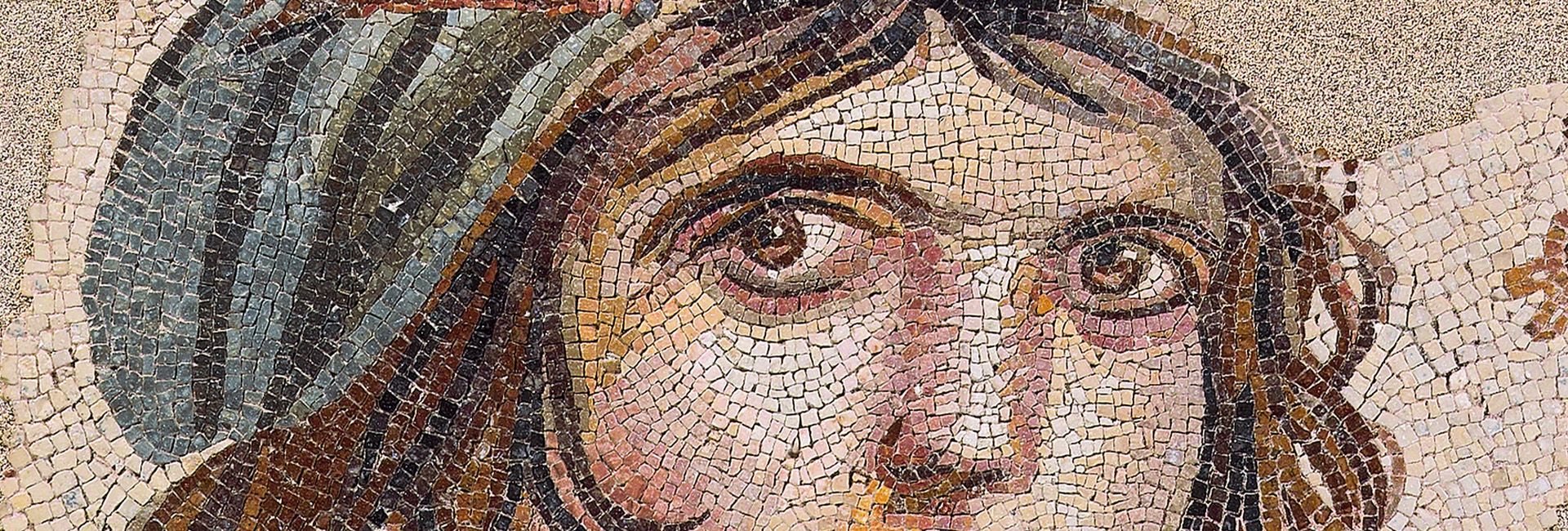
The Gypsy Girl mosaic is one of the centrepieces of the Gaziantep Zeugma Mosaic Museum, and a powerful symbol of both the site and the museum itself. The mosaic portrays a young girl with large, expressive eyes and tousled hair, partially covered by a patterned headscarf. Her identity remains unknown, adding to the mysterious aura that surrounds the artwork. One of the most striking aspects of the Gypsy Girl is her gaze. Unlike many other portraits of the period, she looks directly toward the viewer in a way that creates a sense of psychological depth. Her eyes seem to follow you across the room, giving the painting a haunting sense of presence and engaging the viewer in an almost conversational way.The mosaic's discovery also symbolises the cultural richness of Zeugma and the importance of preserving archaeological heritage. Today, the Gypsy Girl mosaic is not only a masterpiece of Roman mosaic art but also a cultural emblem for Gaziantep and Türkiye, which represents the silent voice of an ancient world. Through her timeless gaze, she continues to bridge the past and the present, inviting each visitor into a quiet dialogue across centuries.
Experiencing a Virtual Museum
The Gaziantep Zeugma Mosaic Museum combines traditional and modern museology with its virtual museum, which blends high technology with the sounds of antiquity, merging past lives with modernity. You can visit the virtual museum from the official website to examine ancient mosaics, frescoes, and sculptures in detail.Through the virtual museum, which allows for the viewing of every section and room of the museum from anywhere in the world, it is possible to view the mosaics and frescoes of Zeugma. Even after visiting the museum, you can take a closer look at what specifically interests you and enjoy the unique mosaics of ancient times.Zeugma brings the stories of ancient times to the present day through the remnants of its ancient city and the mosaics preserved in the museum. Accompany this journey and check out this video for more: Zeugma.