
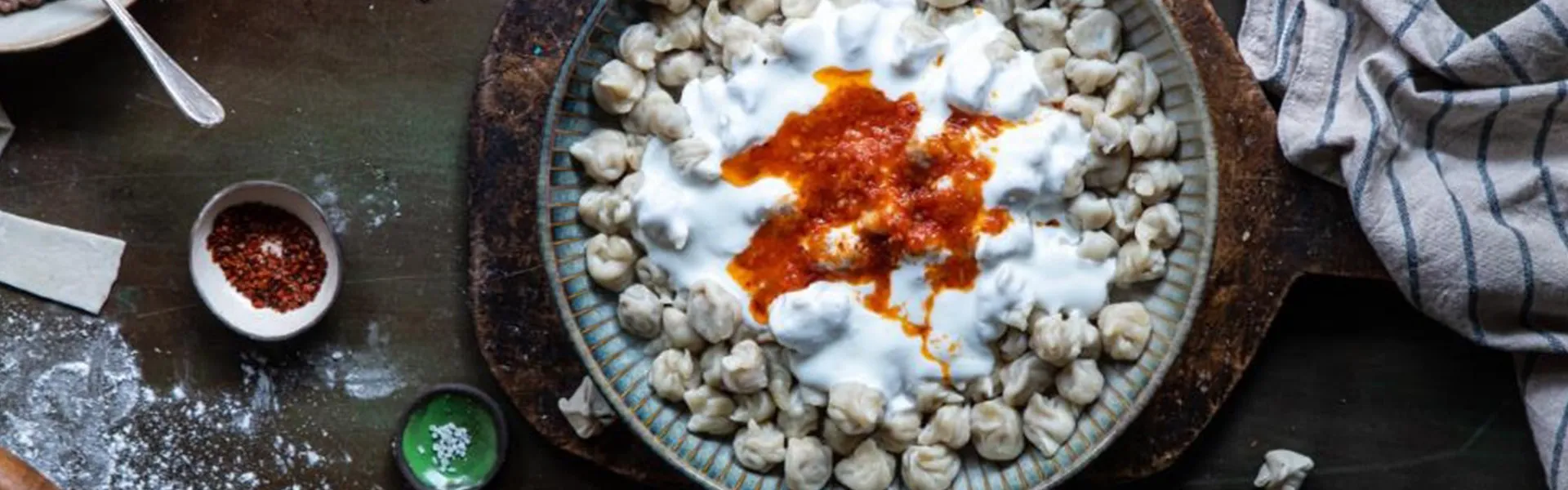
Mantı: Traditions, Rituals, and Regional Variations
Mantı can be defined as a broad category of small, filled dumplings in Turkish cuisine. At its core, it consists of thin pieces of wheat dough wrapped around a simple filling, usually ground meat or potato. Then boiled, steamed, or baked and typically served with yoghurt and a butter-based sauce.Since the recipe is demanding and needs a large group of people to make, mantı is associated with family gatherings or significant days. Along with its balanced and unique taste, the dish has a unique place in Turkish gastronomy due to the cultural connotation and gratitude towards the preparers.In this blog, we will explore the history of mantı, its basic preparation, its regional variations, and the deeper meanings it holds in Turkish culinary culture.
The Origins of Mantı
Turkish mantı traces its origins not to Anatolia, but to the broader world of Central Asian Turkic cultures. Along the Silk Road, small parcels of dough filled with meat were carried and shared by travelling communities, gradually taking different forms and names. Many historians see connections between these early dumplings and East Asian examples, but what we now call Turkish mantı is the result of a long process of adaptation.When Turkic groups began to settle in Anatolia, they brought this dumpling tradition with them and reshaped it with local ingredients. Wheat flour, yoghurt, clarified butter and regional spices created a new flavour profile that distinguished Anatolian mantı from its Central Asian relatives. Over time, these tiny dumplings became part of everyday family meals as well as festive tables in towns and villages across the region.In Ottoman cuisine, mantı appears in early cookbooks as small pieces of dough filled with minced meat and sometimes pulses, cooked and served with yoghurt, butter and spices. Later printed recipe collections from the 19th century show dishes very close to today’s mantı, sometimes under different names, which suggests that the word and the form were still evolving. These written traces reveal how a travelling dumpling tradition gradually settled into the diverse regional mantı styles found in Türkiye today.With the founding of the Republic and the rapid urbanisation of the 20th century, Turkish mantı gradually moved from being a mostly home-made, celebratory dish to an everyday symbol of comfort in Turkish cuisine. Home cooks kept the labour-intensive, hand-folded versions alive, while new “mantı houses” in big cities began to specialise in different regional styles and introduced the dish to a wider, urban audience.
More Than a Dish: Cultural Meanings of Mantı
In Türkiye, mantı is closely associated with patience, skill and togetherness. Preparing it by hand is time-consuming, so families and neighbours often gather around the table to roll the dough, cut small squares and fold each piece, turning cooking into a shared ritual. This collective effort makes mantı a natural choice for special occasions, weddings and holiday meals.Mantı also carries strong meanings of hospitality and care. Serving home-made mantı to a guest is seen as a generous gesture because it reflects hours of work and attention devoted to their visit. In many homes, a plate of mantı is more than a simple meal; it is a warm expression of love, belonging and Turkish culinary heritage.
Inside the Dough: The Basics of Mantı
The two essential elements of the recipe can be understood as the dough and the filling. While the texture, thickness or seasoning may change from region to region, the basic technique of wrapping a small amount of filling in a thin layer of dough remains the same. This shared structure is what connects different styles of mantı across Türkiye.The dough must be simple yet strong enough to hold its shape. It is usually made from flour, water, salt and sometimes egg, then kneaded until smooth and elastic before being rolled out into a thin sheet. The thinner the dough, the lighter the overall bite, which is one of the key qualities associated with well-made mantı.The filling is equally important in creating a balanced taste. Traditionally, it is made with finely minced meat, onion and gentle spices, though some regions prefer potato or other variations. Using well-chosen, aromatic spices and fresh ingredients in the filling will enhance the flavour of your mantı and create harmony with the delicate dough.
Regional Variations
As mentioned, Turkish mantı has diverse recipes, changed according to local preferences. Let’s discover the several shapes and tastes of mantı; each one is delicious and unique.o Kayseri MantısıThe classic and renowned recipe of Turkish mantı, which belongs to Kayseri and has an official geographical indication. In Türkiye, when you mention mantı, people mostly picture the tiny, tightly folded dumplings of Kayseri mantısı. Because its preparation is difficult and requires great care, it is considered a dish for special occasions.Kayseri mantısı is made with a lightly spiced minced meat filling and a simple, unleavened dough made from flour, water, salt, and sometimes egg, rolled out very thin. Its shape resembles a small bundle, and it is often made so tiny that it lives up to a popular saying: ‘the best manti is the kind so small that forty pieces can fit into a single spoon.’o HingelHingel is another local variation of Turkish mantı, but generally larger and more rustic in character. The well-known version is Erzurum hingel, which has been registered as a geographical indication. The dough is rolled slightly thicker, cut into larger pieces and folded into plump parcels, usually filled with minced meat and served with garlicky yogurt and a simple butter-based sauce.In central Anatolia, a different interpretation is known as Sivas hingel. It differs from the classic Kayseri-style mantı in its larger, pillow-like shape, its warmly spiced potato filling, and its rich butter-based sauce. This recipe is mostly famous in Sivas and surrounding provinces; with its delicious sauce made with fresh butter gently heated with paprika, it has a distinctly homely and comforting character.o Sinop MantıSinop mantı is a regional Black Sea interpretation of Turkish mantı, officially protected as a geographical indication. It is made from thin dough cut into larger squares, then folded into small, ear-like parcels and gently boiled, giving it a softer, slightly more rustic texture than the tiny shapes of Kayseri mantısı.Its most distinctive feature is the way it is served: traditionally on one plate with two toppings side by side, garlicky yogurt on one half and plenty of crushed walnuts on the other, often finished with a drizzle of melted butter. This combination of tangy, creamy and nutty flavours has turned Sinop manti into one of the city’s culinary symbols.
Modern Interpretations
Mantı, a type of dumpling, is visually appealing as well as uniquely balanced in flavour. Its elegant and appetising look makes it an ideal dish for reinterpreting traditional shapes and tastes in contemporary presentations.Thus, in fine dining and other modern culinary techniques, it has become a favourite canvas for chefs. Although the basic recipe does not change dramatically, many renowned restaurants create mantı with new shapes and inventive fillings to offer their guests authentic and distinctive plates.Today, these creative interpretations sit alongside the traditional recipe prepared at home and in local restaurants. From family kitchens to tasting menus, mantı continues to evolve while preserving the comforting character that makes it a timeless symbol of Turkish culinary culture.