
Mussels in Turkish Culinary Culture: From Coastal Tables to Urban Streets
The seafood culture of Turkish cuisine dates back hundreds of years, as the country’s fertile lands are bordered by three seas. From octopus to mussel, the variety of seafood recipes once adorned the tables and now continues to influence modern gastronomy. The mussel is one of the most unique and delicious seafood dishes of Turkish cuisine. Whether you’re walking along the coast of the Marmara Sea or exploring the new flavours in a fine-dining restaurant, the mussel recipes greet you with their delicate balance of briny saltiness and subtle sweetness, evoking the pure taste of the sea.Let’s go beyond the salted sea smell of the mussel in Turkish cuisine by discovering the (hi)story, cultural context and recipes.
Historical Evolution: From Empire Shores to Street Food
Mussels have been consumed along the Turkish coasts for centuries, but their role in cuisine has evolved over time. Some sources suggest that shellfish occasionally appeared in Ottoman palace kitchens, though they were far more common in coastal and urban communities. The tradition of mussel consumption likely predates the Ottomans, with Eastern Roman (Byzantine) influences shaping early preparation methods.By the late Ottoman period, coastal communities in İstanbul began popularising stuffed mussels (midye dolma), which later spread across the city as street food. This historical background provides the foundation for the modern reinterpretations seen in contemporary Turkish cuisine, where mussels appear both in fine dining and in the beloved street-food tradition.
The Classics: Three Recipes for Turkish Mussels
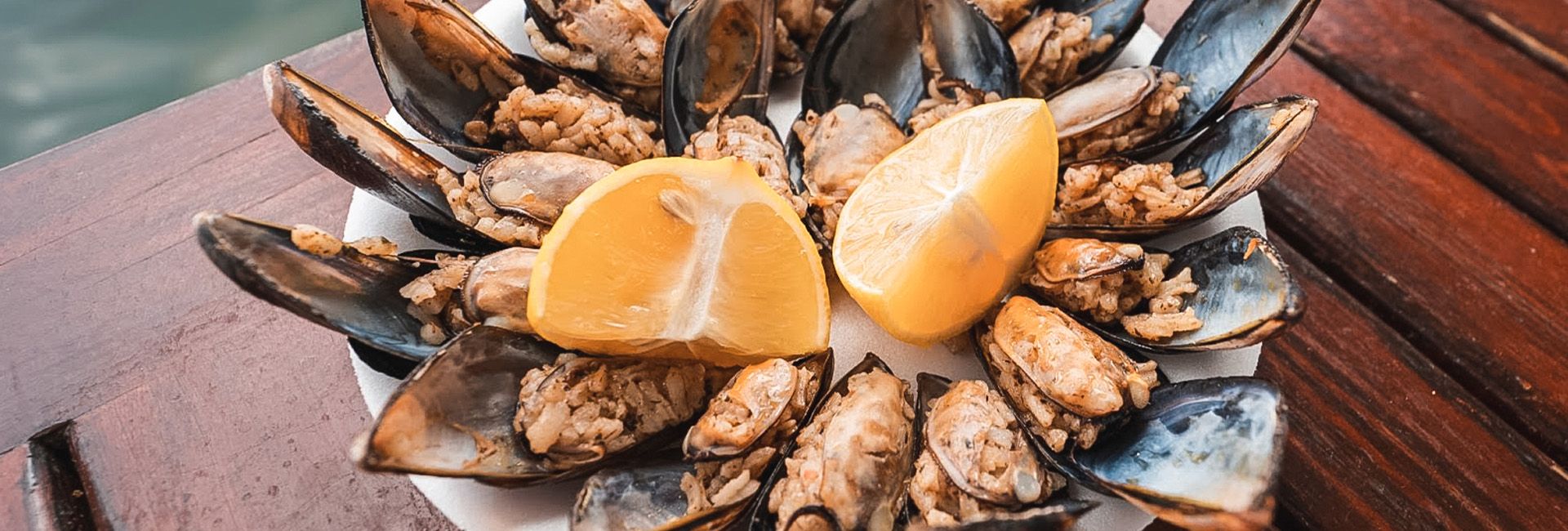
Mussels are commonly used in Aegean and Mediterranean cuisine, appearing in soups, pastas, or salads. However, these three Turkish recipes are popular versions that blend traditional methods with local ingredients.1. Stuffed Mussels: o Mussels filled with spiced rice, pine nuts, and currants are usually served with a squeeze of lemon.o Sold by street vendors, enjoyed by many, from coastal communities to bustling Istanbul streets as a nighttime ritual.2. Fried Mussels o Batter-fried mussels on skewers, served with tarator sauce.o From taverns to seaside restaurants, it is also popular as a street food in its sandwich form.3. Mussel Casseroleo A warm, baked version, containing tomato, garlic, butter, and cheese.o Found in traditional seafood restaurants.
Eastern Roman and Ottoman Cuisine: Back to the Roots
Eastern Roman culinary practices, particularly in coastal regions, emphasised the use of shellfish, including mussels. This tradition was integrated into Ottoman cuisine, especially in İstanbul, where fish and seafood culture gained prominence in the palace during the reign of Sultan Mehmet II and his successors. Notably, Sultan Selim II (1566–1574) was known for his love of fish dishes, often enjoying fresh fish while touring the Bosphorus.While mussels were not the most common ingredient, they were included in Ottoman palace cuisine in dishes such as mussel-stuffed cabbage (midyeli lahana sarması). Outside the palace, mussels were widely consumed in İstanbul's coastal communities, which played a significant role in popularising mussel-based dishes like stuffed mussels (midye dolma) and fried mussels (midye tava), now iconic in Turkish street food.
Mussel as a Part of Street Food Culture
In İstanbul, while you’re walking the seaside in Eminönü or Kadıköy, you can see mussel vendors everywhere, serving freshly prepared stuffed mussels (midye dolma). Originally an İzmir specialty, midye dolma is now enjoyed all over Türkiye, especially in İstanbul, and beyond these well-known spots, you can find it in various districts across the city. In the historic areas of Sultanahmet and Sirkeci, vendors cater to both locals and tourists.Filled with spiced rice and pine nuts, these mussels are mostly enjoyed as a nighttime snack, but you can also grab them during the day as a quick bite while strolling along the waterfront. Along with the salty sea smell coming from the Bosphorus, grabbing a bite from the stuffed mussels is a part of İstanbul’s social rituals. Although it started as an İzmir street-food classic, the tradition of consuming midye dolma isn’t limited to any one city. Coastal regions and fishing villages along the Aegean and Mediterranean coasts have their own variations, often influenced by local spices and ingredients. This widespread appreciation underscores the dish's deep roots in Turkish culinary culture.
Gastronomic Discoveries: Mussels in Modern Recipes
Mussels have long been cherished in Turkish culinary tradition, particularly along the Aegean and Mediterranean coasts. In their traditional form, mussels are often enjoyed as a street food, with stuffed mussels (midye dolma) being a quintessential example. While midye dolma remains iconic, chefs across the city are incorporating mussels into innovative dishes that blend tradition with contemporary flair. These are typically filled with a spiced rice mixture and served as a quick snack, especially popular in coastal areas and urban centres such as İstanbul and İzmir. The preparation of these mussels is a meticulous process, involving cleaning, stuffing, and sometimes frying, reflecting the deep-rooted cultural practices surrounding this dish.In modern Turkish gastronomy, chefs are reimagining mussels by integrating them into innovative dishes that blend traditional flavours with contemporary techniques. For instance, some chefs have created edible mussel shells using ingredients like tamarind and squid ink, filled with mussel meat and rice, offering a playful yet refined take on the classic midye dolma. Additionally, mussels are being incorporated into fusion dishes featuring global flavours like gochujang, showcasing their versatility beyond traditional preparations. These modern interpretations not only highlight the adaptability of mussels but also celebrate Türkiye’s rich culinary heritage in a contemporary context.