
The Spiritual Rhythm of Mevlevi Sema Ceremonies
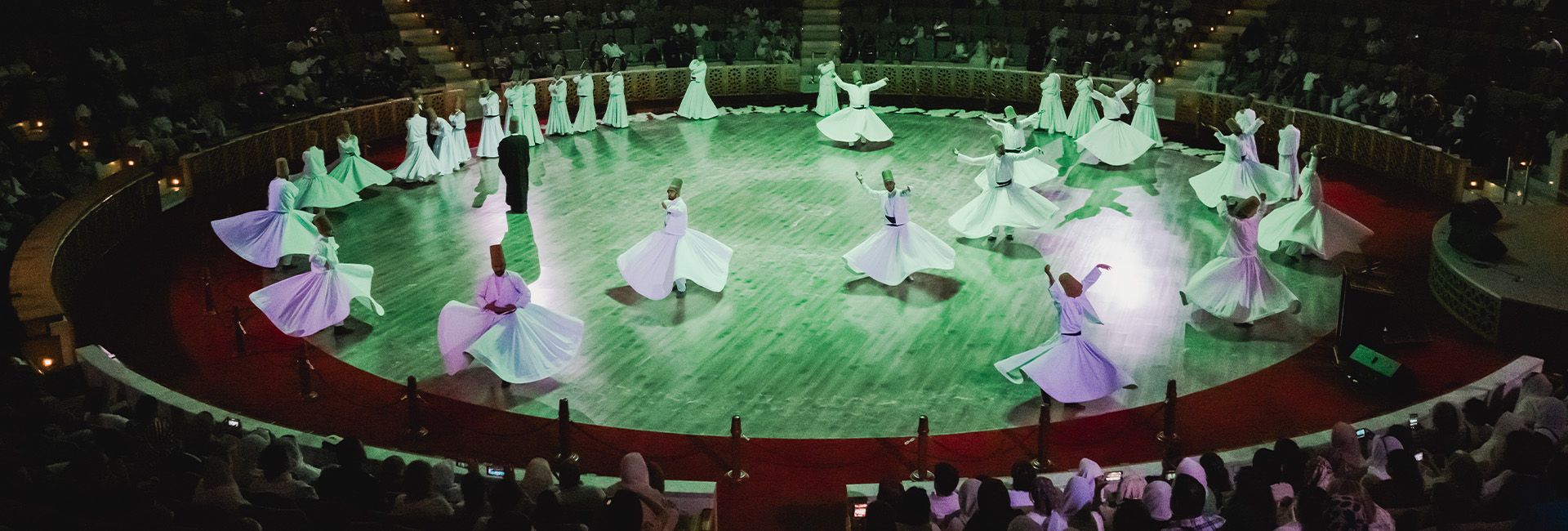
The sema begins in stillness. A breath of the ney pierces the silence, carrying a sound that seems less played than remembered. Dervishes, cloaked in black, step slowly into the circle. With a bow, they cast off their cloaks, revealing white garments that shimmer as they turn. The skirts open, arms extend, and the room fills with a rhythm at once intimate and cosmic. Each rotation is more than movement; it is a prayer in motion, a gesture of surrender, a step closer to the divine.This ceremony, often seen today as the whirling of dervishes, is believed to have its roots in the life of Rumi, who, according to tradition, would enter a state of spiritual ecstasy and begin to whirl upon hearing the rhythmic sound of a hammer striking in a goldsmith's shop. What began as spontaneous expressions of longing grew into one of the most distinctive rituals of Sufism. Within the Mevlevi Order, founded by Rumi’s followers, the sema became not just an act of remembrance but a structured journey of the soul: a passage from the self to the Beloved, from the finite to the eternal.More than a performance, the sema embodies centuries of faith, poetry, and philosophy that continue to echo in Türkiye’s cultural and spiritual life. To witness it is to glimpse a tradition where music, movement, and silence converge in rhythm with the heart’s deepest search. Further Reading: Sufi Path of Love: Mevlânâ
What is the Mevlevi Order and Sufi Tradition?
The Mevlevi Order, shaped by the teachings of Rumi (Hz. Mevlânâ), is one of the most recognisable Sufi traditions. Sufism emphasises love, remembrance of Allah, and spiritual closeness through practices that nurture the heart and the soul. Within Mevlevilik, the sema ritual holds a central position. It first appeared after Rumi’s encounters with Shams of Tabriz, when he began to whirl spontaneously upon hearing sounds that moved him — most famously, the rhythmic hammering of a goldsmith. These early moments were not structured ceremonies but expressions of inner ecstasy, or vecd.
The Meaning of the Whirling Dance of the Whirling Dervishes
The term sema originates from the root meaning “to hear” or “to listen.” In a spiritual context, it encompasses listening to divine sounds and the movement that arises from this inner inspiration. For the Mevlevis, sema represents a journey of the soul towards divine unity. As dervishes turn, they leave behind the self and material world, aiming to dissolve in Allah’s presence. This is not merely a dance but a physical, emotional, and spiritual rotation: turning with the body, the heart, and the soul. You can find further information on whirling dervishes here.
How is the Mevlevi Sema Ceremony Performed?
Over time, sema transitioned from a spontaneous whirling to a carefully structured ritual, especially under Rumi’s successors, such as Sultan Veled. Today, the sema is performed in a space called the Semahane and is also known as mukabele, meaning “encounter” or “facing face-to-face.” The ceremony begins with prayers, Quran recitations, and readings from Rumi’s Masnavi. The music builds with ney (reed flute), kudüm (small kettle drums), and other instruments, leading into the Devr-i Veledi, the ritual circle of walking and greeting one another. The core of the ceremony unfolds in four stages called selam, where semazens remove their black cloaks to reveal white garments symbolising purity and start to whirl. Their rotations represent stages of spiritual knowledge, progressing from knowing Allah through learning, to vision, to certainty, and ultimately, union with Allah. In the final stage, the sheikh also joins the whirling, the Post Sema, signifying the culmination of the spiritual journey. The ritual concludes with prayers, recitations, and a collective hu (a breath of divine remembrance).
Mevlevi Order on the UNESCO Intangible Cultural Heritage List
The sema has been recognised internationally as part of humanity’s living traditions. Mevlevi Sema ceremonies are listed on UNESCO’s list of Intangible Cultural Heritage of Humanity, reflecting their spiritual significance and role in Türkiye’s cultural history. This recognition underscores the ceremony’s value as a form of faith, philosophy, and identity that has persisted over centuries.
Mevlana Museum and Ceremonies in Konya
Konya, where Rumi lived and was buried, remains the centre of the Mevlevi tradition. The Mevlana Museum, once a dervish lodge, is now a pilgrimage site for visitors from many countries. Each year in December, especially on 17 December, the day known as Şeb-i Arûs (the Wedding Night, symbolising Rumi’s union with Allah), thousands gather in Konya to watch Sema ceremonies. These performances combine ritual with cultural presentation, held in large venues like the Mevlana Cultural Centre. While they retain spiritual symbolism, lighting effects, staging, and the large audiences also frame them as performance events. Konya is heavily influenced by Seljuk architecture. In this article, Go Türkiye goes into detail about Seljuk architecture and its influence in Konya.
Music and Instruments Used in Sema Ceremonies
Music is inseparable from the sema, as it awakens the spirit and sets the rhythm for whirling. The ney’s soulful tones are joined by kudüm (drums), the rebab (string instrument), and vocals reciting ilahis (hymns). Historically, any sound could evoke Rumi's sema, but in the ritual form, music became a central part of the structure. The mutrıb, or ensemble, plays from a raised platform, setting the tone and atmosphere. In modern times, sema has also been featured in tasavvuf music concerts, religious festivals, and even popular culture, demonstrating its adaptability beyond traditional settings.
The Symbolism of the Whirling Dervishes' Attire
The attire worn during sema holds symbolic meaning. The tall felt hat (sikke) signifies the tombstone of the ego, while the black cloak represents the grave. Removing the cloak indicates spiritual rebirth. Beneath it, the dervishes wear a white robe (tennure) symbolising the shroud of the ego, and as they whirl, their open skirts evoke the soul’s purity and detachment from worldly ties. The right hand is raised upwards to receive divine grace, while the left hand is turned downwards to share it with the earth, embodying balance between heaven and earth, spirit and matter.