
Lake Van and Akdamar Island: Lost Tales on a Sacred Isle
In the east of Türkiye, where the clear blue of the sky and soothing green of nature meet, lies Lake Van. It is the country’s largest lake and one of the region's most peaceful havens. The lake surrounds the Akdamar Island, a unique place which hosts a centuries-old church and ancient local legends. To explore the natural beauty and rich cultural heritage of Van, continue reading our story about the lake and the island.
Lake Van: Discovering Türkiye’s Largest Soda Lake
Lake Van, located in eastern Türkiye, is the largest lake in the country. As an endorheic lake, it has no outlet to the sea and loses water only through evaporation or seepage. Its geological origin is linked to tectonic activity and volcanic eruptions, particularly from the nearby Nemrut volcano, which helped shape its current basin. Its geographical and structural features support only a few forms of life, most notably a species of soda-loving fish. Apart from its natural importance, the lake holds historical and cultural significance, with Akdamar Island, ancient remnants, churches, and traditional villages on its shores.
Akdamar Island: A Journey to the Heart of the Lake
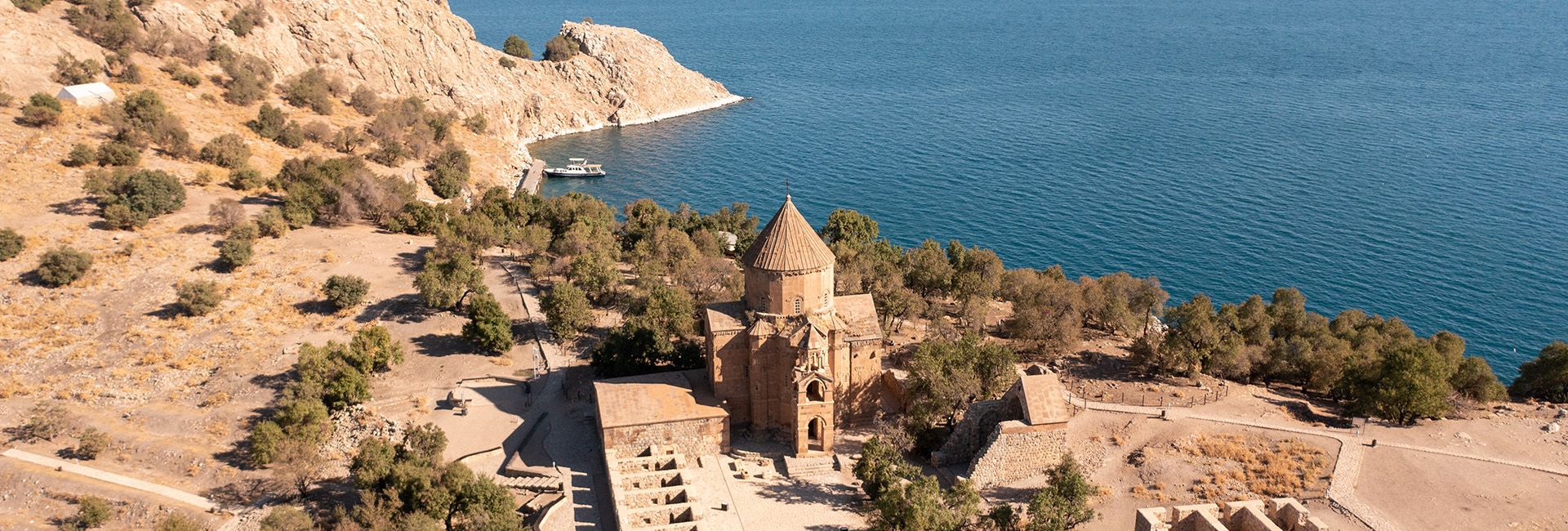
Akdamar Island is on the shore of Lake Van, surrounded by the deep blue waters and many natural wonders. The island is primarily known for the 10th-century Church of the Holy Cross, a remarkable example of medieval architecture. With its detailed stone reliefs and striking silhouette against the mountains, the church tells stories of faith, art, and empire. Over the centuries, the island has witnessed shifting borders, forgotten kingdoms, and enduring legends. Today, visitors come for its beauty, but stay for the silence that seems to carry voices from the past.
The Church of the Holy Cross: A Medieval Masterpiece
The Church of the Holy Cross was built between 915 and 921 CE in the Kingdom of Vaspurakan. It is renowned for its detailed bas-relief carvings depicting biblical stories from the tales of Jonah and the whale to David and Goliath. These engravings not only illustrate religious scenes but also incorporate local symbolic motifs, including animals like lions, birds, and mythical sea creatures, as well as vine and harvest patterns.More than just a place of worship, the Church of the Holy Cross stands as a visual archive of its era. The artistic quality of the stonework blends religious narrative with cultural identity by creating a visual history carved into stone. Through its carvings, the church becomes a unique fusion of faith, art, and the mythological imagination of the time.Inside, the church is relatively modest but atmospheric, with remnants of faded frescoes still visible in places. Although it no longer functions as an active place of worship, it is occasionally opened for religious ceremonies. The church has witnessed periods of decline and restoration, and still stands as a testament to the region’s complex history and cultural legacy.
Legends and Lore: The Story Behind Akdamar
Akdamar Island is associated with many local legends, the most famous being the tragic love story of Tamar and a young man from the opposite shore. According to legend, Tamar was a beautiful Armenian princess who fell in love with a commoner. Their love was forbidden by her father, the king, who discovered their secret meetings and had the guiding light put out, leaving the young man to lose his way and drown in the lake. Heartbroken, Tamar retreated to the island, where she prayed for her lover’s return.One version of the tale says the island was named after her, “Akdamar”, meaning “white vein” or “white soul,” which symbolises purity and love. The legend is also deeply tied to the island’s mystique and the Church of the Holy Cross.
General Information for Visitors
Akdamar Island can only be reached by boat, with regular ferry services running from Gevaş during the warmer months (usually April to October). Outside this season, access is limited, and weather conditions on the lake can sometimes cause cancellations. Visitors should be prepared for a short walk from the dock to the Church of the Holy Cross, which involves uneven terrain and some steps. For this reason, comfortable shoes are recommended. Facilities on the island are minimal, with no shops or cafés, so you should bring water and snacks.
What to See and Do Around Lake Van
After exploring Lake Van and Akdamar Island, you should see the other historically and culturally significant places of the city. Nearby Van Castle, an ancient Urartian fortress, would be a perfect choice with its breathtaking views over the city and lake. You can also visit the Hosap Castle to discover a unique medieval architecture. While the Van Museum provides insight into the region’s archaeology and history, the Çavuştepe Fortress showcases well-preserved Urartian ruins. If you’re looking for natural wonders, the Muradiye Waterfall is an ideal destination for hiking and picnicking. Visitors can roam vibrant local markets and sample the famous Van breakfast. By visiting these routes and sites, you can explore and fully experience the Van and its authentic culture. Embark on a wonderful journey where you will feel connected to the city's history and nature.