
Islamic Art Museums to Visit in İstanbul
Islamic art is filled with exquisite works that bear the traces of a vast Islamic culture. Works in forms such as wood and metal craftsmanship, decorative arts, ceramics and glass arts, bookbinding, and calligraphy find their place as an important part of this civilisation.Türkiye hosts many museums, exhibitions, and events focused on Islamic arts. During your trip to İstanbul, you can visit wonderful museums and enjoy carefully curated collections.Here are some exquisite Islamic art museums in İstanbul that you should not miss!
Museum of Turkish and Islamic Arts
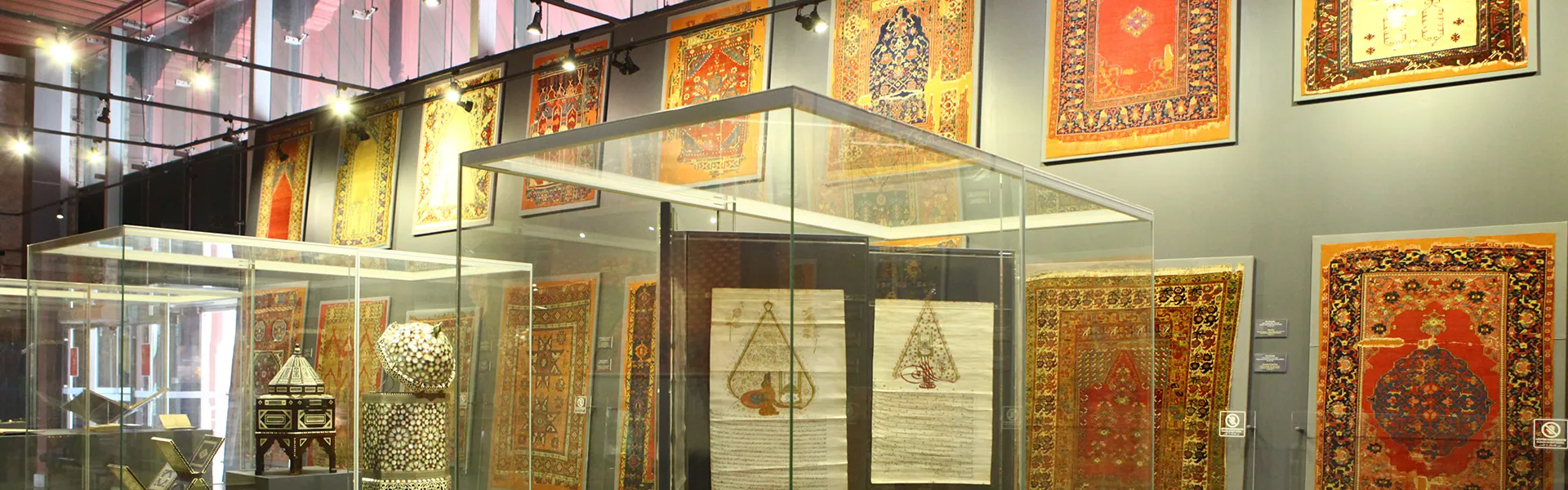
İstanbul Turkish and Islamic Arts Museum holds the distinction of being the first museum in Türkiye to bring Turkish-Islamic artworks under one roof.Opening its doors in 1914 at the imaret of the Süleymaniye Mosque Complex, the museum was relocated in 1983 to the İbrahim Pasha Palace, just west of the Blue Mosque Square.Inside the museum, you can see artworks from various Islamic periods, including Ottoman, Seljuk, Emevi, Abbasi, Artuklu, Eyyubi, Ilhanlı, Timurid, Safavi, Kaçar, and Memluk. Especially, the rug collection inside is really impressive, including masterpieces such as rare 13th-century Seljuk carpets.Moreover, the museum also features an outstanding collection of well-preserved works of art, including glass, stone, terracotta, metal, and ceramic artefacts.
Topkapı Palace
Topkapı Palace offers an incredible opportunity to explore the vast world of Ottoman treasures and jewellery.In the palace, you’ll encounter a large collection of:o Ottoman miniatureso Islamic calligraphic manuscriptso Spectacular jewels o Weaponso Porcelaino Robes and more.The palace was built by Sultan Mehmed II (1444-1445 and 1451-1481) during the years 1460-1478, following the conquest of İstanbul. As one of the city’s most iconic buildings, covering an area of 700,000 m², it is situated in one of the oldest parts of İstanbul; the historic peninsula bounded by the Marmara Sea, the Bosphorus Strait and the Golden Horn inlet.While wandering among this beautiful palace, you can also see old and very precious Qur'ans (12th to 17th centuries), hand-painted and hand-written in Kufic, and also a Bible from the 4th century, written in Arabic. The gallery of Topkapı Palace showcases 37 portraits of different sultans, most of which are copies since the original paintings are too delicate to be publicly shown. The portrait of Mehmed II was painted by the Venetian painter Gentile Bellini. Along with these works, it preserves other precious Ottoman miniature masterpieces, including the Hünername, Şahanşahname, Sarayı Albums, Siyer-i Nebi, Surname-i Hümayun, Surname-i Vehbi, and the Süleymanname.
İstanbul The Tiled Kiosk Museum
Set within the outer walls of Topkapı Palace, İstanbul The Tiled Kiosk Museum (Çinili Köşk) was constructed in 1472. It is located next to the Gülhane Park and is also called the Glazed Kiosk (Sırça Köşk).The museum's collections contain approximately 2000 artefacts dating from the 11th to the early 20th century, covering the Seljuk and Ottoman periods. Inside, you can see unique examples of Seljuk and Ottoman tiles, pottery, and ceramics.The tiles and ceramics selected from these collections consist of works from the Seljuk period, slip technique, Miletus work, İznik, Kütahya, and Çanakkale ceramics.
Museum of Islamic Civilisations
The Museum of Islamic Civilisations is located within the Büyük Çamlıca Mosque complex, which opened in 2019 as the largest mosque in İstanbul and Türkiye.The museum features modern architecture and a diverse range of Islamic art collections, offering a broad historical perspective.Moreover, interactive digital presentations allow you to relate in a more engaging and meaningful way.The museum’s first section displays artefacts associated with the Kaaba, Islam’s first place of worship, along with objects dating from the time of the Prophet Muhammad. You can also see sections dedicated to scientific and technological achievements of Islamic civilisation, examples of Islamic architecture, and a special gallery focused on the Qur’an, showcasing beautifully crafted manuscripts from different eras of the Islamic world. Another section features selected documents from the Damascus Documents, among the earliest examples of Islamic art. Plus, the museum houses collections of historical Islamic coins and weapons used during the Muslim conquests.Here are the sections of the Museum of Islamic Civilisations:1. The Turkish Art of Weaving 2. Objects Attributed to the Prophet Muhammad3. Architectural and Decorative Elements in Islamic Art4. The Kaaba, the First Place of Worship5. The Damascus Documents6. Qur’ans and Qur’an Cases7. Science in Islam8. Berats and Firmans9. Calligraphy10. Talismanic Shirts11. Ottoman Costume12. Handkerchiefs and Cenotaph Covers 13. Conquest in Islam14. Turkish Tiles15. Islamic CoinsTo wrap up, having served as the heartland of the Seljuk and Ottoman states for more than a thousand years, Türkiye contains an extensive collection of artistic and architectural works produced by Islamic civilisation.The good news is that you can experience many of the finest examples of Islamic heritage and art firsthand during your visit to İstanbul.Plan your trip today and discover the timeless legacy of Islamic civilisation in Türkiye.