
Healing Centres of Anatolia: From Ancient Asklepions to Ottoman Darüşşifas
Anatolia hosted many civilisations that shaped the history of medicine across centuries. From the healing sanctuaries of antiquity to the organised darüşşifas of the Seljuk and Ottoman eras, the region developed a continuous and evolving culture of healthcare.
These centres reflected medical knowledge alongside social responsibility, education, and architectural vision. This journey invites you to explore these institutions, revealing how different periods transformed the understanding of healing in Anatolia.
Healing in Ancient Anatolia
The history of medicine in western Anatolian lands dates back to the ancient Greek period. Although the tradition originated in sacred rituals, the science of medicine has evolved through rational, scientific methods over time.
The healing centres of ancient Anatolia were called asklepion, taking their name from Asklepios, who is the god of medicine. People believed these sanctuaries dedicated to him helped their healing process and cured their diseases.
These sanctuaries were carefully designed therapeutic environments built in calm, natural settings outside city walls. Patients underwent ritual purification, drank from sacred springs, followed special diets, attended theatrical performances, and, most importantly, practised “incubation”.
Asklepion was also an important medical school that supported scientific developments. While physicians such as Hippocrates advanced observational and systematic approaches to disease, they laid the basis for modern medicine in these ancient sanctuaries.
Pergamon Asklepion: The World’s Earliest Healing Complex
Pergamon Asklepion was the first healing centre of ancient Anatolia and became one of the most renowned medical complexes of the Mediterranean of its time. It also served as a medical school of its time, and the discoveries made here contributed significantly to the history of medicine, later influencing figures such as Galen.
The Asklepion was founded in the 4th century BCE and is among the earliest organised medical centres in Anatolia and the ancient world. It became a major therapeutic complex where spiritual and practical treatments were combined, attracting patients from across the Mediterranean and influencing later approaches to healing.
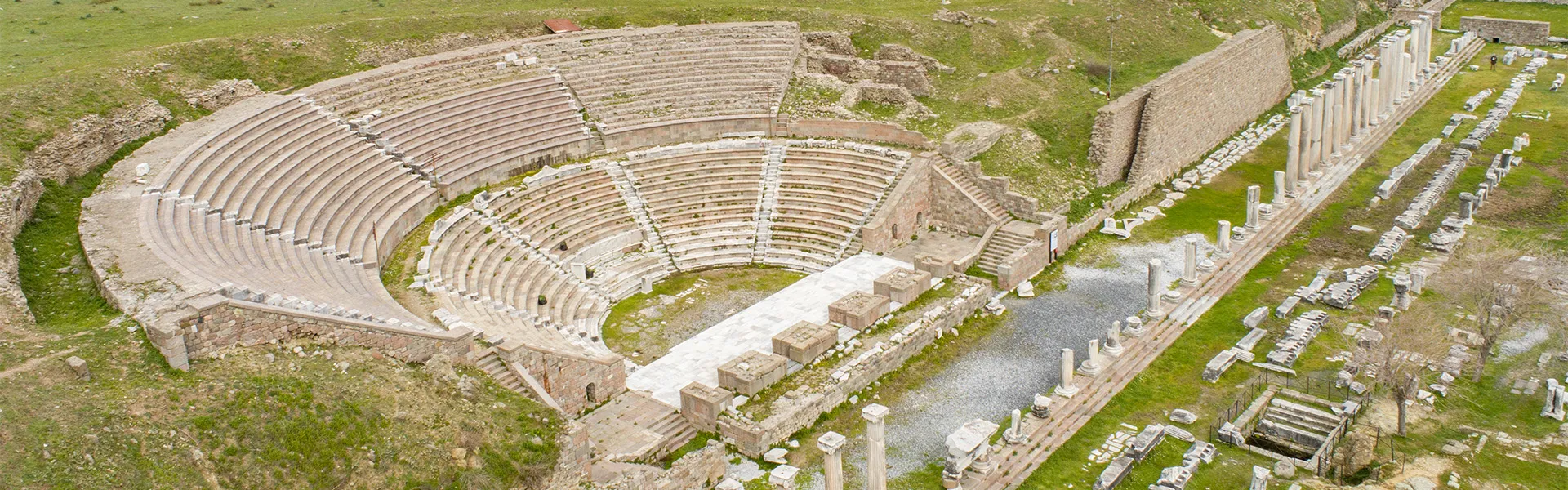
Expanded during the Roman period, it featured a monumental courtyard, treatment rooms, a theatre, a sacred water source, and a remarkable underground vaulted tunnel used for incubation therapy.
According to local legend, a citizen of Pergamon named Archias (or Arkhias) was injured during a hunting trip and taken to the famous Asklepion at Epidaurus, where he was healed. After his recovery, he brought the cult of Asklepios back to his hometown and established a new healing sanctuary there. This story is referenced in ancient sources and inscriptions, though details vary, and it blends historical and mythic elements.
Today, the sanctuary can still be visited, and it is one of the most attractive structures of the Pergamon Archaeological Site in Bergama, İzmir. Well-preserved remains of the treatment rooms, theatre, sacred spring, and underground incubation tunnel allow visitors to experience the scale and design of this ancient healing complex.
Seljuks: Masters of Healing and Medical Education
The Seljuk medical tradition in Anatolia was nourished by earlier Islamic, Persian and Greco-Roman knowledge. They developed practical treatments with educational principles and a strong emphasis on holistic patient care, combining physical, mental, and sometimes spiritual healing.
Seljuks institutionalised healthcare through darüşşifas (hospitals), which functioned both as treatment centres and medical schools. While curing the physical and mental illnesses of patients, doctors were also educated in these foundations to improve the science of medicine.
Its importance lies in establishing structured, publicly accessible medical care in Anatolia for the first time, training physicians who would continue these practices into the Ottoman era, and laying the foundation for the region’s long-standing tradition of organised healthcare and medical education.
Gevher Nesibe Darüşşifası: Legacy of Seljuk Healing
Founded in 1206, Gevher Nesibe Darüşşifası, located in Kayseri, is one of the most important healing centres of the Seljuk medical tradition. As a classical darüşşifa, it was used as both a hospital and a medical school by combining physical and mental illnesses with education for future physicians.
Since people can access free medical care, the institution also shows how the Seljuks valued publicly accessible medical care and the organisation of structured medical knowledge.
Their attitude also laid the groundwork for medical practices and hospitals that continued into the Ottoman period. Its preservation today allows visitors to understand how medicine, education, and social welfare were integrated in Seljuk Anatolia.
Ottoman Darüşşifas: Preserving and Expanding Medical Heritage
During the reign of the Ottomans, the healing tradition was a continuation and formalisation of earlier Seljuk practices. They emphasised publicly open and free healthcare for both physical and mental illnesses through darüşşifas.
These institutions were established as charitable foundations and offered free treatment, hygiene, diet, and medical education for people. Along with this, they supported the science of medicine by transmitting the developments across generations.
Accessible healthcare and quality education set the foundation for Ottoman medicine for centuries and created a continuous lineage of hospitals and medical schools throughout the empire.
Bayezid II Külliyesi Şifahane: The Ottoman Medical Centre
Ottoman has various medical centres across the country, and the Bayezid II Külliyesi ve Şifahanesi is one of the most important among these institutions. It reflects the Ottoman emphasis on public, charitable, and accessible medical services.
It was founded between 1484 and 1488 in Edirne by Sultan Bayezid II, and was named after the sultan. As a classical darüşşifa in the Ottoman Empire, it served as both a hospital and a shifahane and a medical school.
The complex included patient wards, a lecture hall, a pharmacy, and facilities for holistic care. Today, it is well-preserved and open to visitors as the Bayezid II Health Museum, showcasing the Ottoman approach to medicine and healthcare.