
Döner: Origin, Cooking Method, and the Usta’s Craft
Döner is one of those dishes that lures you in long before you take a bite. Its aroma floats through the air, smoky and spiced, mingling with the warmth of bread. The spectacle is equally magnetic: a towering skewer of meat, glistening under the heat, slowly rotating on its axis. With every turn, juices sizzle and drip, fat bastes the layers beneath, and the outer crust crisps to perfection. When the long blade sweeps down its side, thin shavings fall effortlessly, landing steaming and fragrant into bread or onto a plate. It is theatre, appetite, and comfort combined, a dish that is as much about watching as it is about tasting.
1. What is Döner? Its Origin and Definition
The name itself carries its essence. Döner comes from the Turkish verb dönmek, meaning “to turn.” The act of rotation defines it: meat stacked high on a vertical spit, turning slowly in front of glowing heat, browning evenly while remaining succulent within. This simple idea, rotation as both a technique and a beautiful sight, is what has elevated döner from a humble meal to a culinary icon recognised across the world.Its roots stretch deep into the Ottoman kitchen and beyond. In the early 17th century, depictions of meat roasting on spits appear in miniature paintings from İstanbul. At that time, the spit lay horizontally, a common practice across many cultures. But sometime in the 19th century, in the bustling kitchens of Bursa, the idea of turning the spit upright took hold. This small innovation changed everything: no longer would the fat drip away into the fire, but instead it would cascade down the stack of meat, basting it continuously. Every slice would be moist, and every bite would be richly flavoured. Bursa’s İskender Efendi immortalised this method in his creation, the famed İskender kebap, döner meat layered over pide bread, soaked in tomato sauce, crowned with sizzling butter, and cooled with yoghurt. It is indulgent, aromatic, and utterly satisfying.Elsewhere in Türkiye, döner found other shapes. In Kastamonu, Hamdi Usta was also said to have pioneered the vertical spit, his method giving rise to the easily carved towers of meat we recognise today. In the country’s northeastern provinces, the tradition persisted in its original form: significant cuts of meat were roasted horizontally outdoors during picnics, served simply with bread and herbs. Each region adapted the concept in its own way, demonstrating the dish's adaptability and enduring nature.
2. Döner Cooking Techniques and Types of Meat Used
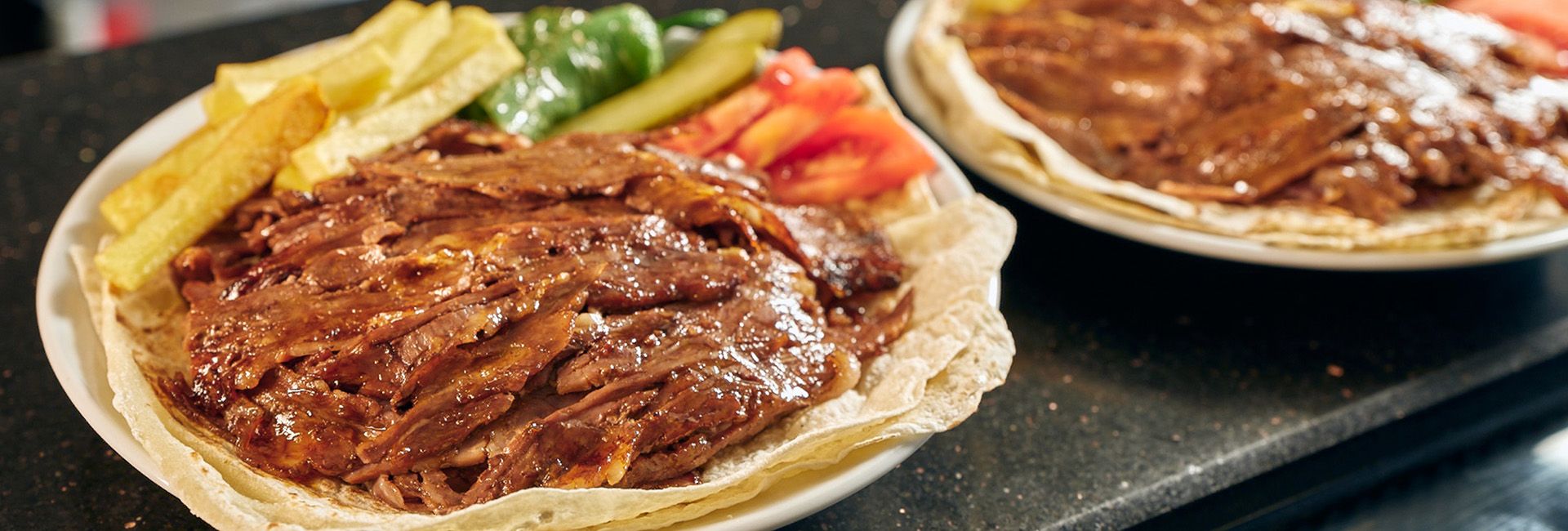
To watch döner being made is to appreciate its artistry. The process begins long before the skewer touches the flame. Butchers and chefs trim cuts of lamb, beef, or chicken, removing sinew while leaving just enough fat for flavour. The meat is sliced thin, then pounded gently, and each type is marinated with care. Red meat is often steeped in onion water and milk, sometimes with a touch of cumin or oregano, to tenderise the fibres and bring out a mild depth of flavour. Chicken, on the other hand, is rubbed in a bolder mix of spices, red pepper flakes, and smoky pepper paste, a seasoning profile that gives it a livelier, more vibrant taste. Once seasoned, the slices are stacked with precision, lean meat alternating with fatty pieces, built layer upon layer until a towering column emerges. In yaprak döner (“leaf döner”), this careful stacking of whole cuts creates a texture that is tender yet robust, while kıyma döner uses minced meat pressed into shape for uniformity. Both require balance: too much fat and the beef greases the bread, too little and it dries out.Then comes the roasting, a slow ritual of transformation. The skewer rotates before heat, once charcoal, now often gas or electric, browning the edges while keeping the inside moist. The air fills with the smell of spices warming, juices dripping, fat hissing as it meets the flames. With each slice the knife releases, steam rises, carrying the perfume of cumin, garlic, and roasted lamb. Served immediately, the meat retains its heat and juiciness, every bite a marriage of tenderness and crispness.How it reaches the plate varies, and these variations are as significant as the meat itself. Rolled in lavash or yufka, döner becomes a dürüm, a tight and portable dish stuffed with lettuce, tomato, and onions. This is the döner of busy city streets, eaten one-handed while weaving through traffic or perched on a bench in a square. Folded into soft pide bread, it transforms into a sandwich, hearty and satisfying, the bread spongy enough to soak up sauces yet sturdy enough to hold layers of meat, pickles, and crisp vegetables.On a plate, it is a different experience entirely: slices of döner arranged beside rice or bulgur, bright salads, grilled peppers, and often fries, a meal to be savoured slowly, combining comfort with ceremony.
3. The Döner Master: A Craft Devoted to One Dish
There is a moment in every great döner shop when you realise the spit is not the true centre of attention. The real focus is the person beside it — steady, patient, almost still — reading the roast as it turns. In Türkiye, that specialist is called the döner ustası: a döner master, trained not to cook everything, but to perfect one thing.Most kitchens are built on variety. Hands move from grill to pan, from sauce to garnish, juggling a dozen dishes at once. Döner is unusually different. It has shaped a role so precise that it becomes a profession of its own — a craft centred on a single preparation, repeated daily with the kind of concentration you rarely see in modern food culture. The döner master doesn’t simply “serve meat.” He safeguards the entire ritual: how the stack is built, how it roasts, how it’s carved, and how each slice lands at its best.The work begins long before the first shaving falls. The master chooses the cuts, keeps the balance of lean and fat, and stacks the slices with intention so the spit cooks evenly and bastes itself as it turns. Too tight and the heat can’t travel through; too loose and it roasts unevenly. Even the surface matters — shaped, smoothed, and protected so it browns gradually instead of burning fast. This is quiet architecture: flavour designed not just through seasoning, but through structure.Then comes the moment everyone waits for: the carving, where skill turns patience into flavour. Carving is not just cutting; it is timing, pressure, and restraint. The master slices with the rotation, letting the blade follow the curve so the meat falls in delicate, even ribbons. He decides on thickness in an instant: thin enough to capture the crisp edge, generous enough to carry the juices within. Cut too early, and it tastes pale. Wait too long, and it toughens. Go too deep, and you expose the tender interior to harsh heat; stay too shallow, and the crust overcooks while the inside waits. This is why expert carving looks effortless — because the real work happens in judgment, not in speed.Very few foods create a job that exists almost entirely for their sake. Most dishes share a kitchen and a rotating cast of hands. Döner, with its towering presence and slow transformation, demands something more focused: a specialist who stays beside it, who understands its rhythm, who knows that the difference between “good” and unforgettable can be a matter of seconds.In the end, the spit turns — but the craft belongs to the person guiding it. The aromas rise, the blade moves, steam lifts from fresh shavings, and the promise repeats itself: crispness without dryness, richness without heaviness, flavour that tastes both timeless and newly made. Döner may be simple at heart, but in the hands of a true döner master, it becomes theatre, tradition, and mastery — served warm, one slice at a time.