
Bilecik, the place where the Ottoman Empire was founded and it has many tourist attractions like the Ertuğrul Gazi (the founder of Ottoman Empire) Tomb (Ertuğrul Gazi Türbesi), Şeyh Edebali Tomb (Şeyh Edebali Türbesi), and Metristepe Victory Monument (Metristepe Zafer Anıtı). People can visit the Söğüt Ertuğrul Gazi Museum (Söğüt Ertuğrul Gazi Müzesi) in the town of Söğüt near Bilecik and see traditional potteries in Kınık village. In addition to all historical places, Bilecik has many beautiful natural beauties and fertile lands. Bozüyük, Gölpazarı, İnhisar, Osmaneli, Pazaryeri, Söğüt and Yenipazar are the districts of Bilecik.
Natural Beauties and Promenade Places
Harmankaya Canyon Nature Park
Harmankaya Canyon (Harmankaya Kanyonu) is located in Harmanköy, between Yenipazar and İnhisar districts of Bilecik province. The vegetation of the nature park consists of trees and shrubs like oak, juniper, rowan, terebinth, willow and blackthorn. In the 4-square-kilometre canyon, there are two waterfalls. Apart from this, there are numerous small waterfalls and caves in the canyon. The canyon is also home to mammals such as wild boars, foxes, jackals, rabbits and squirrels. Nature lovers perform various activities in the canyon, such as nature walks, nature sports, mountaineering, rafting, caving, windsurfing, paragliding, and camping. Harmankaya Canyon is the perfect spot for outdoor sports and walks.
Pelitözü Pond
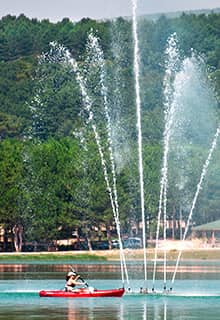
Pelitözü Pond (Pelitözü Göleti) is 7 kilometres away from Bilecik city centre. As it is easy to get there by public transportation and the amazing area is vast, the pond, surrounded by pine trees, attracts great attention especially on weekends. You can go there for a hike or a cycling circuit while enjoying the lake view.
Türbin Recreation Area
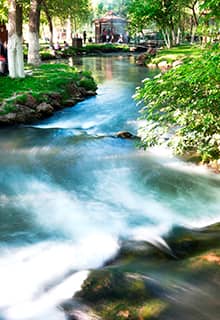
Türbin Recreation Area (Türbin Mesire Alanı) located in the Bozüyük district of Bilecik, is one of the most popular recreation areas of the city. There are fish and meat restaurants along the promenade covered with wood and greenery. Karasu River, 2 kilometres away from the recreation area, is a natural beauty worth seeing.
Küçük Elmalı Pond and Nature Park
The Küçükelmalı Nature Park (Küçükelmalı Doğa Parkı), was planned for recreational and cultural needs of people in Bilecik as well as their mental and physical health. Natural Park is in Bilecik’s Pazaryeri district and is 10 kilometres Pazaryeri’s town centre. With its geographical location, topographic structure, forest texture, Küçükelmalı Pond and its surroundings offer pure air, away from urban noise and pollution, and it attracts daily visitors.
Bozcaarmut Pond
Bozcaarmut Pond (Bozcaarmut Göleti), close to Bozcaarmut village in Pazaryeri district, is an impressive natural wonder with its untouched nature, pine trees surrounding the lake, clean air, silence and extraordinary beauty – the perfect address for fishing enthusiasts.
Magic Plateaus
The city of Bilecik offers beautiful plateaus which are very popular destinations for mountain and nature lovers
Kömürsu, Sofular, Çiçekli, Avlan, Oğulpaşa, Uzunçam and Kamçı plateaus, whose heights range from 1250 metres to 1906 metres, await you with their clean air, clear waters, lush greenery and, colourful and sweet-scented flowers. Kömürsu Plateau (Kömürsu Yaylası) is 28 kilometres away from Bozüyük centre. There are 4 natural water springs in the plateau that is covered with fir, black pine, beech, juniper trees and many kinds of flowers. The highest peak is around 1700 metres-high.
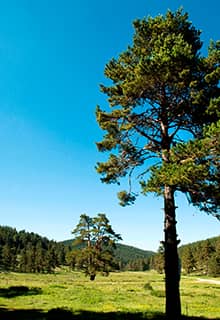
Sofular Plateau (Sofular Yaylası) is 25 kilometres to Bozüyük, and its height is around 1445 metres. The plateau covered with pine and fir trees.
Waterfalls
Bilecik holds many waterfalls that appeal both eye and ear.
İnhisar Waterfall (İnhisar Şelalesi) is located in İnhisar district of Bilecik. The distance between Bilecik and İnhisar is 56 kilometres. The waterfall, located on mountain slopes, at an altitude of 520 metres, is totally hidden among the greenery. A pathway leads you up a steep 300-metre slope. Follow the path, the cold waters of the waterfall falling from about 8 metres meet you.
The hidden paradise of Kınık Waterfall (Kınık Şelalesi) surrounded by figs and plane trees, is a rare beauty. The water falling from about 10 metres has a high-flow on March and April. The Kınık Waterfall is located at an altitude of 360 metre. The waterfall is 25 kilometres to Bilecik city centre.
Çukurören Village
Çukurören is a village located in Bilecik’s central district. Agriculture and farming are the main activities in the village. The most common agricultural products are chili peppers and tomatoes. Approximately 50 tons of hot peppers have been grown annually in Çukurören village for 150 years without any genetical modifications. Bilecik’s Çukurören pepper is registered as geographical indication.
Kurşunlu Eco and Agrotourism Village
Kurşunlu village is in the Gölpazarı district of Bilecik. The village is one of the few ecotourism villages in Türkiye, and was chosen as the cleanest village in Bilecik. With its white painted houses and flower gardens, Kurşunlu offers a real village scenery. Within the scope of the ecotourism project, visitors who come to the village to get away from the chaos of urban life, walk in the forest, bake their own bread in adobe houses and have breakfast with the eggs they collect from the co-op.
Pazaryeri Kınık Pottery and Ecotourism Village
Kınık village is in Bilecik’s Pazaryeri district and it is the perfect place to discover traditional pottery making. The village offers also various activities for families who would like to explore country life –collecting eggs from the co-op, feeding chickens, hoeing, taking care of animals, and playing with mud are amongst visitors’ favourite ventures.
Imperial Mosques and Tombs
As the birthplace of Ottoman Empire, Bilecik also shines out as the city of important historical mosques and other religious monuments.
Orhan Gazi Mosque (Orhan Gazi Cami) is the first example of Ottoman period Turkish architectural art in the field of religious architecture and it is thought that it was built in the 14th century. The mosque’s most interesting characteristic is the main minaret built on a rock 30 metres away from the edifice.
Kasım Pasha Mosque (Kasım Paşa Cami) is located in Söğüt district. It is one of the classic Ottoman mosques and one of the apprenticeships works of Mimar Sinan. It was built by desire of Kasım Pasha who was one of Suleiman the Magnificent’s commanders. The building is very interesting thanks to its stone walls, its windows with wooden swings and its mihrab, as well as its woodwork and ivory embroidery. Its pulpit is covered with white marble tiles of various colours.
Other historical mosques to admire in Bilecik province are Rüstem Pasha Mosque (Rüstem Paşa Cami), Yıldırım Beyazıt Mosque (Yıldırım Beyazıt Cami), Medrese Mosque (Medrese Cami), Çelebi Mehmet Mosque (Çelebi Mehmet Cami), Hamidiye Mosque (Hamidiye Cami), Ertuğrul Gazi Mosque (Ertuğrul Gazi Cami), Kasımlar Mosque (Kasımlar Cami), Mihalgazi Mosque (Mihalgazi Cami), Rüstem Pasha Mosque (Rüstem Paşa Cami), Köprülü Mehmet Paşa Mosque (Köprülü Mehmet Paşa Cami), Kuyulu Mescid or Ertuğrul Gazi Mosque and Şerif Pasha Mosque (Şerif Paşa Cami).
Bilecik is also home to the final resting place of 13th-century Islamic theologist and scholar Şeyh Edebali who was the spiritual founder of Ottoman Empire as well. Şeyh Edebali’s Tomb (Şeyh Edebali Türbesi) is one of the most important historical monuments in Bilecik.
Hagios Georgios Church
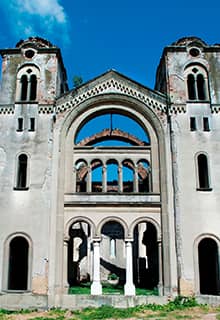
Osmaneli was a significant midpoint in the era of Byzantine and Ottoman empires, where Turks and Anatolian Greeks had lived together until the War of Independence. The Hagios Georgios Greek Orthodox Church (Aya Yorgi Yunan Ortodoks Kilisesi) located on Cumhuriyet Avenue is the only structure in Osmaneli, left from Greek people.
Metris Tepe Zafer Anıtı (Metris Hill Victory Monument)
Metris Tepe Victory Monument (Metris Tepe Zafer Anıtı) is on the Bozüyük-Eskişehir highway. The monument was built on Metris Tepe in order to preserve the memories where the İnönü Wars were won. On that hill, the great leader Mustafa Kemal Atatürk said to İsmet İnönü “You not only defeated the enemy but also the misfortune of the nation”. It symbolizes the invincibility of Turkish people.
Kaymakam Fountain
The Kaymakam Fountain (Kaymakam Çeşmesi), located in Söğüt district of Bilecik and built in 1919 represents the neoclassical style. It is an important example of late Ottoman architectural art. At the centre of each three sides of the fountain, vase shaped troughs are placed in slices. The surfaces and pointed arches are formed into niches, while its interior and top are covered with coloured tiles. The fountain made of Kütahya tiles and marble has four facades.
Bilecik Museum
The Bilecik Museum (Bilecik Müzesi) is located in the city centre. The museum exhibits objects and weapons used by Oguz Turks, clothing, carpets, rugs, pots, pots and weaving tools used in daily life of Bilecik.
Söğüt Ertuğrul Gazi Museum
The museum showcases ethnographic artifacts and items belonging to Söğüt and nomads living in the vicinity. There are also banners, old clothing and accessories, handwoven rugs and carpets, weapons, measuring and weighing instruments, napkins and money bags, and archaeological artifacts (Roman, Byzantine, Ottoman period coins, as well as Roman pottery).
Osmaneli Houses
Rather than historical monuments, Osmaneli is known for its civil buildings. During Ottoman era, the town housed three mills for silk production and every household was engaged with the business of silkworm breeding.
Classical Osmaneli houses are structured on wooden carcasses, mostly with two or three-stories. Houses are filled with mud brick or brick and are plastered over, which is specially made to breed silkworms.
Their ground floors have no windows and were used to store mulberry leaves to feed silkworms. The upper floors are bright and spacious where silkworm cocoons were fed.
Gordios Kaya Mezarı / King Gordios Rock Tombs
The rock tombs, located in a valley 15 kilometres away from Gölpazarı town centre, are carved as rooms and have both exterior and interior doorways. There are three separate sarcophagi places in the room section. It is believed that one of these sarcophagi belongs to Phrygian King Gordios and the others to his child and wife.
Günyurdu Dam Lake
Located in the Pazaryeri district of Bilecik, Günyurdu Dam Lake (Günyurdu Baraj Göleti) is one of the region's most striking natural spots, enveloped by dense pine forests. Known for its high altitude and crisp air, the lake serves as an ideal getaway for hiking, recreational fishing, and tent camping. The vibrant shades of green reflecting on its calm waters offer a visual feast for photography enthusiasts, providing a peaceful escape for those seeking quietude in nature.
Kızıldamlar Pond
Situated near the Kızıldamlar village in central Bilecik, Kızıldamlar Pond (Kızıldamlar Göleti) is a serene wetland known for its rich biodiversity and picturesque scenery. Surrounded by oak and pine woodlands, the pond is especially popular during autumn for its vibrant foliage. Offering an ideal setting for nature photography, birdwatching, and quiet picnics, Kızıldamlar Pond also stands out as a favored local spot for recreational fishing and tranquil weekend retreats.
Büyükelmalı Dam Lake
Another hidden gem of the Pazaryeri district, Büyükelmalı Dam Lake (Büyükelmalı Baraj Göleti) resembles a postcard landscape nestled right in the heart of lush pine forests. Equipped with designated picnic and camping areas, it provides visitors with a comfortable way to experience the outdoors. With its scenic walking trails, crisp mountain air, and peaceful waters, Büyükelmalı is a premier destination for weekend road trips and nature-centric itineraries across the region.
Suuçtu Waterfall
Located in Bilecik's Yenipazar district at an altitude of 875 meters, Suuçtu Waterfall creates a striking view as it cascades from a height of about 30 meters. Its freezing water, which gathers in a small pool at the base, requires a second thought before taking a dip. Enveloped by lush greenery, birdsong, and the soothing sound of rushing water, it stands as a rare natural paradise perfect for spending long, relaxing hours.
Gedikkaya İn Cave
Located in Bilecik's İnhisar district overlooking the Sakarya Valley, Gedikkaya İn Cave (Gedikkaya İn Mağarası) extends 180 meters into the mountain and represents one of the region's most vital archaeological sites. Excavations led by the Bilecik Museum push the human history of Bilecik back 40,000 years to the Paleolithic Era.
Radiocarbon dating indicates seasonal habitation between 14,500 BCE (Epi-paleolitik) and 4,500 BCE (Middle Chalcolithic), serving as a crucial refuge during climate disruptions and human migrations. Key finds—including a stylized sandstone mother goddess figurine and bone batons—highlight strong cultural ties connecting the region with Europe, the Balkans, the Caucasus, and the Eastern Mediterranean.
Historical Gölpazarı Houses
Reflecting the traditional architectural heritage of Bilecik, the Historical Gölpazarı Houses (Gölpazarı Tarihi Evleri) hold a special place among the surviving Ottoman-era vernacular architecture of the region. Located in the historic quarters of the Gölpazarı district, these structures serve as living monuments offering insights into the socio-cultural life and construction techniques of the past.
Typically built as two or three-story structures, the houses utilize a traditional timber-frame technique filled with mudbrick or stone (known locally as hımış). While the ground floors are constructed with heavy stonework to serve as storage, cellars, or barns, the upper living floors feature prominent wooden bay windows (cumba) extending over the streets. The symmetrical window layouts, hand-carved wooden ceilings, decorative brackets, and historic doorways highlight the aesthetic craft of local artisans. Preserved through ongoing restoration projects, the historic streets of Gölpazarı offer visitors an authentic journey through Ottoman townscape history.
Tomb of Dursun Fakih
Located atop a scenic hill in the Küre village of Söğüt, Bilecik, the Tomb of Dursun Fakih (Dursun Fakih Türbesi) is a vital spiritual site honoring one of the founding figures of the Ottoman Empire. Born in Karaman, Dursun Fakih was a prominent scholar trained in Islamic jurisprudence, a student of Sheikh Edebali, and the state's first judge (qadi). He delivered the first sermon (khutbah) declaring Ottoman sovereignty in Osman Gazi’s name. Positioned at a high vantage point overlooking Söğüt, the tomb offers visitors a serene atmosphere and a rich historical experience.
Bilecik Living City Museum
Located in the city center of Bilecik, the Bilecik Living City Museum (Bilecik Yaşayan Şehir Müzesi) serves as a vibrant cultural center that brings the rich history, local heritage, and traditional lifestyle of the city to life. Housed in a striking building constructed in line with traditional Ottoman-Bilecik architecture, the museum departs from static exhibitions by offering visitors an interactive journey through the region's past.
Inside, the museum traces Bilecik's historical timeline—from the Paleolithic Era and the founding of the Ottoman Empire to the Turkish War of Independence and the Republican era—using hyper-realistic wax figures, historical artifacts, and detailed dioramas. Traditional local crafts such as weaving and pottery, alongside Thracian-Anatolian culinary traditions and daily domestic life, are dynamically displayed. The museum stands as an essential stop for travelers looking to experience the living heritage and historical spirit of Bilecik.
Çelebi Sultan Mehmet Mosque
Located in the Bozüyük district of Bilecik, the Çelebi Sultan Mehmet Mosque (Çelebi Sultan Mehmet Camii) is one of the most prominent surviving examples of Early Ottoman architectural heritage in the region. The mosque was commissioned by Sultan Mehmed I (Çelebi Mehmet)—known as the second founder of the Ottoman Empire for reunifying the state after the Ottoman Interregnum—and constructed between 1414 and 1420.
Built on a square plan featuring a single central dome, the mosque displays a harmonious blend of ashlar stone and brick craftsmanship characteristic of early 15th-century Ottoman architecture. Its modest interior ornamentation and traditional portico highlight the serene aesthetic of the era. Preserved through restoration efforts over the centuries, the mosque continues to function as an active place of worship and stands as a key historical landmark in Bozüyük's town center.
Hamidiye Mosque
Located on Ertuğrul Gazi Street in the district center of Söğüt, Bilecik, the Hamidiye Mosque (Bilecik Hamidiye Camii), locally known as the Twin Minaret Mosque, stands as one of the finest examples of Late Ottoman Neoclassical architecture. Built between 1903 and 1905 during the reign of Sultan Abdulhamid II, the construction of the mosque was closely monitored by the Ottoman Imperial Palace.
Designed on a square plan topped with a single lead-covered dome, the building is constructed from distinctive red ashlar stone and framed by its iconic twin minarets. As a testament to imperial patronage, eleven calligraphic plaques crafted at the Yıldız Imperial Porcelain and Tile Factory were presented to the mosque. Forming an architectural ensemble alongside the neighboring Ottoman high school (idadi) and orphanage (darüleytam), the mosque remains a landmark of Söğüt's historical circuit.
Orhan Gazi Mosque
Situated on steep rocks near the Tomb of Sheikh Edebali in the city center of Bilecik, the Orhan Gazi Mosque (Orhan Camii) stands as one of the earliest remaining architectural works from the formative years of the Ottoman Empire. Commissioned in the early 14th century by Orhan Gazi, the second Ottoman Sultan, it is historically renowned as the first Ottoman structure to feature a lead-covered dome, earning it the local moniker "Kurşunlu Camii" (Lead Mosque).
Built on a nearly square plan utilizing a combination of rubble stone and brickwork, the building embodies the austere yet durable aesthetic of Early Ottoman architecture. One of its most distinctive features is its minaret, which was constructed separately from the main mosque body atop a natural rock formation located about 30 meters away. Carefully preserved through restoration work, the Orhan Mosque remains an active worship site and an essential landmark within the historic Sheikh Edebali Valley.
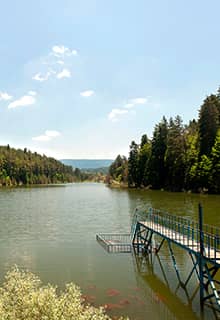
Bozcaarmut Pond
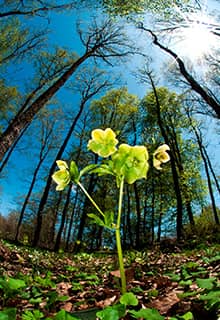
Çiçekli Plateau
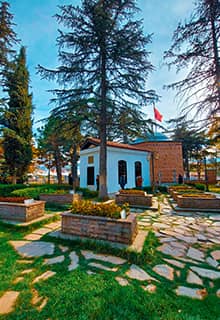
Ertuğrul Gazi Tomb
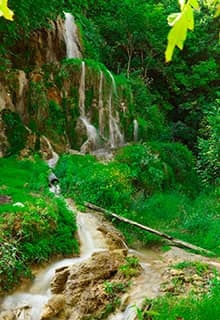
Çukurören Village Waterfall
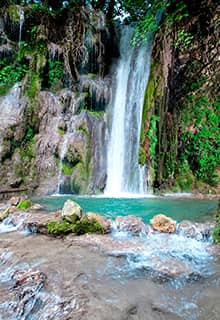
İnhisar Village
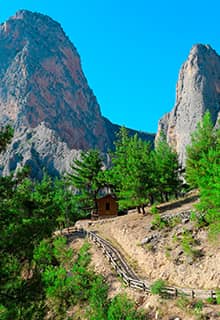
Harmankaya Canyon
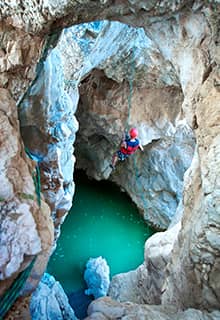
Kayaboğazı Canyon
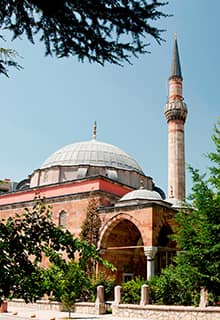
Kasım Pasha Mosque
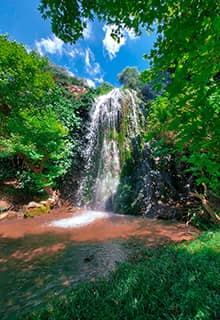
Kınık Waterfall
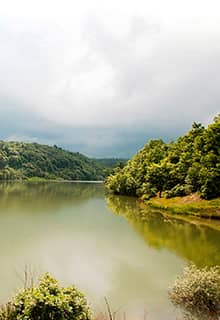
Küçük Elmalı Pond and Nature Park
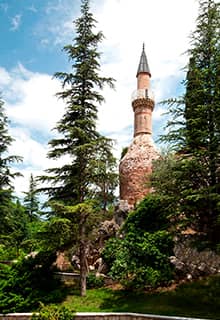
Orhan Gazi Mosque
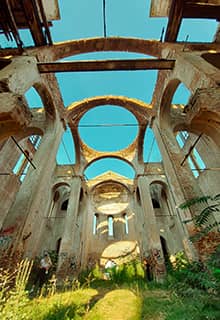
Osmaneli Aya Yorgi Church
Pelitözü Pond
Osmaneli Aya Yorgi Church
Sofular Plateau
Türbin Recreation Area