
Balıkesir is one of the most important centres of cultural tourism with its monasteries, cemeteries, museums and ancient cities. Having hosted many important civilizations in the past and the existence of many remains belonging to these civilizations, Balıkesir has an important place in the rich cultural heritage of Türkiye.
Historical Monuments and Museums in Balıkesir
The mid-14th century Yıldırım Mosque (Yıldırım Cami), built by Bayezit I, is the city's oldest mosque while the Zağnos Paşa Mosque (Zağnos Paşa Cami), built by and named after the Grand Vizier of Mehmet the Conqueror Zağnos Paşa in 1461. The Clock Tower (Saat Kulesi) built by Mehmet Paşa in 1827 is a smaller version of the Galata Tower. The Karesi Bey Mausoleum (Karesi Bey Türbesi) of 1336 contains the cenotaphs of Karesi Bey and his five sons. Don’t forget to see the artefacts taken from the area and put on display in Balıkesir Museum (Kuva-i Milliye) (Balıkesir Müzesi).
Just a few steps from Balıkesir
The beautiful Değirmen Strait (Değirmen Boğazı), an area 10km from Balıkesir on the way to Bursa, lies nestled between two hills: on holidays and weekends families flock to this scenic spot and its restaurants. At Karakol village (Karakol köyü), photographers can capture three picturesque windmills. Ancient Penderamus, now called Bandırma, is today an important commercial and industrial harbour second only to İstanbul in the Sea of Marmara; you can spend a pleasant afternoon in the town’s restaurants and cafés. Belkıs (Kyzikos) lies 10km west of Bandırma; in this ancient city on the isthmus of the Kapıdağ Peninsula (Kapıdağ Yarımadası), the Temple of Hadrian (Hadrian Tapınağı), a theatre and aqueducts still captivate visitors
Ayvalık
The Devil's Feast
One of the best vantage points of Ayvalık. The hill, which is perched over the Çamlık Forestry Camp (Çamlık Orman Kampı), is an old lava cone, and the hilltop, which is flat, resembles the traditional, low, round dining tables of the region. Some believe that an imprint on the rock, now covered with an iron cage, is the footprint of the Devil. The Devil's Feast (Şeytan Sofrası) has a panoramic view over the Ayvalık archipelago, looking down onto sounds and coves covered with pine forests. To dine at a hilltop restaurant and enjoy a drink while watching the sunset is a privilege.
Historical Monuments of Ayvalık
It is impossible to imagine Ayvalık without its sanctuaries. Saatli Mosque (Saatli Cami) Çınarlı Mosque (Çınarlı Cami) Hamidiye Mosque (Hamidiye Cami), Hayrettin Paşa Mosque (Hayrettin Paşa Cami) Küçükköy Central Mosque (Küçükköy Merkez Cami) Taxiarchis Church (Taksiyaris Kilisesi), Ayazma Church (Ayazma Kilisesi), Hagios Triada (Hagia Triada Kilisesi) Church are just some of them…
Kaz Mountains Glass Viewing Terrace
Kaz Mountains Glass Viewing Terrace is a popular attraction located near the summit of Şahinderesi Canyon within the borders of Kazdağı National Park in the Edremit district of Balıkesir. Accessible via a scenic mountain road winded through olive groves and pine forests, the facility is built with steel structures over a sheer cliff hundreds of meters above the ground. Providing visitors with the thrilling sensation of walking on thin air, this special glass terrace offers an endless, bird's-eye view encompassing the lush valleys of the Kaz Mountains as well as the entire Edremit Gulf and the Ayvalık islands. Featuring a cafeteria and wooden walking paths in harmony with the protected national park texture, the area stands as one of the region's most iconic destinations for nature enthusiasts and photographers, especially with the visual feast it presents during sunset hours.
Kapıdağ Peninsula
Kapıdağ Peninsula, located in the Erdek district of Balıkesir, is a captivating region rich in history and nature, formed when a former island became connected to the mainland (a tombolo). Known for its proximity to İstanbul, the peninsula is home to the popular beaches of Erdek and Ocaklar, peaceful fishing villages like Narlı and İlhanlar, and crystal-clear bays like Kiryos. Harboring important cultural heritage in its densely forested interior such as the ancient city of Kyzikos and the historic Kirazlı Monastery the region also appeals to food enthusiasts with its geographically indicated purple onions, high-quality olives, and fresh seafood. Especially during the spring and autumn months, it transforms into an exceptional outdoor playground for trekking, camping, and mountain biking enthusiasts with its forest trails painted in a myriad of nature's colors. In contrast to the lively coastline, the peninsula embraces a mesmerizing tranquility as you ascend to its peaks. Watching the Sea of Marmara and its offshore islands from the high points of Kapıdağ is one of its most breathtaking experiences; bringing together both modern travelers seeking a quick escape near the city and adventure lovers tracing the steps of history and wildlife, this landscape continues to fascinate its visitors in every season.
Cunda Island (Alibey Island)
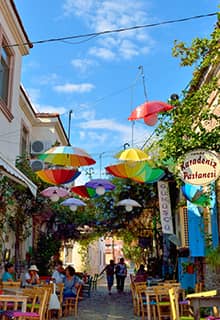
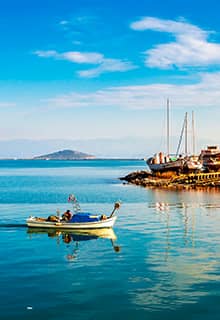
Cunda Island (Alibey Island), located in the Ayvalık district of Balıkesir, is Türkiye’s first island to be connected to the mainland by a bridge. Built in 1964 and known as "Türkiye's First Bosphorus Bridge," this crossing transforms transportation to the island into an effortless and delightful journey. Offering a quintessential Aegean atmosphere with its cobblestone streets, bougainvillea-adorned Greek stone houses, and the nostalgic Taş Kahve, the island's most iconic landmarks are the Taksiyarhis Church Museum and the historic windmill on Aşıklar Hill. Part of the Ayvalık Islands Nature Park and standing out with its untouched, pristine shores, this charming island promises its visitors an unforgettable gastronomic experience with its crispy papalina fish, olive oil-infused herb dishes, and mastic-flavored delicacies.
Kazdağları (Mount Ida) National Park
Located within the borders of the Edremit district of Balıkesir, Mount Ida National Park known in antiquity as "Mount Ida"is a world-renowned natural heritage site encompassing rich mythology and extraordinary biodiversity. Designated a national park in 1994, this vast area is recognized as one of the regions with the highest oxygen levels in the world.
The park features abundant water resources, deep gorges, and breathtaking natural landmarks such as the Şahinderesi Canyon, Sütüven Waterfall, and Hasan Boğuldu Pond. Home to hundreds of plant and animal species, most notably the endemic Kazdağı fir (Abies nordmanniana subsp. equi-trojani), it serves as an open-air natural laboratory. Referred to as "many-fountained Ida" in Homer's Iliad and famed as the legendary setting of history's first beauty contest, this mountain stands today as one of the most popular and peaceful escapes in Türkiye for trekking, mountain biking, camping, and eco-tourism enthusiasts.
Hasan Boğuldu Pond
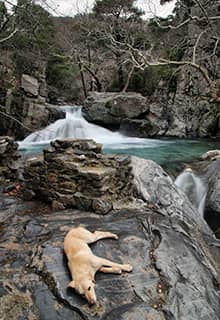
Hasan Boğuldu Pond, located within the boundaries of Mount Ida (Kazdağları) National Park in the Edremit district of Balıkesir, is a natural wonder famous for its stunning scenery and melancholy legend. Situated right next to the Sütüven Waterfall and shaded by centuries-old plane trees, this natural pond is a popular destination for those looking to cool off in its ice-cold spring waters, especially during the summer.
The pond takes its name from the tragic love story of Hasan, a lowlander, and Emine, a highlander nomad, whose romance ended in death due to the harsh conditions imposed by the nomad community. Today, with its surrounding walking trails, wooden bridges, and picnic areas, Hasan Boğuldu is one of the most popular eco-tourism routes in Mount Ida, offering a unique stop for both a peaceful nature getaway and those wishing to trace the steps of this deeply rooted legend.
Sütüven Waterfall
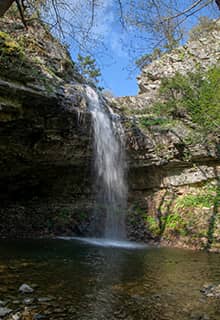
Sütüven Waterfall, located at the foothills of Mount Ida (Kazdağları) National Park in the Edremit district of Balıkesir, is a captivating natural wonder surrounded by lush, rich vegetation. Situated along the same pathway as the Hasan Boğuldu Pond, the waterfall cascades from a height of approximately 17 meters. The ice-cold spring waters coming down from the mountains crash against the rocks to create white foams that resemble milk froth from afar, which is why the waterfall was named "süt tüven" (meaning "milk-splashing" or "milk-spouting").
Shaded by red pine, plane, and oak trees, the surroundings of the waterfall echo with bird songs, making it a popular spot for domestic and foreign tourists who want to breathe in the cool air of Mount Ida, especially during the summer. Offering an ideal environment for nature photography and trekking with its viewing terraces, wooden bridges, and walking trails, Sütüven Waterfall is one of the most peaceful hidden gems of Mount Ida.
Ida Madra Geopark
Ida Madra Geopark, spanning a vast area of approximately 17,000 km² in northwestern Türkiye, is a monumental natural and geological heritage with coasts along both the Marmara and Aegean Seas. Covering the entirety of Balıkesir province alongside the Ayvacık and Ezine districts of Çanakkale, and the Bergama district of İzmir, this region harbors volcanic areas, mountains, plateaus, valleys, and karstic formations dating back to various periods from hundreds of millions of years of geological history to the present day. The area also stands out for its rich geothermal resources and minerals, particularly boron salts.
Home to 45 unique geosites, each with its own distinctive characteristics, the geopark serves as a magnificent open-air museum. It aims to raise awareness of the region's geological, natural, and cultural values, make rural areas more attractive, and support sustainable local development through eco-tourism.
Kazdağı Museum (Kazdağı Ethnography Gallery)
Located in the Güre neighborhood of the Edremit district in Balıkesir, the Kazdağı Museum (Kazdağı Ethnography Gallery) is a unique cultural stop that gathers the thousands of years of mythological, historical, cultural, and natural heritage of Mount Ida under one roof. Established to preserve the region's deep-rooted history and living traditions, this thematic museum presents the rich mythological narratives of Mount Ida—ranging from the world's first beauty contest to the Trojan War—to visitors through engaging visual and auditory displays.
The museum meticulously exhibits colorful traditional clothing, handcrafted textiles, household items, and artifacts tracing the nomadic lifestyle of the Turkmen culture that has inhabited the region for centuries. Additionally, it highlights the rich biodiversity, endemic plant species, and fauna of Mount Ida while honoring historical figures connected to the region, such as the renowned writer Sabahattin Ali. Offering a deep experience of the mystical and captivating spirit of the area, the Kazdağı Museum stands out as one of the city's most prestigious contemporary cultural heritage centers.
The Mount Ida Museum
The Mount Ida Museum (Kazdağı Müzesi) is a very special cultural destination located in the Güre town of Balıkesir's Edremit district, gathering the thousands-of-years-old mythological, historical, cultural, and natural richness of Mount Ida under a single roof. Established to preserve the deep-rooted past and living culture of the region, this thematic museum conveys the rich mythological narratives of Mount Ida (Ancient Mount Ida) to its visitors through visual and auditory elements, extending from the world's first beauty contest in history to the Trojan War. The museum meticulously exhibits colorful traditional garments, handcrafted weavers, household goods, and objects bearing the traces of nomadic life belonging to the Turkmen culture that has maintained its presence in the region for centuries. Also introducing the rich biodiversity, endemic plant species, and fauna structure of Mount Ida, the museum hosts the memories of historical figures who formed a bond with the region, such as the famous writer Sabahattin Ali. Standing as a must-visit spot for those who wish to deeply experience the mystical and mesmerizing spirit of Mount Ida, the museum is one of the city's most prestigious contemporary cultural heritage centers.
The Ancient City of Kyzikos
The Ancient City of Kyzikos (Kyzikos Antik Kenti) is one of the most precious archaeological treasures of the Marmara region with its deep-rooted history and magnificent architecture, located at a strategic point where the Kapıdağ Peninsula connects to the mainland in Balıkesir's Erdek district. Dating back to the 8th century BC, this ancient city flourished as a highly important center of trade, maritime, and settlement throughout antiquity, thanks to the advantages offered by its geographical location. The most majestic structure carrying the rich history of Kyzikos to the present day is the colossal Temple of Hadrian, which was considered one of the largest temples in Anatolia and was nominated as one of the seven wonders of the world in its time. Today, this massive city, where excavation works continue with great meticulousness, reveals the grandeur of the past with its huge amphitheater, necropolis, theater, agora, acropolis, and three large harbors that once gave life to the ancient world. The unique and invaluable artifacts unearthed from Kyzikos, shedding light on history, are exhibited in the nearby Balıkesir Bandırma Museum, taking its visitors on a fascinating journey back through the centuries.
The Ancient City of Antandros
Ancient City of Antandros (Antandros Antik Kenti) is a highly important archaeological treasure located on the southern foothills of Mount Ida (Kazdağları) in Balıkesir's Edremit district, outstanding for its strategic position both militarily and commercially. Although the city is officially thought to have been founded in the 10th century BC, it is evaluated that its roots could extend back to the 2000s BC, similar to the deep history of neighboring Assos. One of the most fascinating remains of Antandros that has survived to the present day is the well-preserved floor mosaics and wall frescoes of a Roman villa dating back to the 1st century AD. The unique grave gifts and archaeological artifacts unearthed from the city's necropolis, which was used between the 7th and 2nd centuries BC, are exhibited in the Balıkesir Bandırma Museum.
The grandest feature making Antandros unique on a global scale is its position at the heart of the Aeneas Cultural Route, which is the first and only Certified Cultural Route of the Council of Europe starting from Türkiye. According to the famous Epic of Aeneas, the hero Aeneas, fleeing the burning city of Troy with his father and son, came to Antandros and built his ships here using timber obtained from Mount Ida. Setting sail from this coast, he crossed Greece, Albania, and Tunisia to reach Italy, where he laid the foundations of Rome. This international route, starting from the archaeological sites of Troy and Antandros and ending in Rome, brings together numerous rural landscapes, archaeological sites, and assets inscribed on the UNESCO World Heritage list, making Antandros the heart of one of the most important migration and foundation legends in world history.
Ancient City of Daskyleion
The Ancient City of Daskyleion (Daskyleion Antik Kenti) is one of the most mysterious and multicultural archaeological centers of Anatolian history, located on the southeastern shore of the mesmerizing Lake Manyas (near Ergili Village) in Balıkesir's Bandırma district. Dating back to the 3000s BC, the city took its name from the famous Lydian King Daskylos. The most significant period making Daskyleion unique in the history of world archaeology is its status as the "Satrapy" (provincial governorship) capital of the Persian (Achaemenid) Empire established in the region from 547 BC onwards. In the excavations carried out in this city, which was the heart of Persian rule in Anatolia, thousands-of-years-old terracotta seal impressions (bullae) used by Persian governors in administrative correspondence, tomb steles representing the most original examples of Anatolian-Persian art, and palace remains have been unearthed. Possessing a cosmopolitan structure where Phrygian, Lydian, Persian, and Hellenic cultures coexisted peacefully, the remains of a 2,600-year-old Zoroastrian temple (fire temple) discovered in recent years hold immense importance for the history of faiths. The unique artifacts obtained from this ancient city, where nature and history intertwine, are exhibited in the Balıkesir Bandırma Museum, revealing the geopolitical and cultural grandeur of the site.
Kuvayı Milliye Museum
Kuvayı Milliye Museum (Balıkesir Kuvayı Milliye Müzesi) is one of the most meaningful cultural heritages carrying the national struggle spirit and the heroic history of Balıkesir, which holds a very special and pioneering place in Türkiye's struggle for independence, into the future. The museum building itself is of immense historical significance; it is the former "Okuma Yurdu" (Reading House) where the local people of Balıkesir gathered following the occupation of İzmir in 1919 to initiate the liberation movement, lay the foundations of the National Forces (Kuvayı Milliye), and where the Alaca Mescit committee assembled to take historic decisions. Opened as a museum in 1996, the ground floor of this two-story historic structure exhibits the momentous decisions, personal belongings, and photographs of the 41 pioneering leaders who organized the city's resistance movement, alongside national struggle newspapers published in Balıkesir. The upper floor features historic photographs taken during the Great Leader Mustafa Kemal Atatürk's visits to Balıkesir, memories of his presence in the city, and rare documents from the foundation era of the Republic. Deeply conveying the spirit of the first civil organization of homeland defense and the belief in independence to its visitors, the museum stands as a symbolic center that proudly crowns Balıkesir's title as the "City of Kuvayı Milliye."
Havran City Museum
Havran City Museum (Havran Kent Müzesi), housed in the historic Hocazade Mansion, is a highly precious museum located in Havran one of Balıkesir's districts that has successfully preserved its historical fabric in its purest form carrying the region's past, cultural identity, and rich folkloric elements into the future. Serving in the historic Hocazade Mansion, which is one of the most elegant examples of Republican-era architecture and has been meticulously restored in accordance with its original structure, the museum practically takes its visitors on a fascinating journey through time. In the agricultural section of the museum, the centuries-old olive cultivation tradition, which is the lifeblood of the district, old olive oil pressing tools, and traditional farming culture are brought to life. The cherished memory of Corporal Seyit (Koca Seyit), a hero born in Havran who changed the course of the Gallipoli Campaign, along with his photographs and war-era memorabilia, is respectfully kept alive in a very special section of the museum. Supported by rich ethnographic artifacts reflecting traditional Havran life, handicrafts, historical documents, and animations of old trades, this historic mansion stands as a must-see living city memory that mirrors Havran’s historical and cultural heritage.
Taksiyarhis Monument Museum
The Taksiyarhis Monument Museum (Taksiyarhis Anıt Müzesi) is one of the most important monumental cultural heritages dazzling with its architectural grandeur, located in the heart of the historic town of Ayvalık in Balıkesir. This historic structure, dedicated to the Archangel Gabriel (Taksiyarhis) and holding the distinction of being the city's first church, was rebuilt in 1844 in the neoclassical style. Used for a long time as a tobacco warehouse during the Republican era, the building opened its doors to visitors as a monument museum in 2013 following a meticulous restoration process carried out by the Ministry of Culture and Tourism in accordance with its original state. One of the most fascinating features of the museum is its majestic exterior architecture built with local garlic stone (sarımsak taşı), along with the magnificent marble craftsmanship in the interior, intricate biblical descriptions on its ceilings, and icons adorned with floral decorations. Also hosting distinguished cultural events and concerts today thanks to its unique acoustics, the Taksiyarhis Monument Museum stands as one of the most iconic living symbols of the city, mirroring Ayvalık's multicultural historical background, architectural aesthetics, and aesthetic richness.
Bandırma Archaeological Museum
Bandırma Archaeological Museum (Bandırma Arkeoloji Müzesi) is one of the most important memory centers of the region, preserving the thousands-of-years-old rich historical heritage of Balıkesir and the Southern Marmara zone. Located within the culture park, the museum hosts unique artifacts obtained from scientific excavations carried out in two major nearby ancient cities: Daskyleion (the Persian Satrapy center) and Kyzikos. The exhibition halls of the museum display the famous Persian-era seal impressions (bullae) unearthed from the Daskyleion excavations that made a worldwide impact, tomb steles representing the most original examples of Anatolian-Persian art, as well as colossal architectural fragments, marble sculptures defying centuries, and figurines from the Ancient City of Kyzikos. Additionally, impressive grave gifts brought from the necropolis of the Ancient City of Antandros and chronological artifacts belonging to different periods in the region complete the museum's rich collection. Gathering the traces of magnificent past civilizations under a single roof, the Bandırma Museum stands as a prestigious cultural stop inviting archaeology enthusiasts on a fascinating journey through a time tunnel.
Cunda Rahmi M. Koç Museum
Cunda Rahmi M. Koç Museum (Cunda Rahmi M. Koç Müzesi), housed in the historic Taksiyarhis Church, is the most prominent monumental structure and the most popular cultural destination on Cunda Island (Alibey Island) in Balıkesir's Ayvalık district. The museum operates inside the historic Taksiyarhis Church, which was built in the neoclassical style in 1873 by the local Greek Orthodox community and dedicated to the Archangels Gabriel and Michael. Left derelict over time by neglect and earthquakes, this magnificent architectural masterpiece was meticulously restored by the Rahmi M. Koç Museology Foundation in accordance with its original form and opened its doors as a museum in 2014.
Inside the museum, while the church's centuries-old breathtaking frescoes, intricate marble craftsmanship, and religious icons are preserved, the collection on display sheds light on the evolution of industrial history. The wide-ranging collection features thousands of rare artifacts gathered from all corners of the world, including antique automobiles, period toys that captivate children, steam engine models, maritime instruments, vintage telegraphs, and cameras. Having become the symbol of Cunda with both its aesthetic architecture and the industrial heritage it preserves, this living monument offers its visitors a nostalgic and artistically rich experience.
Küçükköy
Located in the Ayvalık district of Balıkesir, Küçükköy is a charming historical settlement originally founded during the Ottoman era and later settled by Bosnian and Lesbian (Mytilene) immigrants. Through extensive restoration and sustainable development initiatives, the village has successfully transformed into a celebrated "Smart Village" and a thriving hub for arts, culture, and eco-innovation.
The village features the Sustainable Energy-Based Tourism Application Center (SENTRUM) project, which serves as a pioneering green destination model focused on energy efficiency, renewable energy usage, and sustainable tourism practices. The cobblestone streets are lined with restored stone houses housing art galleries, ceramic workshops, design boutiques, and specialty cafes. Alongside its green energy identity and forward-thinking cultural vision, Küçükköy preserves its rich culinary heritage famous for authentic Bosnian pastries (Boşnak böreği)making it one of the most distinctive cultural and eco-tourism stops in the Northern Aegean region.
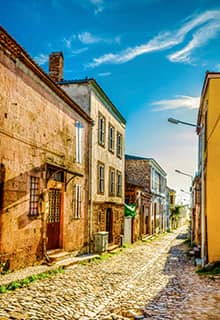
Cunda Island
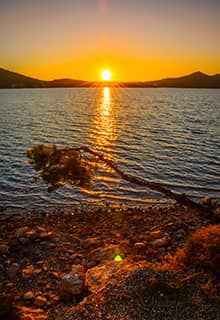
Ayvalık
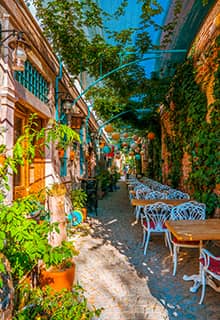
Cunda Island
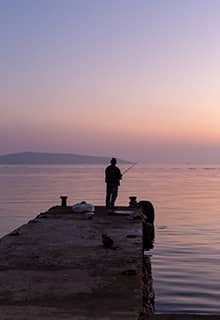
Erdek
Cunda Island
Mount Ida
Cunda Island
Hasanboğuldu River